Last updated 2026-07-25
TL;DR
An Oregon adult foster home is a licensed residential care setting, in an ordinary house, for up to 5 unrelated adults who need help with daily living. The Department of Human Services, Aging and People with Disabilities program, licenses and inspects these homes under OAR chapter 411, division 50.
What is an adult foster home in Oregon?
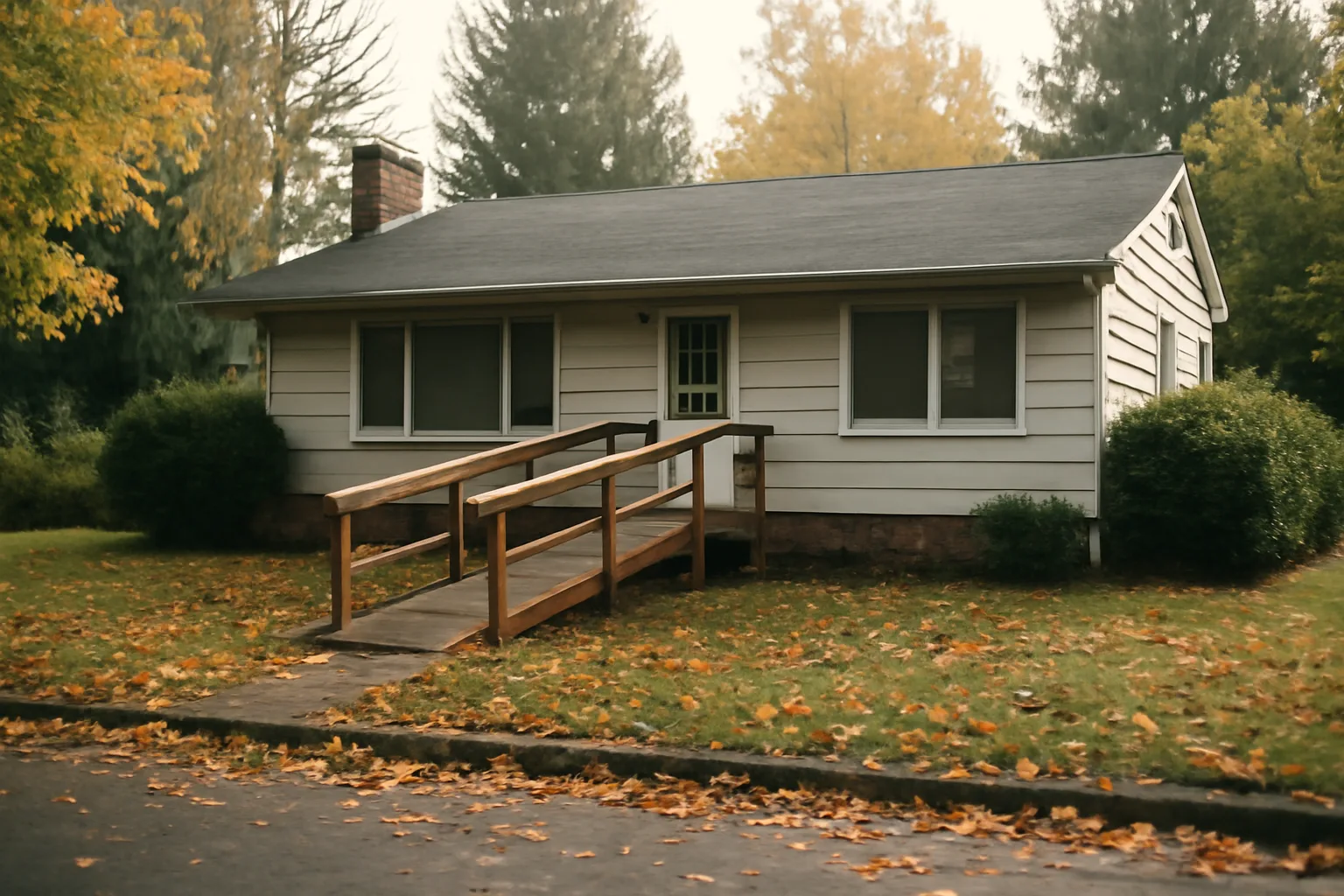
An adult foster home in Oregon is a private residence licensed to provide room, board, and 24-hour care to a small number of adults, usually older adults or people with physical disabilities, who cannot safely live alone anymore. Oregon caps most homes at 5 residents, which is what separates this model from a larger assisted living facility or a nursing home [1]. The legal home for this program sits in Oregon Administrative Rules chapter 411, division 50, which the Department of Human Services (DHS) Aging and People with Disabilities (APD) program administers. The rule defines an adult foster home as "a residence, facility or other similar place... in which residential care is provided in a home-like environment for compensation for five or fewer adults who are not related to the provider" [1]. That home-like piece is more than marketing language. It is baked into the regulatory definition and it shapes everything from staffing ratios to how bedrooms get inspected. Most Oregon adult foster homes are run out of single-family houses, often by a live-in provider or a small team, rather than in a purpose-built commercial building. That is different from how a lot of other states handle small residential care, and it is worth understanding before you buy or lease property. If you're comparing this option against a licensed assisted living facility, read our breakdown of assisted living facility licensing to see how the two tracks diverge on resident capacity and services.
What is assisted living, and how is it different from an adult foster home?
Assisted living is a broader senior housing and care category, typically larger buildings with private apartments, dining rooms, and activity staff, licensed separately from adult foster homes. Oregon licenses assisted living facilities under a different section of OAR chapter 411, and these buildings can house dozens to over a hundred residents, compared to the 5-resident cap in most adult foster homes [2]. The practical differences matter for anyone deciding which license to pursue. Assisted living facilities in Oregon must offer a full range of scheduled and unscheduled services, generally provide private apartment-style units with kitchenettes and full bathrooms, and operate more like a commercial senior living community. Adult foster homes are smaller, more residential in feel, and often less expensive to build out because you are converting an existing house rather than constructing or renovating a purpose-built facility. Staffing patterns differ too. A licensed assisted living building needs shift coverage across a bigger population and typically a larger administrative structure. An adult foster home, by contrast, can sometimes run with the provider living on-site and functioning as the primary caregiver, supplemented by relief staff. If you are weighing the two paths, our guide to assisted living covers the larger-facility licensing route in more detail, and our page on assisted living facilities compares state variation on capacity limits.
What is a group home, and is that the same thing as an adult foster home?
"Group home" is a general term people use for any small residential setting where unrelated people live together and receive care or supervision, and it gets used loosely across disability services, mental health, and senior care. In Oregon's regulatory language, the specific license for small senior and disability residential care in a house is the adult foster home license, not a generic "group home" license [1]. Other states use "adult foster care home," "adult family home," or "residential care home" for functionally similar programs, which causes real confusion for operators researching multi-state expansion. Oregon's own children's system uses a separate "foster care" term for child welfare placements, which is a completely different license and agency than adult foster homes. Do not confuse the two when you're searching Oregon statute and rule. If your population is adults with intellectual or developmental disabilities rather than older adults needing personal care, Oregon has separate licensing under the Office of Developmental Disabilities Services, and the operational rules diverge from APD's adult foster home rules even though the physical setting can look similar from the street.
What does an Oregon adult foster home actually provide to residents?
An adult foster home provides room, board, 24-hour supervision, and help with activities of daily living such as bathing, dressing, medication management, and mobility, along with coordination of outside medical care. It is not a medical facility and is not licensed to provide skilled nursing care the way a nursing facility is [1]. OAR 411-050 requires providers to develop an individualized negotiated service agreement for each resident, updated as needs change, that spells out exactly what care the home will deliver and how. Providers must also maintain a written house rules disclosure and admission agreement so residents and families know what is and is not included before move-in. Medication management is one of the most heavily regulated pieces. Oregon rule sets specific requirements for who can administer medications, how they are stored, and how errors get documented, and DHS inspectors check this closely during licensing surveys and complaint investigations. Dietary needs, incontinence care, and behavioral support for residents with dementia are all things a well-run adult foster home should be equipped to handle, but the scope has real limits. A resident who needs IV therapy, ventilator support, or complex wound care that exceeds what a home health nurse can manage in a home setting typically needs a nursing facility instead, which is one of several reasons Oregon requires an assessment before and periodically after admission to confirm the placement still fits the resident's needs.
How does assisted living compare to a nursing home?
| Typical resident count | Up to 5 | Often 20 to 100+ | Often 60 to 150+ | |
|---|---|---|---|---|
| Setting | Private residence | Purpose-built apartment building | Institutional/medical building | |
| Licensed nursing on-site | Not required | Not typically required | Required, around the clock | |
| Regulator | DHS APD, OAR 411-050 | DHS APD, separate OAR section | Oregon Health Authority / CMS certified | |
| Medicaid pathway | K Plan / 1915(k) waiver services possible | Yes, through APD Medicaid waivers | Yes, Medicaid + Medicare (limited) | A resident whose care needs exceed what an adult foster home or assisted living facility can safely deliver, based on the state's assessment tool, generally has to transition to a nursing facility. This is a clinical and regulatory line, not a preference, and Oregon's licensing rules require providers to recognize when a resident's needs have outgrown the home's scope of practice [1][3]. |
Assisted living and nursing homes both provide long-term residential care, but nursing homes are licensed to deliver skilled nursing and rehabilitative medical care around the clock, while assisted living (and adult foster homes) provide personal care and supervision without the same level of clinical staffing. Nursing homes must have licensed nurses on-site continuously and typically accept residents with more complex medical needs, including those requiring IV therapy, wound vacs, or ventilator support [3]. Here is a simple side-by-side for Oregon specifically: | Feature | Adult foster home | Assisted living facility | Nursing facility |
Does Medicare cover assisted living or adult foster home care?
No. Medicare does not cover the room and board costs of assisted living, adult foster homes, or any other long-term custodial care setting. CMS states plainly that Medicare does not pay for long-term care, which it defines as "non-skilled personal care assistance," whether that care happens at home, in assisted living, or in a nursing home [4]. Medicare Part A can cover a short-term skilled nursing facility stay after a qualifying hospital stay, and Medicare will pay for medically necessary home health visits regardless of where someone lives, but neither of those covers the ongoing custodial cost of living in an adult foster home. Families paying for adult foster home care in Oregon typically use private funds, long-term care insurance, or Medicaid once the resident financially qualifies [4]. Medicaid is the payer that actually funds a lot of adult foster home care for lower-income Oregonians. Oregon runs Medicaid-funded long-term care through APD, and adult foster homes can be reimbursed through the state's Medicaid state plan and home and community-based services authorities once a home is both licensed and enrolled as a Medicaid provider [5]. Getting Medicaid-eligible is a separate process from getting your license, and operators should not assume the two happen automatically together.
How do I start a group home / adult foster home in Oregon?
Starting an adult foster home in Oregon means working through DHS APD's licensing process, which generally includes a criminal background check, a home and site inspection, provider training requirements, and a completed license application before you can accept your first resident. The exact sequence and current forms are published by DHS and should be confirmed directly with your local APD licensing office before you commit to a property [1][6]. At a high level, the steps operators typically go through look like this: 1. Confirm you meet Oregon's provider qualification requirements, including background check clearance and required training hours under OAR 411-050. 2. Identify a property that meets zoning, fire/life safety, and physical plant requirements for a home with up to 5 residents (bedroom size, exits, bathroom ratios, and sprinkler or smoke detection rules all get checked). 3. Submit your license application to your regional APD office, along with required fees; confirm current fee amounts with your state licensing agency since these are adjusted periodically. 4. Pass a pre-licensing inspection covering fire safety, food handling, medication storage, and general home condition. 5. Complete any required provider or caregiver training before residents move in. 6. Develop your policy manual, admission agreement, and negotiated service agreement templates so you are ready to admit your first resident compliantly. 7. If you intend to accept Medicaid-funded residents, complete separate Medicaid provider enrollment. Zoning is a step people underestimate constantly. Adult foster homes are generally treated as a residential use under Oregon and federal fair housing law, and Oregon statute has specific language limiting how local governments can restrict them, but every city and county still has its own process, and you need to confirm zoning compatibility for your specific address before signing a lease or purchase agreement, not after [7]. A realistic build-out timeline, from deciding to pursue licensing to actually admitting your first resident, commonly runs several months once you account for background checks, inspection scheduling, and any physical modifications the home needs. Nobody has solid published data on the average timeline start to finish, and DHS does not publish a guaranteed processing window, so budget generously and do not sign a lease assuming a fast approval.
What does the Oregon adult foster home license application actually require?
The license application package generally requires proof of provider qualifications, a floor plan of the home, fire marshal or local fire authority sign-off, background check clearance for anyone with resident access, and a written operational plan covering staffing, emergency procedures, and admission criteria. DHS APD reviews these materials before scheduling the pre-licensing inspection [1][6]. Providers should expect DHS to check things like: minimum bedroom square footage per resident, a maximum of two residents per bedroom in most cases, accessible bathroom-to-resident ratios, a working fire alarm and smoke detection system, secondary egress from sleeping areas, and safe storage for medications and hazardous cleaning supplies. None of this is exotic, but it does mean an ordinary house often needs some retrofit work before it passes. Policy manual requirements typically cover resident rights, grievance procedures, medication administration protocols, infection control, emergency preparedness (including evacuation plans), staff training records, and incident reporting procedures. Building this manual from scratch is one of the more time-consuming parts of getting licensed, since DHS wants to see it is specific to your actual home and population, not a generic template copied from another state. This is genuinely where a lot of new operators get stuck, less on the physical building and more on producing a complete, state-specific policy and procedures manual on top of the application forms. A state-specific starting point, like the $299 one-time State Group Home Licensing Kit, can save real hours if you would otherwise be building every policy document from a blank page, though it does not replace your own attorney review or DHS's actual approval process.
What staffing does Oregon require in an adult foster home?
Oregon requires adult foster homes to maintain staffing sufficient to meet each resident's negotiated service agreement around the clock, with specific training requirements for anyone providing direct care, including the licensed provider [1]. There is no single fixed staff-to-resident ratio published as a simple number across all situations, because the requirement is tied to the actual care needs documented in each resident's individual service plan, not a flat formula. Providers and caregivers must complete required orientation and ongoing training covering topics like medication administration, abuse recognition and reporting, dementia care, and emergency response. DHS tracks these training hours and can review records during licensing inspections and complaint investigations. A home with 5 medically complex residents needing extensive help with transfers, incontinence care, and medication management realistically needs more staffing hours than a home with 5 relatively independent residents who need mostly supervision and meal support. Confirm exact current training hour requirements and any ratio guidance with your APD regional licensing office, since these details get updated through rule revisions periodically.
How does zoning work for adult foster homes in Oregon?
Oregon treats licensed adult foster homes with up to 5 residents as a residential use in most zoning contexts, which generally means they should be allowed in single-family residential zones without requiring a special use permit, though the exact legal protection depends on state statute, local code, and how your specific jurisdiction has written its zoning ordinance [7]. Federal fair housing law matters here too. The Fair Housing Act prohibits municipalities from using zoning to discriminate against housing for people with disabilities, and courts have applied this to group homes and adult foster care settings in various cases around the country. That legal backdrop supports residential-use treatment for small adult foster homes, but it does not eliminate the need to check your specific city or county planning department before buying or leasing. HOA covenants are a separate wrinkle that trips people up. Some private HOA rules attempt to restrict foster homes even where zoning law would allow them, and enforceability varies. If you are considering a property inside an HOA, get the covenant language reviewed before you commit, not after. For anyone comparing zoning treatment across states before picking where to locate a facility, our page on assisted living at home covers how zoning categorization differs for home-based versus purpose-built senior care models.
What do inspections look like once an Oregon adult foster home is licensed?
DHS APD conducts licensing inspections before initial approval and periodic renewal inspections after that, along with complaint-driven investigations if a resident, family member, or staff member reports a concern. Inspectors check physical plant conditions, medication management practices, staffing records, resident care documentation, and compliance with each resident's negotiated service agreement [1]. Common problem areas in real inspections tend to include incomplete or outdated negotiated service agreements, medication administration records with gaps, expired staff training documentation, and physical plant issues like blocked exits or malfunctioning smoke detectors. None of these are surprising once you know DHS is checking for them, which is exactly why building your documentation systems before you open, not after your first inspection, saves a huge amount of stress. License renewal is not automatic. Providers need to maintain compliance continuously, and a pattern of substantiated complaints or repeat violations can lead to conditions on the license, fines, or in serious cases, license revocation. Keep your own compliance file organized year-round rather than scrambling right before a scheduled renewal inspection.
What's the realistic cost and funding picture for opening an adult foster home in Oregon?
Costs to open an Oregon adult foster home vary widely depending on whether you already own a qualifying house or need to buy and retrofit one, and DHS does not publish a single startup cost figure because it depends entirely on your specific property and market. Confirm current license application fees directly with your APD regional office, since fee schedules are set by rule and get updated periodically [6]. On the revenue side, Oregon adult foster homes can be paid through private pay arrangements with residents and families, or through Medicaid once the home completes separate Medicaid provider enrollment on top of its DHS operating license. Medicaid coverage for adult foster home services in Oregon runs through the state's approved home and community-based services authorities, and CMS's Medicaid HCBS program page describes the general federal framework these state programs operate under [5]. We are not going to guess at what any given home can expect to earn, because that depends on resident census, payer mix, local market rates, and staffing costs, none of which DHS or CMS publishes as a standardized figure, and any specific income claim you see elsewhere should be treated with real skepticism.
Frequently asked questions
What is assisted living?
Assisted living is a licensed residential care model for people who need help with daily activities like bathing, dressing, and medication management but do not need the round-the-clock skilled nursing care a nursing home provides. It typically involves private or semi-private apartments in a larger building, with staff available on-site continuously to assist residents as needed.
What is a group home?
A group home is a general term for a small residential setting where a limited number of unrelated people live together and receive supervision or care, often used across senior care, disability services, and behavioral health. In Oregon, the specific license for this kind of small senior/disability residential setting is called an adult foster home, governed by OAR chapter 411, division 50.
What is an assisted living facility?
An assisted living facility is a licensed building, usually larger than an adult foster home, that provides housing plus personal care services, meals, and supervision to residents who need help with daily activities but not full-time skilled nursing. Oregon licenses these facilities separately from adult foster homes under a distinct section of its administrative rules.
What is assisted living vs nursing home?
Assisted living provides help with daily living activities and supervision, while a nursing home provides continuous skilled nursing and rehabilitative medical care for residents with more complex health needs. Nursing homes must have licensed nurses on-site around the clock; assisted living facilities and adult foster homes generally do not carry that same clinical staffing requirement.
What does assisted living provide?
Assisted living typically provides housing, meals, help with activities of daily living (bathing, dressing, mobility, medication management), housekeeping, social activities, and 24-hour staff availability for supervision and assistance. It does not typically provide skilled nursing or complex medical care, which is the domain of nursing facilities.
How do I start a group home in Oregon?
In Oregon, you start what the state calls an adult foster home by meeting DHS APD provider qualifications, securing a qualifying property, passing a pre-licensing inspection, completing required background checks and training, and submitting a full license application through your regional APD office. Confirm the current step-by-step checklist and fees directly with APD before committing to a property.
What is the difference between assisted living and nursing home?
Assisted living serves residents who need help with daily activities but are relatively medically stable, while nursing homes serve residents with more complex medical needs requiring continuous skilled nursing care, like wound care, IV therapy, or rehabilitation after major illness. Regulatory oversight, staffing requirements, and Medicare/Medicaid coverage rules also differ significantly between the two.
Does Medicare cover assisted living facilities?
No. Medicare does not cover room and board or custodial care costs at assisted living facilities, adult foster homes, or any long-term residential care setting, according to CMS. Medicare may cover a short skilled nursing facility stay after a qualifying hospitalization, and it covers medically necessary home health visits, but neither covers ongoing assisted living costs.
How do I start a group home (adult foster home)?
You start by researching your specific state's licensing agency, since requirements are state-specific; in Oregon that's DHS Aging and People with Disabilities. Expect a background check, home inspection, staff training requirements, zoning confirmation, and a formal license application before you can legally admit residents. Build your policy manual and staffing plan well before your target opening date.
How many residents can an Oregon adult foster home have?
Oregon adult foster homes are generally licensed for up to 5 residents who are not related to the provider, under OAR 411-050. This cap is what distinguishes an adult foster home from a larger assisted living facility, which can house dozens or more residents in a purpose-built building.
Does Oregon Medicaid pay for adult foster home care?
Oregon Medicaid can pay for adult foster home services for financially eligible residents, but the home must complete Medicaid provider enrollment separately from its DHS operating license. Coverage runs through Oregon's approved home and community-based services authorities under the state Medicaid program, administered in coordination with CMS's HCBS framework.
Is an adult foster home the same as a nursing home in Oregon?
No. An adult foster home is a small residential care setting for up to 5 residents providing personal care and supervision, while a nursing home is a licensed medical facility providing continuous skilled nursing care for residents with complex health needs. They have different regulators, different staffing requirements, and different resident acuity levels.
Can I get zoning approval for an adult foster home in any residential neighborhood in Oregon?
Licensed adult foster homes with up to 5 residents are generally treated as a residential use under Oregon law and federal fair housing protections, which usually allows them in single-family zones without a special permit. Local rules and HOA covenants still vary, so confirm zoning compatibility with your specific city or county planning department before buying or leasing a property.
Sources
- Oregon Secretary of State, Oregon Administrative Rules chapter 411, division 050 (Adult Foster Homes): Definition of adult foster home, 5-resident cap, negotiated service agreement, and general operating requirements
- Oregon Department of Human Services, Aging and People with Disabilities licensing programs: Oregon licenses assisted living facilities and adult foster homes as distinct programs under APD
- Medicare.gov, Nursing Home Care coverage page: Medicare coverage rules for skilled nursing facility care and its limits
- CMS/Medicare.gov, Long-Term Care coverage page: Medicare does not cover long-term custodial care such as assisted living or adult foster home room and board
- Medicaid.gov, Home & Community-Based Services page: Federal framework for Medicaid HCBS funding that states use to pay for adult foster home and assisted living services
- Oregon Department of Human Services, Adult Foster Home licensing information: Oregon APD administers adult foster home licensing including applications and inspections
- Oregon Revised Statutes, Chapter 443 (Adult Foster Homes): State statutory framework governing adult foster homes including zoning and residential use treatment