Last updated 2026-07-25
TL;DR
Alaska licenses assisted living under Assisted Living Homes (ALH) rules through the Department of Health, Division of Senior and Disabilities Services. Operators need a certificate of need in some cases, a facility license, background checks, a fire/life safety inspection, and a staffing plan tied to resident acuity. Medicare does not pay for room and board; Medicaid can help through the Alaska waiver program for eligible residents.
What is assisted living, exactly?
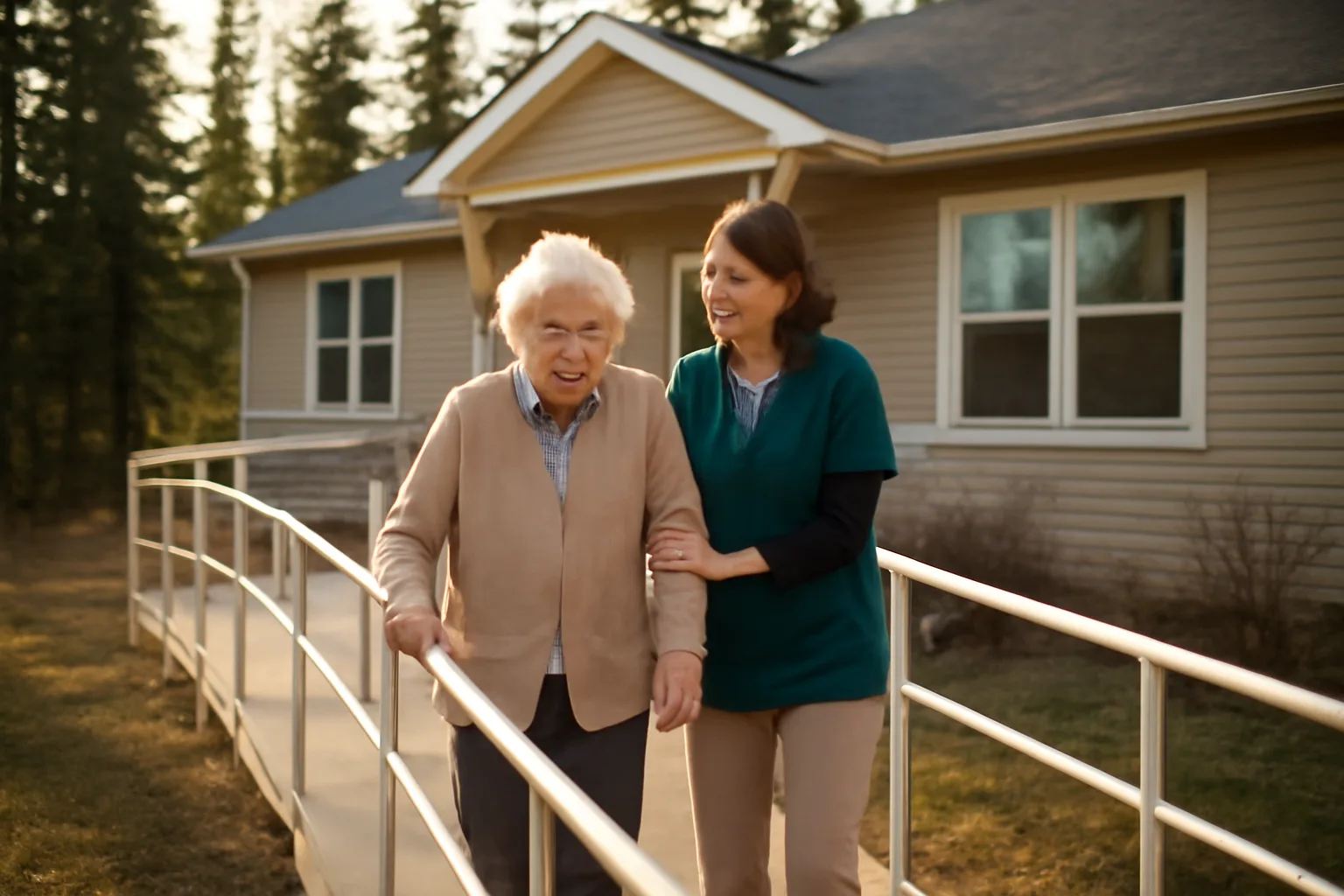
Assisted living is a licensed residential setting where adults who need help with daily activities, bathing, dressing, medication reminders, meals, get that support while living in something closer to a home than a hospital. It sits between fully independent senior housing and a nursing home. Residents usually have their own room or apartment, staff are on site around the clock or close to it, and care plans are individualized rather than built around a medical unit's routine. In Alaska the state's regulatory term is Assisted Living Home (ALH), and the license category covers both small adult foster-care-style homes and larger congregate facilities. The Alaska Department of Health, Division of Senior and Disabilities Services (SDS), is the licensing authority [1]. If you're researching this from outside Alaska and comparing definitions across states, the broader explainer on assisted living and on what an assisted living facility actually is will help you see what's common nationally versus what Alaska does differently. One thing that trips up new operators: Alaska does not use the term "assisted living facility" in its statute the way some states do. The controlling law is AS 47.33, the Assisted Living Homes licensing statute, and the implementing regulations sit in 7 AAC 75 [2]. If a consultant or template uses "ALF" language, translate it to Alaska's "ALH" terminology before you file anything.
What is a group home, and how does it differ from an ALH?
"Group home" is a catch-all term people use for any small residential care setting, but it doesn't map cleanly onto Alaska's licensing categories. Alaska licenses assisted living homes under AS 47.33, and separately licenses services for people with intellectual and developmental disabilities and behavioral health needs under different chapters and Medicaid waiver rules administered by SDS and the Division of Behavioral Health. If your target population is seniors or adults needing help with activities of daily living because of aging, physical decline, or chronic illness, you're almost certainly filing under the ALH rules in 7 AAC 75. If your target population is adults with I/DD or serious mental illness, you may be looking at a different license track and different Medicaid waiver enrollment, even though the physical building might look identical to an assisted living home from the street. Confirm which category fits your intended population with SDS before you sign a lease or buy a property, because the fire code requirements, staffing ratios, and training requirements are not identical across categories [1]. This is also where a lot of first-time operators waste money: they build out a home to residential-care specs, then discover their target population actually needs a different license type with different physical plant requirements. A phone call to the licensing unit before you commit to a building saves real rework.
What is an assisted living facility (and what does Alaska call it)?
Nationally, "assisted living facility" usually means a licensed residential building, ranging from a few beds to over a hundred, where staff provide help with activities of daily living (ADLs), medication management, meals, housekeeping, and some level of supervision, but not skilled nursing care. Alaska's statutory term is "assisted living home," defined in AS 47.33.990 as a residence that provides "room and board and assistance with activities of daily living and instrumental activities of daily living" to adults who need that support [2]. Alaska further separates homes by size. A home licensed for one to three residents (sometimes still called an adult foster home in practice) has different oversight intensity than a larger congregate ALH licensed for a higher capacity. Both fall under AS 47.33, but the required policies, staffing documentation, and inspection frequency scale with size and resident acuity [1][2]. If you're comparing multiple state definitions side by side for a multi-state buildout, the general reference pages on assisted living facilities and facility assisted living lay out how terminology shifts state to state, which matters if you're pulling policy templates from another state's regulations by mistake.
What is assisted living vs nursing home, and how do the licenses differ?
| Licensing authority | Div. of Senior and Disabilities Services, AS 47.33 [1][2] | State long-term care licensure + CMS certification under 42 CFR Part 483 [3] | |
|---|---|---|---|
| Staffing | Direct care staff, delegated nursing tasks allowed | Licensed nurses on duty around the clock | |
| Medical acuity | ADL/IADL support, stable chronic conditions | Skilled nursing, post-acute, complex medical needs | |
| Medicare room & board | Not covered | Covered only for a limited SNF stay meeting criteria [4] | |
| Typical setting | Residential home or small apartment building | Institutional, hospital-adjacent building | Operators sometimes assume moving "up" from ALH to nursing home licensure is a paperwork step. It isn't. It's a separate license, a separate building code standard, and a separate staffing model built around licensed nurses, not direct care aides. |
The core difference is medical acuity and staffing. A nursing home (skilled nursing facility) is licensed to provide 24-hour skilled nursing care, ordered and supervised by physicians, for people recovering from illness, injury, or surgery, or living with conditions that require ongoing clinical monitoring. Nursing homes participate in Medicare and Medicaid under federal conditions of participation for long-term care facilities set out at 42 CFR Part 483, Subpart B, a different regulatory track entirely from ALH licensing [3]. An assisted living home, by contrast, is a social model of care. Staff help with ADLs and IADLs (bathing, dressing, meal prep, medication reminders, transportation) but the home is not equipped or licensed to deliver skilled nursing, IV therapy, ventilator care, or complex wound care beyond what's allowed under Alaska's nurse delegation rules. If a resident's needs exceed what ALH staff and delegated nursing tasks can safely cover, the home has to arrange a higher level of care or discharge planning, per the negotiated service agreement required under 7 AAC 75 [2]. | Feature | Assisted living home (Alaska ALH) | Nursing home (SNF) |
What does assisted living provide, day to day?
Under Alaska's regulations, an assisted living home has to provide, at minimum, room and board, assistance with ADLs and IADLs, medication assistance consistent with the resident's negotiated service agreement, and a safe, supervised living environment [2]. Beyond that floor, most homes also provide social activities, transportation coordination, and some housekeeping or laundry. Every resident is supposed to have an individualized negotiated service agreement or comparable service plan that spells out exactly what the home will provide, what family or outside providers will provide, and what triggers a re-evaluation. This document is one of the first things a surveyor asks to see during inspection, and it's also the document that protects the operator when a resident's needs change and the home has to have a conversation about discharge or a higher level of care. Don't confuse "providing assistance" with "providing medical care." Alaska's nurse delegation framework lets a registered nurse train and delegate certain tasks (medication administration, glucose monitoring, and similar) to unlicensed direct care staff, but delegation has documentation requirements and limits. Get this wrong and you're both a licensing violation and a liability exposure.
How to start a group home in Alaska: the licensing sequence
Here's the realistic sequence, not the marketing version. It generally takes months, not weeks, and the timeline stretches further if your building needs fire code upgrades. 1. Confirm your license category with SDS. Call or email the Division of Senior and Disabilities Services before you sign a lease. Confirm whether your target population and building fit the ALH rules under AS 47.33 or a different Medicaid waiver / behavioral health license track [1]. 2. Check zoning and building code fit. Municipalities in Alaska (Anchorage, Fairbanks, Juneau, and others) have their own zoning rules for residential care uses. Confirm local zoning and any conditional use permit requirements with your municipal planning department before you commit to a property, because state licensing won't override a local zoning denial. 3. Complete the fire and life safety inspection. Alaska requires ALHs to meet fire and life safety standards appropriate to resident mobility and building size, coordinated through the state fire marshal's office and local fire authority. Budget real time here; corrections often require contractor work (exit signage, sprinkler assessment, smoke detector interconnection) that can take weeks to schedule. 4. Submit the license application to SDS, including background checks for owners, administrators, and staff (Alaska requires criminal history checks consistent with 7 AAC 10 and related background check regulations for licensed care settings), proof of financial capacity, your policy and procedure manual, staffing plan, and negotiated service agreement templates [1][2]. 5. Pass the pre-licensing survey. A licensing surveyor visits the physical site to confirm the building, staffing plan, and policies match what's on paper before issuing the certificate. 6. Get your license and start intake. Once SDS issues the license, you can admit residents, but ongoing compliance (annual or periodic surveys, incident reporting, staff training documentation) starts immediately, not later. Confirm current fee amounts, application forms, and exact document checklists directly with SDS, because fee schedules and forms change and this article won't guess a number that could be wrong by the time you read it [1].
What is the difference between assisted living and nursing home (funding and staffing angle)
Beyond the care-model difference covered above, the funding and staffing math is genuinely different, and it drives a lot of operators' business decisions. Nursing homes are staffed with licensed nurses around the clock and are Medicare-certified for short post-acute stays, which means they bill Medicare Part A for a limited skilled nursing benefit period (up to 100 days per benefit period, with a daily coinsurance requirement after day 20) when a resident meets skilled care criteria following a qualifying hospital stay [4]. Assisted living homes don't participate in that Medicare skilled nursing benefit at all, because they aren't delivering skilled nursing care. Staffing costs and required credentials follow the same split. Nursing homes need RNs and LPNs on every shift under federal conditions of participation at 42 CFR Part 483 [3]. Assisted living homes need trained direct care staff, an administrator who typically has to meet state-specified training or experience requirements, and access to a delegating RN for specific tasks, but not licensed nurses staffing every shift. That's a meaningfully lower labor cost structure, which is part of why ALH is the more common small-operator entry point compared to opening a nursing home from scratch.
Does Medicare cover assisted living facilities?
No. Medicare does not pay for room and board in an assisted living home, and it does not pay for the custodial-care services (help with bathing, dressing, medication reminders) that make up most of what an ALH provides. Medicare's own coverage page states plainly: "Medicare doesn't cover long-term care (also called custodial care) if that's the only care you need" and describes SNF coverage as available only after a qualifying inpatient hospital stay and only for skilled care needs [4]. Separately, Medicare Part B can cover medically necessary services delivered to someone who happens to live in an assisted living home (a doctor visit, physical therapy), but not the room, board, or custodial care itself [4]. Medicaid is the more relevant payer conversation for assisted living operators, but it's not automatic either. States can cover home and community-based services through Medicaid HCBS waiver authority under section 1915(c) of the Social Security Act, which can help eligible low-income residents pay for services within an assisted living setting, though room and board itself is typically the resident's responsibility from personal funds, Supplemental Security Income, or other sources [5]. Waiver enrollment, provider agreements, and reimbursement rates are handled separately from your ALH license, so plan on a second application process if you intend to accept Medicaid waiver residents. For the general national picture on how Medicare and Medicaid interact with residential care, and where families get confused, the assisted living at home and senior assisted living facilities near me pages cover the consumer-facing side of this same funding question.
How do I start a group home if I'm brand new to licensing paperwork?
Start with the regulation text itself, not a summary of it. Read AS 47.33 and 7 AAC 75 in full before you draft anything, because your policy manual, staffing plan, and negotiated service agreement template all have to trace back to specific regulatory language, and a surveyor will check that traceability [2]. Then build four things in this order: your staffing plan (tied to expected resident count and acuity mix), your policy and procedure manual (admission and discharge criteria, medication management, emergency preparedness, abuse/neglect reporting), your negotiated service agreement template, and your fire/life safety documentation. Trying to do these out of order (for example, signing a lease before confirming staffing ratios you can actually afford to run) is the single most common expensive mistake new operators make. If you'd rather not build every policy document from a blank page and cross-reference it against Alaska's regulations yourself, that's the gap our $299 licensing kit builder is built to close: a state-specific starting set of policy templates and staffing plan frameworks you adapt to your home, not a substitute for reading the actual regulation or for the state's own review of your application.
How much does Alaska assisted living licensing cost and take, realistically?
Alaska's SDS licensing unit publishes current application fees, background check fees, and renewal fees, and these change periodically, so confirm the current fee schedule directly with the Division of Senior and Disabilities Services rather than relying on a number printed somewhere else [1]. Beyond the state fee itself, budget for background check processing fees per staff member, fire marshal inspection fees (often set at the municipal or local fire department level), and any building corrections identified during the fire/life safety review. Timeline-wise, expect the application-to-license window to run several months when you include background check processing, the pre-licensing survey scheduling, and any corrective work on the building. Operators who assume a 30-day turnaround are almost always disappointed; the honest range depends heavily on whether your building already meets fire code for an ALH occupancy classification or needs retrofit work first. One underused resource: SDS licensing staff will generally answer scoping questions by phone or email before you file, including questions about which category your intended population fits. Use that resource early. It's free, and it can save you from buying or leasing the wrong building.
What inspections and ongoing compliance should operators expect after licensing?
Licensing is the start, not the finish line. Alaska ALHs are subject to periodic licensing surveys (routine and complaint-driven) conducted by SDS staff, who review resident records, negotiated service agreements, medication management practices, staff training files, and the physical condition of the home against 7 AAC 75 standards [1][2]. Complaint investigations can happen at any time, triggered by a resident, family member, staff member, or mandatory reporter. Alaska, like most states, requires licensed care facility staff to report suspected abuse, neglect, or exploitation of vulnerable adults, and failing to report is itself a compliance and, in some cases, legal problem separate from any underlying incident. Fire and life safety re-inspection typically recurs on a set cycle tied to your local fire authority's schedule, more than the state's licensing survey cycle, so operators are managing two overlapping inspection relationships (state licensing surveyor and local fire marshal), not one. Keep both sets of corrective action documentation organized and dated, because a surveyor will ask for your most recent fire inspection report as part of a routine licensing survey.
Frequently asked questions
What is assisted living in simple terms?
Assisted living is a licensed residential setting for adults who need help with daily tasks like bathing, dressing, medication reminders, and meals, but don't need hospital-level medical care. Staff are on site to help, residents typically have their own room, and the setting is built around a home-like environment rather than a clinical one. Alaska licenses this as an Assisted Living Home under AS 47.33 [2].
What is a group home vs assisted living home in Alaska?
"Group home" is an informal term. In Alaska, the licensing categories that might fit under that label depend on the population served: seniors and adults needing ADL support fall under Assisted Living Home rules (AS 47.33), while I/DD or behavioral health group settings fall under different Medicaid waiver and licensing tracks. Confirm the correct category with SDS before applying [1].
What is an assisted living facility called in Alaska?
Alaska's statute uses "assisted living home" (ALH), not "assisted living facility." It's defined in AS 47.33.990 as a residence providing room and board plus assistance with activities of daily living and instrumental activities of daily living to adults who need that support [2].
What is the difference between assisted living and a nursing home?
Assisted living provides help with daily activities in a home-like setting with direct care staff; a nursing home provides 24-hour skilled nursing care ordered by physicians for people with higher medical acuity, staffed by licensed nurses around the clock under federal conditions of participation at 42 CFR Part 483 [3][4].
Does Medicare cover assisted living facilities?
No. Medicare does not pay for room and board or custodial care in an assisted living home. It covers a limited skilled nursing facility benefit after a qualifying hospital stay, and it can cover medically necessary Part B services delivered to someone living in assisted living, but not the assisted living costs themselves [4].
Does Alaska Medicaid pay for assisted living?
Alaska Medicaid can help eligible residents pay for services through home and community-based waiver programs authorized under section 1915(c) of the Social Security Act, administered alongside SDS, but room and board is generally the resident's own responsibility, and waiver enrollment is a separate process from getting your facility license. Confirm current waiver eligibility and provider enrollment steps with the state Medicaid office [5].
How do I start a group home in Alaska?
Confirm your license category and population fit with the Division of Senior and Disabilities Services first, check municipal zoning, complete a fire and life safety inspection, build your staffing plan and policy manual, submit your license application with background checks, pass the pre-licensing survey, then you can admit residents. Budget several months, not weeks [1][2].
What does assisted living provide that independent living doesn't?
Independent living offers housing and amenities without hands-on personal care. Assisted living adds staff-provided help with ADLs and IADLs (bathing, dressing, medication reminders, meal prep) plus a documented service plan (in Alaska, a negotiated service agreement) that spells out exactly what care the home delivers [2].
What's the minimum staffing requirement for an Alaska assisted living home?
Staffing has to be sufficient to meet each resident's negotiated service agreement and the home's licensed capacity under 7 AAC 75, but exact ratios scale with resident acuity and home size rather than a single fixed number. Confirm current staffing standards and any recent regulation updates directly with SDS before finalizing your staffing plan [2].
How long does it take to get an assisted living license in Alaska?
There's no fixed statutory timeline published for total processing, and it varies based on background check turnaround, fire/life safety corrections, and survey scheduling. Realistically, plan for several months from application submission to license issuance, longer if the building needs code upgrades first.
What inspections happen after I'm licensed?
Expect periodic licensing surveys from SDS reviewing resident records, service agreements, medication management, and staff training, plus separate fire and life safety re-inspections through your local fire authority. Complaint-driven investigations can also happen anytime a report is made to the licensing agency [1][2].
Can I convert my house into a licensed assisted living home?
Possibly, but it depends on local zoning approval, whether the home can meet fire and life safety code for the resident capacity you want, and whether SDS confirms your intended population and services fit the ALH category. Check zoning with your municipality and physical plant requirements with SDS before buying or leasing a specific property [1].
Sources
- Alaska Department of Health, Division of Senior and Disabilities Services: SDS is the licensing authority for Assisted Living Homes in Alaska and administers surveys, background checks, and licensing applications
- Alaska Statutes, AS 47.33 (Assisted Living Homes): Defines assisted living homes, licensing requirements, negotiated service agreements, and the ADL/IADL scope of services under Alaska law
- 42 CFR Part 483, Subpart B - Requirements for Long Term Care Facilities: Nursing homes are federally certified separately from assisted living and staffed with licensed nurses under CMS conditions of participation for long-term care facilities
- Medicare.gov, Skilled Nursing Facility Care coverage: Medicare covers a limited skilled nursing facility benefit period after a qualifying hospital stay, with coinsurance after day 20, and does not cover assisted living room and board or custodial care
- Social Security Act, Section 1915(c), Home and Community-Based Services Waivers: Medicaid HCBS waiver programs authorized under section 1915(c) can help cover services in residential care settings while room and board remains a separate resident responsibility
- Alaska Administrative Code, 7 AAC 75 (Assisted Living Homes): Implementing regulations for assisted living home licensing, negotiated service agreements, staffing, and physical plant standards sit in 7 AAC 75