Last updated 2026-07-24
TL;DR
In Alaska, assisted living is provided through licensed Assisted Living Homes (ALHs), regulated by the Department of Health under 7 AAC 75. ALHs range from small family-run homes to larger facilities, offering help with daily living, medication, and supervision, but not skilled nursing. Medicare doesn't pay for room and board; Medicaid may help through a waiver program for eligible residents.
What is assisted living?
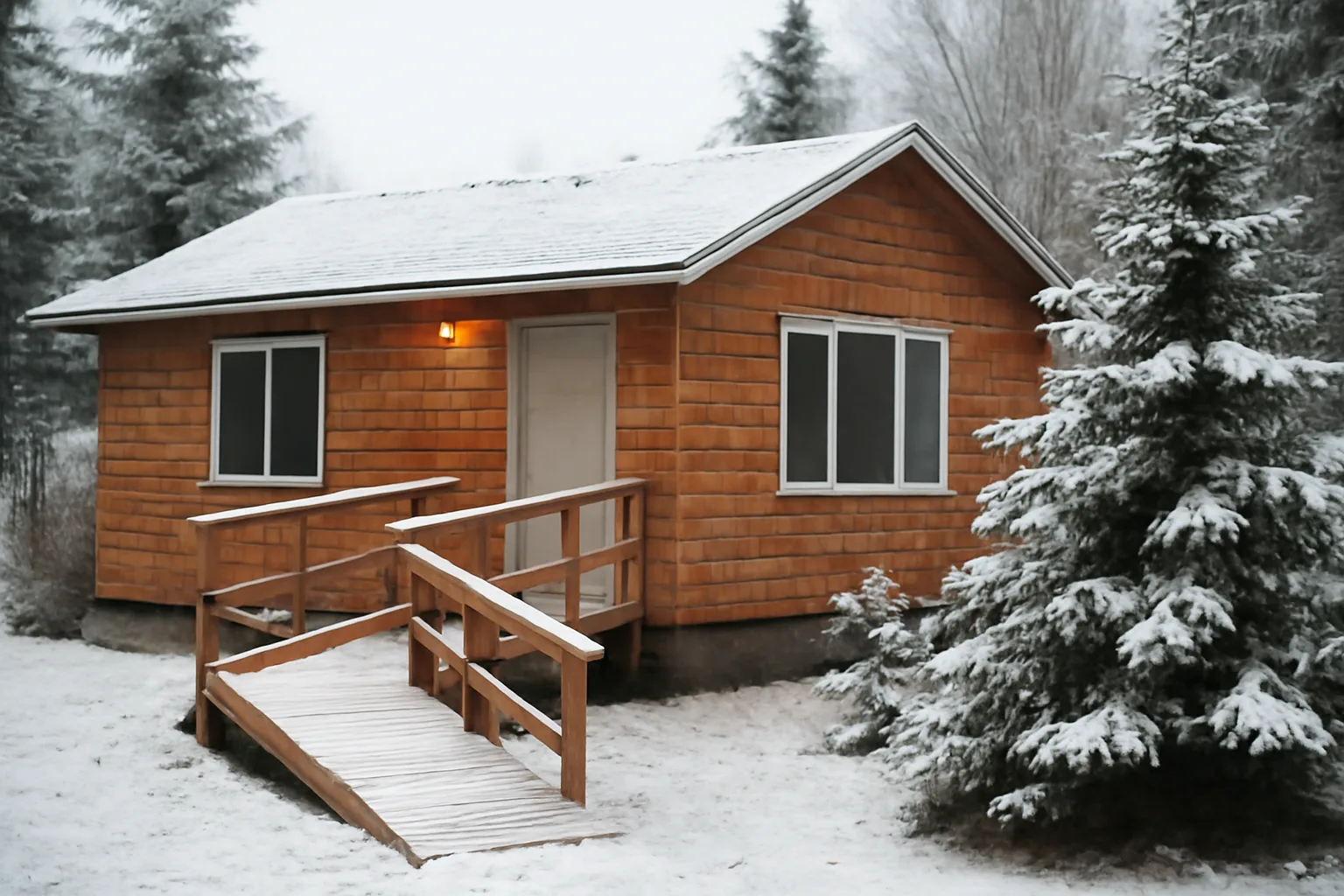
Assisted living is a housing and care option for people who need help with daily tasks like bathing, dressing, medication reminders, and meals, but who don't need round-the-clock skilled nursing care. It sits between independent living and a nursing home on the care spectrum. In Alaska, this level of care is delivered through a licensed category called an Assisted Living Home (ALH). The state's regulations define the services and the license type; there isn't a separate "assisted living facility" license distinct from the ALH designation. If you hear both terms used in Alaska, they're generally pointing at the same thing. [1] ALHs in Alaska can be small, sometimes just two or three residents in a converted house, or larger, purpose-built buildings serving dozens of people. The regulatory bar is the same regardless of size; only the staffing ratios and physical plant requirements scale up. [1]
What is a group home?
"Group home" is a broad, informal term. It usually means a residential setting, often a house in a regular neighborhood, where a small number of unrelated people live together and receive support or supervision from staff. The populations served vary a lot: seniors who need assistance with daily living, adults with intellectual or developmental disabilities, people in mental health recovery, or people in substance use recovery. The regulatory license backing a "group home" changes depending on who lives there and what care is provided. In Alaska, a group home serving older adults or adults needing personal care assistance is almost always licensed as an Assisted Living Home under 7 AAC 75. A group home serving people with developmental disabilities might instead fall under Alaska's home and community-based waiver rules through the Division of Senior and Disabilities Services. If you're planning to open a home, the first question to answer is which population you'll serve. That decision drives which license and rulebook applies. [1][2]
What is an assisted living facility (and what is assisted living facility, exactly, in Alaska)?
An assisted living facility, called an Assisted Living Home in Alaska's statutes, is a licensed residence that provides room, board, and personal care services to adults who need help with activities of daily living but don't require hospital-level or skilled nursing care. Alaska's regulations at 7 AAC 75 spell out what an ALH must provide: 24-hour on-site staff availability appropriate to resident needs, assistance with activities of daily living, medication assistance or administration consistent with the resident's assessed needs, and a safe, home-like physical environment. [1] ALH licenses in Alaska are typically categorized by capacity, and the physical plant, staffing, and fire/life safety requirements scale with the number of beds. A two-bed home in a residential neighborhood faces different (generally lighter) building code and staffing expectations than a 40-bed facility, though the core resident-rights and care-planning rules apply across the board. Confirm the specific capacity tiers and their requirements with the Alaska Department of Health, Division of Senior and Disabilities Services, or the assisted living licensing unit, since these thresholds are the kind of detail that gets updated in regulation amendments. [1] For readers comparing definitions across states, our assisted living facility guide breaks down how this term is used nationally, and assisted living facilities covers the plural, multi-state licensing angle if you're planning to operate in more than one jurisdiction.
What is assisted living vs nursing home? What is the difference between assisted living and nursing home?
| Regulating body | Alaska Department of Health, ALH licensing program | Alaska Department of Health, Health Facilities Licensing & Certification | |
|---|---|---|---|
| Core regulation | 7 AAC 75 [1] | 7 AAC 12 and federal SNF requirements [3] | |
| Level of care | Personal care, ADL assistance, medication help | 24-hour skilled nursing, physician-directed medical care | |
| Staffing | Direct care staff, not required to be RNs on every shift | Licensed nurses on duty around the clock | |
| Typical setting | Home-like, often smaller residential buildings | Institutional, hospital-adjacent building code | |
| Medicare coverage | Does not cover room and board | Covers up to 100 days per benefit period after a qualifying hospital stay, with cost-sharing after day 20 [4] | If a resident's needs go past what an ALH is licensed to provide (say, they need IV medications, wound vac care, or ventilator support), Alaska regulations generally require the home to arrange a transfer to a higher level of care. That's a resident-rights and safety issue, more than a business decision, and it comes up during inspections. [1] |
The core difference is the level of medical care and the underlying regulatory framework. Assisted living (Alaska's ALH) is a personal care and supportive housing model. Nursing homes, called skilled nursing facilities, provide 24-hour skilled nursing care ordered by a physician, for people who need medical monitoring, rehabilitation, or complex care that goes past what an ALH staff can legally provide. Here's a side-by-side comparison for Alaska specifically: | Feature | Assisted Living Home (ALH) | Nursing Home (Skilled Nursing Facility) |
What does assisted living provide?
An Alaska ALH is required to provide a defined package of services, and understanding this list matters both for prospective residents and for anyone drafting policy manuals or staffing plans for a new license application. At minimum, ALHs provide: room and board; assistance with activities of daily living (bathing, dressing, toileting, transferring, eating); medication assistance or administration based on an individual assessment; help with instrumental activities of daily living like laundry and light housekeeping; a safe and supervised environment with staff available 24 hours; and an individualized service plan developed with the resident (or their representative) and updated periodically. [1] What an ALH is not required, and generally not licensed, to provide: skilled nursing procedures, physician-level medical treatment, or hospital-level monitoring. Some ALHs contract with home health agencies or hospice for residents who need short-term skilled services while remaining in the home, but that's an arrangement layered on top of the base ALH license, not a substitute for it. A resident's individual service plan in Alaska is required to be based on an assessment of the resident's needs, and it has to be reviewed and updated as those needs change, more than at admission. [1] This is one of the first things surveyors check during an inspection, and it's also one of the easiest things to get wrong in a rushed startup. Every resident file needs a living document, not a one-time intake form.
Does Medicare cover assisted living facilities?
No. Medicare does not cover the room and board costs of assisted living, in Alaska or anywhere else. Medicare Part A covers inpatient hospital stays and, under specific conditions, a limited number of days in a skilled nursing facility following a qualifying hospital stay, but it was never designed to pay for long-term custodial or personal care in a residential setting. [4] Medicare.gov states plainly that "Medicare doesn't cover long-term care (also called custodial care)" and describes assisted living as an example of the kind of custodial care that falls outside coverage. [5] Medicare Part B may cover specific medical services a resident receives while living in assisted living (a doctor visit, physical therapy, durable medical equipment), but not the facility's daily rate itself. Medicaid is a different story, and it's the program most families and operators actually need to understand. Alaska Medicaid, through its home and community-based services waiver programs administered by the Division of Senior and Disabilities Services, can help cover personal care and some services for eligible low-income residents in certain ALH settings, though it typically doesn't cover the room and board portion either; that's usually paid privately or through SSI. Eligibility, covered services, and reimbursement rates are the kind of detail that changes with state budget cycles, so confirm current waiver terms directly with Alaska's Division of Senior and Disabilities Services or Medicaid.gov's state-specific waiver pages before quoting numbers to a resident's family. [6][2]
How to start a group home (and how do I start a group home) in Alaska
Starting a licensed group home or ALH in Alaska is a multi-step regulatory process, not a single application. Here's the realistic sequence, based on the structure of Alaska's ALH licensing program: 1. Decide your population and service model. Seniors needing personal care, adults with disabilities, or a different specialty population; this decision determines which license type and regulatory chapter applies. 2. Contact the Alaska Department of Health's assisted living licensing unit early, before signing a lease or making a purchase offer, to confirm current application requirements, fees, and capacity-based rules. [1] 3. Secure a property that meets zoning and building/fire code requirements for residential care use. Local zoning rules vary by municipality (Anchorage, Fairbanks, Juneau, and unincorporated areas all handle group home zoning differently), so check with your local planning department in addition to state licensing. Alaska's Fair Housing Act analog and federal fair housing law generally protect small group homes for people with disabilities from being zoned out as a "single-family residential" exclusion, but the specifics depend on capacity and local ordinance language. 4. Write your policy and procedure manual: admission and discharge criteria, medication management protocols, staffing plans, emergency and disaster procedures, resident rights notices, and an abuse/neglect reporting policy. Alaska's licensing survey process checks these documents against 7 AAC 75 requirements. [1] 5. Hire and train staff to meet the state's required staff-to-resident ratios and any administrator qualification rules (some capacity tiers require a licensed administrator or specific training hours; confirm current thresholds with the state). 6. Pass a pre-licensing inspection covering life safety, food service, medication storage, and physical plant requirements. 7. Submit your license application with the required fee. Alaska licensing fees are set by regulation and can change; get the current fee schedule directly from the Department of Health rather than relying on a third-party number. [1] 8. Once licensed, budget for ongoing costs: liability insurance, staff training renewals, annual license renewal, and unannounced survey visits. This is genuinely a lot of paperwork to track at once, application forms, a policy manual, staffing plans, and inspection prep checklists, and most first-time operators underestimate how long the policy manual alone takes to write correctly. If you want a structured starting point instead of building every document from a blank page, the State Group Home Licensing Kit is a $299 one-time toolkit with templates built around common state licensing requirements; you'll still need to confirm exact Alaska-specific fees, forms, and thresholds with the Department of Health, but it saves you from starting from zero.
What are Alaska's staffing and administrator requirements for ALHs?
Alaska requires ALHs to have staff on-site and awake or available (depending on resident acuity) 24 hours a day, with staffing levels tied to the number and needs of residents. [1] Larger ALHs typically need a designated administrator who meets specific training or education requirements set out in regulation. Exact ratios (for example, whether a specific number of direct care hours per resident per day is mandated, or whether staffing is need-based rather than a fixed ratio) are set in the regulatory text and updated periodically, so don't rely on a secondhand number when writing a staffing plan for a license application. Pull the current staffing subsection of 7 AAC 75 directly, or ask the licensing unit to point you to it in writing. [1] Medication administration is another area with specific training requirements in Alaska. Staff who administer medication (as opposed to just reminding a resident to take it) generally need to complete a state-approved medication administration training course before doing so unsupervised. This is one of the most commonly cited deficiencies in assisted living inspections nationally, more than in Alaska specifically, so it's worth building a strong internal training and documentation system from day one.
What does an Alaska ALH inspection look for?
Alaska conducts licensing surveys (inspections) to verify ongoing compliance with 7 AAC 75, and these typically happen on a regular cycle plus in response to complaints. Surveyors generally check: resident service plans and whether they match actual observed care, medication storage and administration records, staff training files, fire and life safety systems (smoke detectors, fire extinguishers, evacuation plans), food service and kitchen sanitation, and resident rights postings and grievance procedures. A deficiency during survey doesn't automatically mean license revocation; it typically triggers a plan of correction that the operator has to submit and implement within a set timeframe. Repeated or severe deficiencies (things that put resident health and safety at immediate risk) can lead to more serious action, up to license suspension or revocation, but that's the exception, not the norm, for homes running reasonable operations. The best inspection prep isn't a scramble the week before a survey. It's a daily operating habit: service plans reviewed on schedule, medication logs signed in real time (not backfilled), and incident reports filed the same day something happens. Surveyors can tell the difference between a home that documents as it goes and one that reconstructs records after the fact.
How much does assisted living cost in Alaska, and how does that compare nationally?
Alaska is consistently one of the more expensive states for long-term care, largely because of the state's high cost of goods, labor, and transportation for remote communities. Genworth's Cost of Care Survey, one of the most widely cited sources for these figures, has historically shown Alaska's assisted living median monthly cost running well above the national median, though exact current figures should be pulled from the latest survey year rather than an older cached number, since costs shift year to year with inflation and staffing wage pressure. [7] For operators building a pro forma or a family budgeting for care, the honest answer is: get the current year's figure directly from Genworth's published survey or a comparable current source, and don't quote an old number as if it's still accurate. Costs in Alaska also vary a lot by region; a home in Anchorage or the Mat-Su Valley will price very differently from one in a rural or remote community where staffing and supply costs run even higher. Neither Medicare nor most private insurance policies cover the base monthly rate. Long-term care insurance, veterans' benefits (like Aid and Attendance), and Medicaid waiver programs for those who qualify are the main non-private-pay funding paths, and each has its own eligibility rules worth checking directly with the relevant agency rather than assuming coverage.
How does Alaska's ALH license differ from licenses in other states?
Every state runs its own licensing scheme for residential care, and the terminology alone can trip up operators moving between states. Alaska uses "Assisted Living Home" as its formal license category under 7 AAC 75. [1] Other states use terms like "residential care facility," "personal care home," "board and care home," or "adult foster care," and the underlying rules (staffing ratios, admission/discharge criteria, medication rules, physical plant code) can differ meaningfully even when the marketing language sounds the same. If you're researching multiple states before deciding where to open, our assisted living facilities overview compares how states structure these licenses, and assisted living is a good starting reference for the general regulatory landscape before you dig into a specific state's chapter and forms. One practical implication for Alaska specifically: because much of the state is remote or has limited transportation infrastructure, plan review, life safety inspections, and even routine survey visits can take longer to schedule than in more urban states. Build extra lead time into your project timeline if your proposed location isn't in Anchorage, Fairbanks, or Juneau.
Can you run assisted living out of your own home in Alaska?
Small assisted living homes, sometimes just two or three residents, operating out of a converted single-family residence are common in Alaska and across the country. Alaska's ALH licensing structure does accommodate smaller-capacity homes with adjusted physical plant and staffing expectations compared to large facilities. [1] That said, "out of your own home" still means meeting the same core ALH requirements: a license, an individualized service plan for each resident, trained staff, medication protocols, and passing a fire/life safety inspection appropriate to a residential care occupancy classification, which may differ from a standard single-family residential fire code. Zoning is the other piece; check with your municipality's planning department to confirm a small ALH is a permitted or conditional use in your zoning district, since some residential zones restrict or require conditional use permits for group care homes above a certain resident count. For readers exploring this model in more depth, assisted living at home covers the small-home, residential-neighborhood version of this business model in more detail.
What should a first-time Alaska ALH operator budget for beyond the license fee?
The license application fee is usually the smallest line item in your startup budget, not the biggest. Realistic costs to plan for include: property acquisition or lease and any required renovations to meet fire/life safety code for a care occupancy, liability and workers' compensation insurance, staff wages and required training hours (medication administration training, first aid/CPR, abuse reporting training), an electronic health record or paper documentation system for service plans and medication administration records, food service costs and any required food handler permits, and a reserve fund for the gap between opening and reaching stable occupancy. Many states, and this is likely true in Alaska as well, require proof of financial solvency or a minimum operating reserve as part of the license application, precisely because a home running out of money mid-year with residents in place is a serious safety and continuity-of-care problem. Confirm Alaska's specific financial disclosure requirements with the Department of Health's licensing unit before you finalize your budget, since this is exactly the kind of requirement that gets missed by first-time applicants who focus only on the physical building and staffing plan. If you'd rather work from an organized checklist than piece this together from scattered regulation PDFs, the State Group Home Licensing Kit bundles policy manual templates, staffing plan worksheets, and an inspection readiness checklist for a one-time $299 fee. It's built to shortcut the drafting work; you'll still confirm Alaska-specific fee amounts, forms, and current regulatory citations with the state before you submit anything.
Frequently asked questions
What is assisted living?
Assisted living is housing paired with personal care services, help with bathing, dressing, medication, and meals, for people who need daily support but not skilled nursing care. In Alaska this care model is licensed as an Assisted Living Home (ALH) under 7 AAC 75, covering everything from small two- or three-bed homes to larger facilities.
What is a group home?
A group home is a residential setting where a small number of unrelated people live together with staff support, often in a regular house rather than an institutional building. The specific license backing it depends on who lives there; in Alaska, homes serving seniors or adults needing personal care are typically licensed as Assisted Living Homes.
What is an assisted living facility?
An assisted living facility is a licensed residence providing room, board, and personal care to adults who need help with daily activities but not hospital-level medical care. Alaska calls this license category an Assisted Living Home (ALH), regulated under 7 AAC 75 by the state Department of Health.
What is assisted living facility, in plain terms?
It's a licensed home, ranging from a few beds to dozens, where staff help residents with tasks like bathing, dressing, and medication, and provide 24-hour supervision. It is not a hospital or skilled nursing facility, and it doesn't provide round-the-clock medical treatment.
What is assisted living vs nursing home?
Assisted living provides personal care and supportive housing; a nursing home (skilled nursing facility) provides 24-hour physician-directed medical and nursing care. In Alaska, ALHs fall under 7 AAC 75, while nursing homes are licensed separately and must meet federal skilled nursing facility conditions of participation.
What does assisted living provide?
At minimum: room and board, help with activities of daily living (bathing, dressing, transferring), medication assistance, an individualized service plan, and 24-hour staff availability. It does not include skilled nursing procedures or hospital-level medical monitoring, which require a different license.
How to start a group home in Alaska?
Pick your resident population, contact Alaska's ALH licensing unit for current requirements, secure a compliant property, write your policy manual and staffing plan, hire and train staff, pass a pre-licensing inspection, and submit your application with the required fee. Confirm every fee and threshold directly with the Department of Health, since these change.
What is the difference between assisted living and nursing home care?
Assisted living is for people who need help with daily tasks but are otherwise fairly independent; nursing homes are for people who need ongoing skilled medical or nursing care. The regulatory chapters, staffing requirements, and physical plant codes differ significantly between the two license types in Alaska.
Does Medicare cover assisted living facilities?
No. Medicare does not pay for the room and board or custodial care costs of assisted living. It may cover specific medical services (doctor visits, therapy) a resident receives while living there, and it covers limited days in a skilled nursing facility after a qualifying hospital stay, but not ongoing assisted living costs.
How do I start a group home if I've never run one before?
Start by researching your target state's specific license category (in Alaska, that's the Assisted Living Home license under 7 AAC 75), talk to the licensing agency directly before committing to a property, and build your policy manual and staffing plan around their current regulations rather than assumptions from other states.
Does Alaska Medicaid pay for assisted living?
Alaska Medicaid, through home and community-based services waiver programs, can help cover personal care services for some eligible low-income residents in certain settings, but it typically doesn't cover room and board. Confirm current eligibility and covered services with Alaska's Division of Senior and Disabilities Services and Medicaid.gov.
Can a small home with two or three residents be licensed as assisted living in Alaska?
Yes, Alaska's ALH licensing structure accommodates small-capacity homes with staffing and physical plant expectations scaled to the resident count. You'll still need a license, an individualized service plan per resident, trained staff, and a fire/life safety inspection appropriate to a care occupancy.
What happens during an Alaska assisted living inspection?
Surveyors review resident service plans against observed care, medication records, staff training files, fire and life safety systems, food service sanitation, and resident rights compliance. Deficiencies usually trigger a required plan of correction rather than immediate license action, unless the issue poses an immediate safety risk.
Sources
- Alaska Department of Health, Assisted Living Homes regulations: Alaska licenses assisted living under 7 AAC 75, defining required services, staffing, and administrator requirements for Assisted Living Homes
- Alaska Statutes, Senior and Disabilities Services / Medicaid waiver authority, AS 47.07.045: Alaska's home and community-based waiver programs, administered through the state's senior and disabilities services structure, are the statutory basis for Medicaid-funded personal care services relevant to assisted living residents
- CMS, State Operations Manual, Skilled Nursing Facilities: Skilled nursing facilities must meet federal conditions of participation distinct from assisted living/personal care regulation
- Medicare.gov, Skilled Nursing Facility Care Coverage: Medicare covers up to 100 days per benefit period in a skilled nursing facility following a qualifying hospital stay, with cost-sharing after day 20
- Medicare.gov, Long-Term Care: Medicare does not cover long-term custodial care, including assisted living room and board
- Medicaid.gov, Home & Community-Based Services: Medicaid HCBS waivers may cover personal care services for eligible residents in community-based settings, generally excluding room and board
- Genworth Cost of Care Survey: Genworth's Cost of Care Survey tracks assisted living costs by state, including Alaska, showing regional cost variation