Last updated 2026-07-25
TL;DR
DDD group homes in Arizona are licensed residential care settings for adults with developmental disabilities, regulated by the Arizona Department of Economic Security (DES). Homes may serve one to 10 individuals depending on license type, with Medicaid funding available through the Division of Developmental Disabilities (DDD). Licensing requires facility inspection, staffing plans, 40 hours of initial training, and compliance with Arizona Administrative Code Title 6, Chapter 5.
What are DDD group homes in Arizona?
DDD group homes in Arizona are licensed residential care facilities that provide 24-hour supervision, personal care assistance, and skill-building support for adults with intellectual and developmental disabilities. These homes are certified through the Arizona Department of Economic Security (DES) Division of Developmental Disabilities (DDD), which serves approximately 40,000 Arizonans with conditions like autism, cerebral palsy, Down syndrome, and traumatic brain injury [1]. The term "DDD group home" refers specifically to homes contracted to serve DDD members, not merely any residential setting. Arizona law distinguishes between assisted living facilities (which primarily serve seniors or adults with physical disabilities) and Adult Developmental Home settings designed for the DDD population. The regulatory framework sits under Arizona Administrative Code Title 6, Chapter 5, Article 9, which governs group homes and adult developmental homes [2]. Capacity ranges from one to ten residents, depending on license type. A Group Home license permits four to ten residents, while a smaller Adult Developmental Home may serve one to three residents [2]. Most DDD members in group homes receive funding through Arizona's Long-Term Care System (ALTCS) for developmentally disabled adults, which covers room, board, personal care, and habilitative services. Starting a DDD group home means you're entering a highly regulated, Medicaid-funded sector. You'll need a DES license, a Medicaid provider agreement, trained staff, and a home that meets physical plant standards. It's not a fast process, and it's not a low-investment business. You're serving vulnerable adults, and Arizona's Division of Licensing Services (within OHCQS, the Office of Health Care Quality and Safety) takes compliance seriously.
How are DDD group homes different from assisted living facilities?
An assisted living facility in Arizona is a residential care institution (RCI) licensed under A.R.S. § 36-401 and Arizona Administrative Code Title 9, Chapter 10, designed primarily for seniors or adults with physical disabilities who need help with activities of daily living like bathing, dressing, and medication management [3]. Most assisted living residents are older adults. Staff help with daily tasks but typically don't provide the intensive behavioral support or habilitative training required for adults with intellectual disabilities. DDD group homes, by contrast, are licensed specifically to serve adults with developmental disabilities. Staff training requirements are different: caregivers in DDD homes must complete 40 hours of initial training covering topics like positive behavior support, crisis intervention, and individual service plan implementation, plus 24 hours of annual continuing education [2]. Homes often employ direct support professionals (DSPs) trained in Applied Behavior Analysis, de-escalation techniques, and communication strategies for nonverbal residents. Funding models differ too. Assisted living residents usually pay privately or through Arizona's ALTCS program for elderly and physically disabled adults. DDD group home residents are funded almost exclusively through ALTCS for developmentally disabled adults (DDD/EPD waivers), which is a separate Medicaid program with distinct service definitions, billing codes, and rate structures [4]. Physically, homes look similar: single-family houses or small residential buildings in typical neighborhoods. But a DDD group home's environment is tailored to residents with cognitive or behavioral needs. You'll see visual schedules, sensory-friendly spaces, and safety measures like locked medication storage and sometimes reinforced door hardware for individuals with elopement risk. Staffing ratios are often higher. A four-resident DDD home might have one staff member awake overnight, while a four-resident assisted living might have overnight staff awake only if care plans demand it. If you're deciding which license to pursue, ask yourself: are you equipped to support adults with autism who might be nonverbal, adults with Down syndrome who need habilitation services, or adults with traumatic brain injury who have complex behavioral plans? If not, a standard assisted living license for seniors is a simpler regulatory path. If yes, DDD licensure and Medicaid provider enrollment are your gates.
What does Arizona DES require to license a DDD group home?
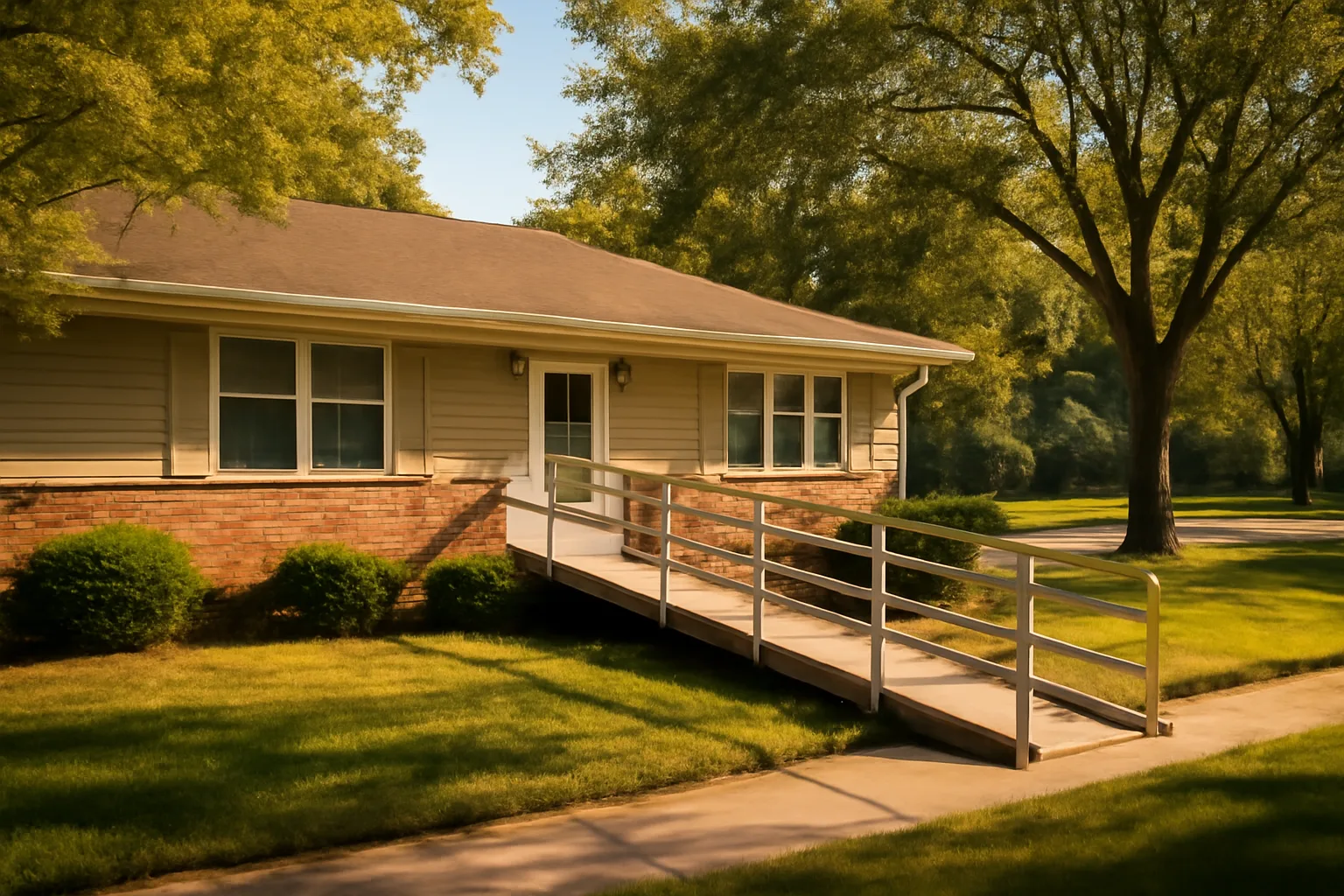
Arizona's licensing process for DDD group homes is administered by the Office of Health Care Quality and Safety (OHCQS), part of DES. You'll apply for either a Group Developmental Home license (four to ten residents) or an Adult Developmental Home license (one to three residents), depending on your planned capacity and the acuity of residents you intend to serve [2]. First, you need a physical location that meets zoning and building code. Arizona counties and municipalities regulate land use. Most residential zones allow group homes under federal and state fair housing laws, but some cities cap the number of homes per area or require conditional use permits for homes serving more than four unrelated adults. Phoenix, Tucson, Mesa, and Scottsdale each have nuanced zoning codes. Confirm local rules before leasing or purchasing property. Your home must pass a physical plant inspection. Requirements include working smoke detectors in every bedroom and common area, a fire extinguisher on each floor, egress windows in bedrooms, hot water temperature not exceeding 120°F, and secure medication storage [2]. If you're retrofitting a single-family home, budget for railings, ramps (if serving individuals with mobility limitations), and potentially a commercial-grade kitchen if your capacity exceeds six residents. Next, you'll submit an application through the DES OHCQS licensing portal. You'll need articles of incorporation (if you're forming an LLC or corporation), a completed criminal background clearance for the administrator and all direct-care staff, proof of general liability insurance (typically $1 million per occurrence), and a staffing plan showing 24-hour coverage [2]. Arizona requires Level 1 fingerprint clearance cards for every employee with direct resident contact; these cost $67 per person and take two to four weeks to process [5]. The administrator (the person legally responsible for the home's operation) must complete DES-approved training: 40 hours of initial instruction covering medication administration, infection control, resident rights, and emergency procedures, plus eight hours annually thereafter [2]. Direct-care staff need the same 40 hours initially and 24 hours of continuing education each year. DES publishes a list of approved training vendors; in-person courses run $300 to $600 per person. You'll also need policies and procedures covering admission criteria, individual service plans, incident reporting, medication management, behavior support, dietary services, transportation, and emergency response [2]. DES publishes a sample policy manual, but you'll tailor it to your home's population and services. If you're purchasing a ready-made compliance package (like the one from GroupHomePath at /licensing-kit-builder), you'll still need to customize forms with your administrator's name, address, and local emergency contacts. After DES receives your complete application, a licensing specialist schedules an on-site survey. The surveyor walks every room, reviews your policies, interviews you about staffing and resident care, and checks that your training records are current. If the survey finds deficiencies, you'll receive a Statement of Deficiencies and have a set time frame to correct them. Plan for three to six months from application submission to license issuance, assuming no major compliance issues. The license fee is $400 for an Adult Developmental Home and $500 for a Group Developmental Home, renewable annually [2]. Budget another $1,500 to $3,000 for pre-licensing costs: fingerprints, training, insurance deposits, and any property modifications.
How do Medicaid funding and DDD rates work in Arizona?
Once you have your DES license, you'll apply for a Medicaid provider agreement through the Arizona Health Care Cost Containment System (AHCCCS), Arizona's Medicaid agency. DDD members are enrolled in AHCCCS through the Division of Developmental Disabilities' ALTCS program for the developmentally disabled (DDD/EPD waiver) [4]. Without a Medicaid provider number, you cannot bill for services or receive reimbursement. Arizona's DDD system uses a fee-for-service model for group home services, reimbursed at a daily or monthly rate depending on the resident's acuity level. As of 2023, group home reimbursement rates ranged from approximately $160 to $275 per day per resident, depending on the level of support required (Level 1 through Level 6 in Arizona's DDD rate structure) [4]. Higher acuity means more intensive staffing, behavior plans, and medical coordination, and correspondingly higher reimbursement. Rates cover room, board, supervision, personal care, habilitative services, and some transportation. They do not cover medical care, therapies delivered by licensed practitioners, or adaptive equipment; those are billed separately by physicians, therapists, or durable medical equipment suppliers. You are responsible for ensuring that meals meet nutritional standards, the home is maintained, and staff are trained and scheduled to meet each resident's individualized service plan. Payment is monthly. You submit billing through Arizona's Medicaid Management Information System (MMIS) or a contracted billing vendor. Expect payment 14 to 30 days after claim submission if your documentation is clean. Late or incomplete billing triggers audits and potential recoupment. Before you receive your first resident, you'll coordinate with a DDD support coordinator (case manager) who works with the individual and their family to arrange placement. The support coordinator ensures the resident's individualized service plan matches your home's staffing and capabilities. You'll sign a residential placement agreement and begin billing on the resident's move-in date. Arizona's DDD has a waiting list for services (over 7,000 individuals as of 2023), but once a person is enrolled and receiving services, group home capacity is the limiting factor, not funding [1]. Demand for quality DDD homes is consistent, especially in Maricopa, Pima, and Pinal counties. If you maintain compliance, treat residents and families well, and manage staff turnover, you'll have referrals.
What staffing and training does Arizona require for DDD group homes?
Arizona mandates 24-hour awake staffing for group homes serving four or more residents [2]. For Adult Developmental Homes (one to three residents), overnight staffing requirements depend on residents' individualized service plans; some may allow overnight sleep-shift staff, others require awake supervision. Staff-to-resident ratios vary by acuity. A typical four-resident home with moderate support needs might have one direct support professional (DSP) on each shift: morning (7 a.m. to 3 p.m.), evening (3 p.m. to 11 p.m.), and overnight (11 p.m. to 7 a.m.). If residents have higher behavioral or medical needs, you may need two staff during waking hours. DES doesn't publish a rigid ratio chart; instead, your staffing plan must demonstrate that coverage meets each resident's service plan. Every staff member with direct resident contact needs a Level 1 fingerprint clearance card before their first day [5]. You're prohibited from employing anyone with certain disqualifying criminal convictions (violent felonies, sexual offenses, exploitation of vulnerable adults). The fingerprint process takes two to four weeks, so plan hiring timelines accordingly. Initial training is 40 hours and must be completed within 90 days of hire [2]. Topics include medication administration (including the DES-approved Medication Administration Training, or MAT), positive behavior support, prevention and reporting of abuse and neglect, resident rights, cultural competency, infection control, emergency procedures, and confidentiality. DES approves specific training providers; you cannot substitute generic online courses unless they're on the approved list. After the first year, staff complete 24 hours of continuing education annually [2]. This includes updates on behavior support techniques, changes to DDD policy, CPR and first aid recertification, and any specialized training for residents' specific diagnoses (for example, seizure recognition or diabetes management if a resident has those conditions). Administrators must also complete eight hours of continuing education each year, covering regulatory updates, quality assurance, and leadership topics [2]. Medication administration is tightly regulated. Only staff who have completed Arizona's Medication Administration Training (a six-hour course plus competency demonstration) may administer prescription medications [2]. If a resident self-administers with supervision, you still document every dose. DES surveyors audit medication records on every inspection, looking for missed doses, transcription errors, or expired medications. You'll also train staff on each resident's individualized service plan, which includes goals, behavior intervention plans, dietary restrictions, communication strategies, and emergency contacts. This training is documented and updated whenever the plan changes. Recruitment is one of the hardest operational challenges. Arizona's direct support professional wage averages $14 to $16 per hour, and turnover in the field runs 40% to 60% annually [6]. Successful operators invest in thorough onboarding, mentorship, and recognition programs. Some pay for staff fingerprint clearances and initial training as a hiring incentive.
What property and zoning rules apply to DDD group homes in Arizona?
Federal and Arizona fair housing law protects group homes from discriminatory zoning. The Fair Housing Act, as interpreted by HUD and federal courts, treats group homes for people with disabilities as "family" residences, meaning they're allowed by right in any zone that permits single-family dwellings [7]. Arizona's fair housing statutes mirror this protection. However, cities and counties may still impose reasonable regulations that apply equally to all group living arrangements. Some municipalities cap the number of residents in single-family homes to five or six unrelated individuals. Others require a conditional use permit or special permit for homes serving more than a threshold number. Phoenix's zoning code, for example, allows community residential care facilities by right in most residential zones but limits occupancy and requires spacing (no two such facilities within 1,200 feet) [8]. Before you lease or buy a property, contact the city or county planning department and ask: "I plan to operate a licensed adult developmental home serving four adults with developmental disabilities. What zoning approvals or permits do I need?" Get the answer in writing. Zoning disputes after lease signing cost time and money. The home must meet building and fire codes for its occupancy type. Single-family homes typically fall under residential occupancy (R-3) if they serve fewer than six residents. Homes serving six or more may trigger R-4 (residential care) or I-1 (institutional) classification, which requires additional fire safety measures like sprinklers, fire-rated doors, and hard-wired smoke alarms. Work with a local code consultant or architect if you're retrofitting a property. Accessibility standards depend on residents' needs. If you serve individuals with mobility impairments, you'll need accessible entrances, bathrooms, and bedroom access. Arizona follows the Americans with Disabilities Act (ADA) and federal accessibility guidelines [9]. A five-step stoop with no ramp isn't compliant if a resident uses a wheelchair. Landlords sometimes hesitate to lease to group home operators, fearing property wear or liability. Address this by offering higher security deposits, showing proof of your liability insurance, and explaining your DES license and oversight. Some operators purchase homes instead of leasing, financing through commercial mortgages or Small Business Administration (SBA) loans. A lender experienced with healthcare real estate understands the model better than a retail mortgage broker. Neighbor opposition occasionally flares when a group home opens. Arizona law prohibits zoning discrimination, but you'll smooth community relations by being a good neighbor: maintaining the property, managing traffic and noise, and introducing yourself to nearby residents. Most neighborhoods have no issue once they see the home operates quietly and professionally.
How do I start a DDD group home in Arizona step by step?
Starting a DDD group home in Arizona takes planning, capital, and patience. Here's the realistic sequence. First, decide your model: will you operate one home yourself as a small business, or build a multi-home organization? A single four-resident home is manageable for a hands-on owner-operator with a background in disability services. Scaling to multiple homes means hiring site managers, centralized training, and more complex billing. Start with one. Second, form a legal entity. Most operators form an Arizona LLC or corporation. An LLC offers liability protection and simpler tax treatment. Register with the Arizona Corporation Commission (azcc.gov), obtain an Employer Identification Number (EIN) from the IRS, and open a business bank account. Budget $200 for formation and filing fees. Third, secure a property. Look in Maricopa County (Phoenix, Mesa, Scottsdale, Glendale), Pima County (Tucson), or other metro areas where DDD demand is high. Ideal homes are single-story, three to five bedrooms, in residential neighborhoods with access to shopping, medical services, and community activities. Lease terms should be at least three years to recover your startup investment. Negotiate a clause allowing your licensed use. Fourth, apply for your DES license. Download the application packet from the DES OHCQS website (des.az.gov/services/child-and-family/licensing). Complete the facility information, staffing plan, administrator qualifications, and policy manual. Submit fingerprint clearance applications for yourself and any initial staff. Pay the license application fee. DES will schedule a pre-licensing inspection within 30 to 60 days. Fifth, prepare the home for inspection. Install smoke detectors, fire extinguisher, first-aid kit, secure medication storage, and hot-water temperature limiters. Print and organize your policies, training records, emergency contact lists, and resident rights documentation. The surveyor will check that bedrooms are adequately sized (Arizona requires at least 80 square feet per resident in a bedroom, 100 square feet for shared rooms) [2]. Have maintenance records for furnace, water heater, and any medical equipment. Sixth, complete your training and staff training. Enroll in a DES-approved 40-hour administrator course. If you're hiring staff before opening, send them to training too. Budget $300 to $600 per person. Some training is online; some requires in-person attendance. Plan two to three weeks to complete it. Seventh, pass the DES inspection and receive your provisional or full license. If DES identifies deficiencies, correct them within the specified timeframe and request a re-inspection. Once you have your license, you can legally operate, but you still can't bill Medicaid until you complete the next step. Eighth, apply for your AHCCCS Medicaid provider number. Submit the AHCCCS Group Home Provider Enrollment Application, proof of DES licensure, proof of liability insurance, W-9, and ownership disclosure forms. AHCCCS processing takes 30 to 90 days. You'll receive a provider number and billing instructions. Ninth, contract with the DDD Division and begin receiving referrals. Contact DDD regional offices and support coordinators to let them know you have openings. Attend DDD provider meetings and build relationships. When a support coordinator has a client ready for placement, they'll contact you, share the individual's service plan, and arrange a meeting. If it's a good match, the resident moves in and you begin billing. Tenth, open your doors and deliver care. Document everything: daily progress notes, incident reports, medication administration records, staff timesheets, training logs, and service plan reviews. DES conducts annual renewal inspections and may perform complaint investigations at any time. Clean records and happy families are your best defense against regulatory trouble. Total startup capital for a single four-resident home runs $30,000 to $75,000, covering lease deposits, property modifications, furniture and supplies, insurance, training, licensing fees, and three to six months of operating reserves before Medicaid revenue starts flowing. You won't make money the first six months; plan to cover payroll and rent from savings or a business loan. Some operators partner with experienced DDD providers as consultants during startup. Others buy turnkey packages that include policies, training coordination, and billing setup. GroupHomePath's Arizona DDD licensing kit at /licensing-kit-builder consolidates the state-specific paperwork and policies, saving you weeks of template-building, but you still own the compliance work and relationship with DES.
What ongoing inspections and compliance does Arizona DES conduct?
Arizona DES conducts annual renewal surveys of every licensed group home [2]. The surveyor arrives unannounced (or with minimal notice) and spends several hours reviewing records, touring the home, interviewing staff, and sometimes speaking with residents. You'll be asked to produce training logs, medication administration records, incident reports, menus, fire drill logs, staff schedules, and individualized service plans. Surveyors look for compliance with Arizona Administrative Code Title 6, Chapter 5, Article 9 and DES licensing standards [2]. Common deficiency areas include incomplete training documentation, medication errors (missed doses, transcription mistakes, expired medications), missing or outdated policies, insufficient staffing during shifts, and failure to report critical incidents within required timeframes. If deficiencies are found, you'll receive a Statement of Deficiencies and a deadline to submit a Plan of Correction. Minor deficiencies (like an outdated policy manual section) might give you 30 days. Serious deficiencies (like unsupervised residents or medication errors that caused harm) trigger follow-up inspections and can result in civil penalties, provisional licensure, or license revocation. Arizona also conducts complaint investigations whenever someone reports alleged abuse, neglect, exploitation, or licensing violations [2]. Complaints may come from family members, staff, or anonymous reporters. DES takes complaints seriously; an investigator will interview staff and residents, review records, and issue findings. If substantiated, you face penalties. If unsubstantiated, your file reflects the investigation but no action. You're required to report critical incidents to DES within specified timeframes: immediately for life-threatening events (hospitalization, suicide attempt, serious injury), within 24 hours for less urgent but significant incidents (medication errors, resident altercations, allegations of abuse), and within five days for other reportable events (falls without injury, elopements with safe return) [2]. Learn the reporting matrix and document every incident with date, time, individuals involved, staff response, and follow-up. Medicaid audits are separate from DES licensing surveys. AHCCCS and the DDD Division periodically audit provider billing records to verify that services billed were actually delivered. Auditors compare your billing claims to progress notes, service plans, and staff timesheets. If you billed for a service not documented or not delivered, you'll face recoupment (paying back the improperly billed amount) and potential fraud investigation. Keep detailed daily notes: who was on shift, what activities residents participated in, any incidents, and any changes to care plans. Maintaining compliance is a daily discipline. One operator I'd trust advises: "Treat every day like the surveyor is coming tomorrow. If your records are current, your staff are trained, and your home is safe, an inspection is just paperwork."
What insurance and liability protections do DDD group home operators need?
Arizona requires general liability insurance with minimum coverage of $1 million per occurrence and $3 million aggregate for group homes [2]. This protects you if a resident is injured on your property, if a visitor is harmed, or if you're sued for negligence. Purchase a policy through a carrier experienced with group homes or disability services; not every insurer understands the risk profile. Professional liability (errors and omissions) insurance covers claims arising from professional services you provide, like medication administration errors, failure to follow a behavior plan, or improper supervision. Coverage limits of $1 million per claim are standard. Premiums run $2,000 to $5,000 annually for a four-resident home, higher for larger or higher-acuity facilities. Workers' compensation insurance is mandatory in Arizona if you have employees. It covers medical costs and lost wages if a staff member is injured on the job (for example, a back injury from assisting a resident with transfers, or an injury during a behavioral incident). Premiums are calculated per $100 of payroll and vary by job classification; direct support professionals are classified as caregivers (higher risk than office workers), so expect premiums around $3 to $6 per $100 of payroll. Property insurance covers the building and contents if you own the home, or contents (furniture, equipment, supplies) if you lease. Landlords may require tenants to carry renter's insurance. Budget $800 to $1,500 annually. Business auto insurance is essential if you transport residents. Arizona requires auto liability coverage, and you'll want higher limits (at least $1 million) plus medical payments coverage. If staff use their personal vehicles to transport residents, your policy should include hired and non-owned auto coverage. Abuse and molestation coverage is increasingly required by licensing agencies and contracts. It covers defense and settlements if you're accused of abuse or neglect. Premiums vary widely depending on claims history and policy limits. An umbrella or excess liability policy adds another layer of protection above your general liability and auto liability limits. A $2 million umbrella costs $500 to $1,000 annually and can be a lifesaver in a major lawsuit. Total annual insurance costs for a small DDD group home run $8,000 to $15,000, depending on home size, staffing, and coverage limits. Shop policies through an independent agent who works with other group home operators; they'll know which carriers offer the best terms and won't balk at the risk.
What resources and support does Arizona DDD provide to group home operators?
The Arizona Division of Developmental Disabilities offers training, technical assistance, and provider supports to licensed group home operators. DDD hosts quarterly provider forums in each region (Central, Northern, and Southern Arizona) where you can ask policy questions, learn about rate updates, and network with other operators [1]. DDD's Provider Relations Unit publishes the Provider Resource Manual, a detailed guide covering billing, service definitions, documentation standards, and compliance expectations [4]. It's updated regularly and available on the DDD website (des.az.gov/ddd). Bookmark it; it answers 80% of operational questions. The Office of Health Care Quality and Safety (OHCQS) offers a licensing consultant assigned to your region who answers questions about regulations, interprets policy, and helps you prepare for surveys [2]. Call or email your consultant before making major operational changes (like increasing capacity or adding a new service). They'd rather help you stay compliant than write deficiencies. DDD also funds the Institute for Human Development at Northern Arizona University, which provides training for direct support professionals and administrators. Courses cover person-centered planning, positive behavior support, health and wellness, and rights and responsibilities. Many trainings are free or low-cost and qualify for continuing education credit. Arizona's Developmental Disabilities Planning Council (ADDPC) advocates for policy improvements and publishes resources on best practices, employment supports, and community inclusion. They host annual conferences and offer small grants for innovative programs. Peer organizations like the Arizona Association of Providers for People with Disabilities (AZAPD) connect you with other group home operators, share compliance updates, and lobby on regulatory issues. Membership costs a few hundred dollars annually and is worth it for the network alone. If you're struggling with a specific resident's behavioral needs, DDD's crisis teams and behavioral health providers can consult. If a resident's service plan isn't working, request a team meeting with the support coordinator, behavior specialist, and family to revise it. DDD also provides a 24-hour crisis line (1-888-404-4440) for urgent situations: medical emergencies, psychiatric crises, or safety threats [1]. Use it when you need immediate backup.
Does Medicare cover group home services in Arizona?
No. Medicare does not cover room and board or custodial care in group homes [10]. Medicare Part A covers skilled nursing facility stays, inpatient hospital care, and limited home health services, but only when the individual requires skilled nursing or therapy that cannot be provided in a non-institutional setting. Medicare Part B covers outpatient medical services, therapy, and durable medical equipment, but not the residential setting itself. DDD group home services in Arizona are funded almost exclusively by Medicaid (AHCCCS), specifically through the ALTCS program for the developmentally disabled [4]. Residents enrolled in the DDD Division's Medicaid waiver receive coverage for room, board, 24-hour supervision, personal care, habilitation, case management, and most therapies. Arizona's DDD waiver is one of the state's 1915(c) Home and Community-Based Services waivers, authorized under federal Medicaid law to serve people who would otherwise require institutional care. Some DDD group home residents are "dual eligible," meaning they have both Medicare and Medicaid. In that case, Medicare pays for covered medical services (doctor visits, prescriptions under Part D, hospital stays), and Medicaid covers the residential and long-term care services Medicare won't pay for. The home bills Medicaid for the daily residential rate and coordinates with Medicare providers for medical care. If a resident is not Medicaid-eligible, they (or their family) would pay the full cost of group home services privately. Private-pay rates in Arizona's DDD group home market typically range from $5,000 to $9,000 per month, depending on acuity and services. Most families cannot afford that long-term, which is why nearly all DDD group home residents are Medicaid-funded. As an operator, you will not bill Medicare for your core services. Your revenue is Medicaid reimbursement. Budget and cashflow accordingly; do not assume any Medicare revenue stream.
What's the difference between assisted living and nursing home care in Arizona?
Assisted living and nursing home care serve different populations with different care needs, and they're regulated under different statutes in Arizona. An assisted living facility in Arizona is a residential care institution licensed under Arizona Revised Statutes § 36-401 and regulated by the Arizona Department of Health Services (not DES) [3]. Residents are typically seniors or adults with physical disabilities who need help with activities of daily living like bathing, dressing, grooming, medication management, and meals, but who do not require 24-hour skilled nursing. Assisted living is a social model of care: staff provide supervision and personal assistance, but they're not registered nurses delivering medical treatments. Nursing homes (skilled nursing facilities) are licensed as healthcare institutions under A.R.S. § 36-401 and regulated by the Arizona Department of Health Services . They provide 24-hour skilled nursing care delivered by RNs and LPNs, serving individuals with complex medical needs, post-surgical recovery, advanced dementia, or end-of-life care. Nursing homes are medical environments. They look like hospitals: shared rooms, nurse call systems, medication carts, therapy gyms. Medicare covers short-term skilled nursing stays (up to 100 days per benefit period following a hospital admission), and Medicaid covers long-term nursing home care for eligible individuals. DDD group homes sit somewhere between assisted living and nursing homes in terms of oversight, but they're not on the same continuum. They serve a distinct population (adults with developmental disabilities) with a distinct care philosophy (habilitation, skill-building, community integration) and a distinct funding source (Medicaid DDD waiver). A resident in a DDD group home might not qualify for assisted living (because they're under 55 and don't have a physical disability) or nursing home care (because they don't require skilled nursing). Some DDD group home residents do eventually need nursing home care if they develop complex medical conditions, advanced age-related decline, or behaviors that cannot be safely managed in a community setting. When that happens, the DDD support coordinator arranges transfer to a nursing facility or a specialized behavioral health setting. But the goal in DDD services is to keep people in community homes as long as safely possible.
Frequently asked questions
What is assisted living?
Assisted living is a residential care setting for seniors or adults with physical disabilities who need help with daily tasks like bathing, dressing, and medication management but don't require 24-hour skilled nursing. In Arizona, assisted living facilities are licensed as residential care institutions under A.R.S. § 36-401 and serve a primarily elderly population, distinct from DDD group homes that serve adults with developmental disabilities.
What is a group home?
A group home is a licensed residential facility serving a small number of individuals (typically one to ten) who share a common need for supervision and support. In Arizona, DDD group homes specifically serve adults with intellectual and developmental disabilities, providing 24-hour care, personal assistance, and habilitative services under DES licensure and Medicaid funding.
What is an assisted living facility?
An assisted living facility is a state-licensed residential care institution offering housing, meals, personal care assistance, medication management, and social activities for seniors and adults with physical disabilities who do not need skilled nursing. Arizona licenses them under Title 9, Chapter 10 of the Administrative Code, separate from DDD group homes.
What is assisted living vs nursing home?
Assisted living provides personal care and supervision for people who need help with daily tasks but not medical treatment, while nursing homes deliver 24-hour skilled nursing care for individuals with complex medical conditions, post-surgical recovery, or advanced dementia. Medicare covers short-term nursing home stays; assisted living is typically private-pay or Medicaid ALTCS in Arizona.
What does assisted living provide?
Assisted living provides housing, meals, housekeeping, personal care assistance (bathing, dressing, grooming), medication management, social and recreational activities, and 24-hour supervision in a residential setting. It does not include skilled nursing, intensive therapy, or treatment for severe behavioral or psychiatric conditions, which require nursing homes or specialized facilities.
How to start a group home?
To start a DDD group home in Arizona, form a legal entity, secure a residential property that meets zoning and building codes, apply for a DES license (Adult Developmental Home or Group Developmental Home), complete 40 hours of administrator training, pass a DES facility inspection, obtain a Medicaid provider number from AHCCCS, and contract with the DDD Division to receive referrals. Budget $30,000 to $75,000 for startup costs and three to six months for licensing.
What is the difference between assisted living and nursing home?
Assisted living is a non-medical residential setting for people needing help with daily activities; nursing homes provide skilled nursing and medical care. Assisted living staff assist with bathing and medications; nursing home staff include RNs and LPNs administering treatments. Medicare does not cover assisted living room and board but does cover nursing home care when medically necessary; both can be Medicaid-funded in Arizona.
Does Medicare cover assisted living facilities?
No. Medicare Part A and Part B do not cover room, board, or custodial care in assisted living facilities. Medicare covers skilled nursing facility stays and home health services only when skilled nursing or therapy is required. Most assisted living residents pay privately or use Medicaid ALTCS if eligible. DDD group homes are also not covered by Medicare.
How much does it cost to open a DDD group home in Arizona?
Opening a four-resident DDD group home in Arizona typically costs $30,000 to $75,000, including lease deposits, property modifications, furniture and supplies, liability insurance, staff training, fingerprint clearance cards, license fees, and three to six months of operating reserves. Ongoing monthly costs include payroll (roughly $12,000 to $18,000 for three shifts), rent, insurance, food, and utilities before Medicaid revenue begins.
How long does DES licensing take in Arizona?
DES licensing for an Arizona DDD group home typically takes three to six months from application submission to license issuance. The timeline includes fingerprint clearance (two to four weeks), administrator training (two to three weeks), application review (30 to 60 days), and the on-site inspection and any deficiency corrections. Delays occur if documentation is incomplete or the property fails inspection.
Can I operate a DDD group home in a residential neighborhood in Arizona?
Yes. Federal and Arizona fair housing law allow group homes for people with disabilities in any zone permitting single-family residences. However, some Arizona cities impose reasonable regulations like occupancy caps or conditional use permits for homes serving more than a threshold number. Confirm local zoning rules with your city or county planning department before leasing or purchasing property.
What training is required for DDD group home staff in Arizona?
Arizona requires 40 hours of initial training for all direct-care staff and administrators, covering medication administration, behavior support, resident rights, infection control, and emergency procedures. Staff complete 24 hours of continuing education annually; administrators need eight hours. Every staff member must also obtain a Level 1 fingerprint clearance card and complete the DES-approved Medication Administration Training before administering medications.
What Medicaid reimbursement rates do Arizona DDD group homes receive?
Arizona DDD group home reimbursement rates range from approximately $160 to $275 per resident per day, depending on the individual's acuity level in the DDD rate structure. Rates cover room, board, supervision, personal care, and habilitative services. Homes bill monthly through Arizona's Medicaid Management Information System, and payment typically arrives 14 to 30 days after claim submission if documentation is complete.
Do I need a nursing license to run a DDD group home in Arizona?
No. Arizona does not require the group home administrator or direct-care staff to hold nursing licenses. Staff must complete the 40-hour DES-approved training and the Medication Administration Training (MAT) to administer medications under supervision. However, if a resident requires skilled nursing (wound care, injections, tube feeding), a licensed nurse or physician must provide that service; your direct-care staff cannot perform skilled nursing tasks.
Sources
- Arizona Department of Economic Security, Division of Developmental Disabilities: DDD serves approximately 40,000 Arizonans; 24-hour crisis line 1-888-404-4440
- Arizona Administrative Code Title 6, Chapter 5, Article 9: Group home and adult developmental home licensing standards, capacity, training, staffing, and inspection requirements
- Arizona Revised Statutes § 36-401: Assisted living facilities are residential care institutions licensed under A.R.S. § 36-401
- Arizona Health Care Cost Containment System (AHCCCS), Division of Developmental Disabilities Provider Manual: DDD ALTCS waiver service definitions, billing, and rate structure
- Arizona Department of Public Safety, Fingerprint Clearance Cards: Level 1 fingerprint clearance card cost $67, processing two to four weeks
- National Core Indicators, Direct Support Professional Turnover Study: Direct support professional turnover rates 40% to 60% annually; average wage $14-$16/hour
- U.S. Department of Housing and Urban Development, Fair Housing Act: Fair Housing Act protections for group homes serving people with disabilities
- International Code Council, International Building Code 2021: R-3 residential occupancy for fewer than six residents; R-4 or I-1 for six or more, triggering additional fire safety requirements
- U.S. Small Business Administration, Calculate Your Startup Costs: Small group home startup capital $30,000 to $75,000 for property, modifications, training, insurance, and operating reserves
- Arizona Department of Health Services, Health Care Institution Licensing: Nursing homes licensed as healthcare institutions under A.R.S. § 36-401, providing 24-hour skilled nursing care