Last updated 2026-07-25
TL;DR
Grace Residential Assisted Living is a licensed assisted living provider in Huntsville, Alabama. This article uses it as a jumping-off point to explain what assisted living actually is, how it differs from nursing homes and group homes, and what Alabama requires to open a facility, since specific operator details (capacity, pricing, ownership) change and should be confirmed directly with the facility or the Alabama Department of Public Health.
What is Grace Residential Assisted Living in Huntsville?
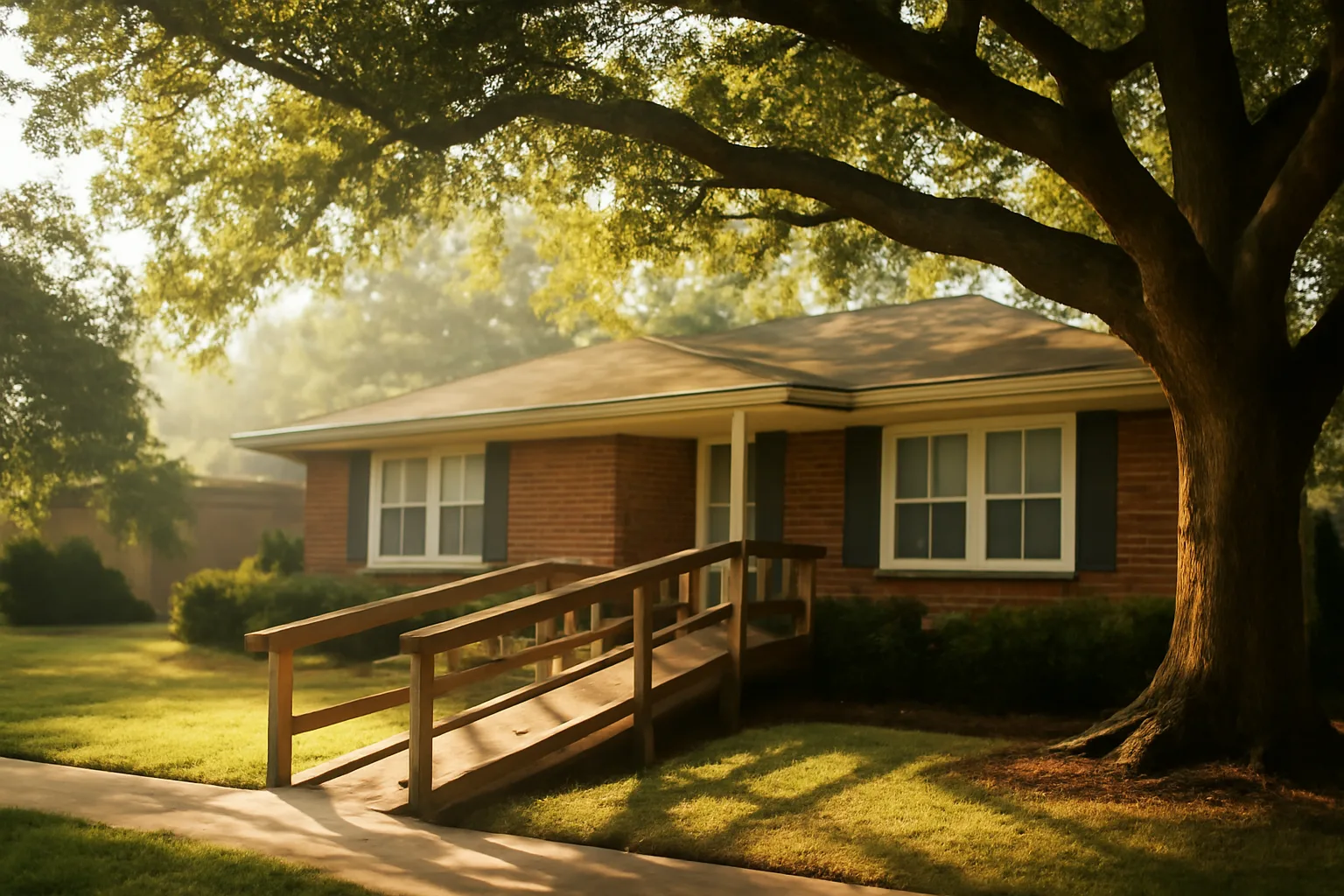
Grace Residential Assisted Living is a residential care provider operating in the Huntsville, Alabama area, offering the kind of small-scale, home-like assisted living setting that has become common across the Southeast. Facilities with this name and format typically house a limited number of residents in a converted single-family home or purpose-built residential structure, rather than a large institutional building. We can't verify current bed capacity, specific pricing, or point-in-time licensure status for any individual facility from here, and those details change. If you're evaluating this provider (or any assisted living home) for a family member, the right move is to confirm current licensure status directly with the Alabama Department of Public Health, which regulates assisted living facilities under Alabama's assisted living statute, Ala. Code § 22-21-20 et seq. [1]. Ask for the facility's license number and any recent inspection or complaint history, which the state maintains and which you're entitled to review. If you're reading this because you're considering opening a home like this yourself, the rest of this article walks through what assisted living is, how it's licensed, and what the startup process actually looks like in Alabama and beyond.
What is assisted living?
Assisted living is a category of licensed residential care for adults, usually seniors, who need help with daily activities like bathing, dressing, medication management, or meal prep, but who don't need the round-the-clock skilled nursing care a nursing home provides. It sits between fully independent living and a nursing facility on the care spectrum. The federal government does not directly define or license assisted living. Instead, each state sets its own licensing category, rules, staffing ratios, and inspection process. That's why the same term can mean fairly different things depending on which state you're in. Some states call these facilities "residential care facilities," others use "personal care homes," "adult care homes," or "assisted living facilities" as the formal legal term. For a broader look at how licensing categories differ by state, see our guide on assisted living licensing frameworks.
What is an assisted living facility?
An assisted living facility is the physical, licensed location where assisted living services are delivered. It's a specific legal designation, more than a marketing term. To operate one, an owner needs a state-issued license, and the building itself has to meet fire, safety, and life-safety code requirements specific to residential care occupancies. In Alabama, assisted living facilities are licensed and inspected by the Alabama Department of Public Health under state law authorizing health facility licensure, Ala. Code § 22-21-28, which sets requirements for admission and retention criteria, staffing, medication assistance, and physical plant standards [1]. Facilities are inspected on a regular cycle and can face plans of correction, fines, or license revocation for violations, similar to how most states handle this. The term "assisted living facility" typically covers a spectrum from small homes with 3 to 6 residents up to large campuses with 100+ units. Alabama distinguishes between Specialty Care Assisted Living Facilities, which serve residents with dementia or Alzheimer's and require additional staffing and training standards, and standard assisted living facilities [1]. If you're comparing facility types before choosing a location for a loved one, our piece on assisted living facility licensing breaks down what those categories mean in practice.
What does assisted living provide?
Assisted living provides a mix of housing, personal care assistance, and light health monitoring, but not skilled nursing care. Typical services include help with bathing, dressing, toileting, and mobility; medication reminders or administration assistance; three meals a day plus snacks; housekeeping and laundry; and some level of social and recreational programming. Most states, including Alabama, require assisted living facilities to have staff awake and available 24 hours a day, though staffing ratios are usually left to the facility's discretion rather than a fixed number written into the regulation, aside from minimums for medication-certified staff. That's a real gap in consumer protection that families should ask about directly. Ask any facility: how many direct care staff are on shift overnight, and what is the current resident-to-staff ratio right now, more than on paper. What assisted living does not typically provide is IV therapy, ventilator care, complex wound care, or the level of skilled nursing needed after, say, a hip replacement or a stroke with major deficits. Those situations usually call for a skilled nursing facility, at least temporarily. For readers comparing home-based care models to facility-based ones, see our explainer on assisted living at home arrangements.
What is the difference between assisted living and nursing home?
| Primary regulator | State health/social services agency | State agency + CMS (for Medicare/Medicaid certification) | |
|---|---|---|---|
| Staffing | Aides/caregivers, medication aide, some RN oversight | Licensed nurses (RN/LPN) on-site, physician oversight | |
| Medical acuity | Stable, chronic conditions | Complex, unstable, or post-acute conditions | |
| Typical room type | Private or semi-private apartment/room | Semi-private or private room, more clinical setting | |
| Medicare coverage | Not covered for room and board | Covers up to 100 days post-hospitalization under conditions | |
| Medicaid coverage | Varies by state (often via HCBS waiver) | Covered as a mandatory Medicaid benefit in all states | Nursing homes are certified to bill Medicare and Medicaid directly for skilled care under federal rules in 42 CFR Part 483 [2]. Assisted living facilities generally are not Medicare-certified at all, and Medicaid coverage for assisted living varies enormously by state, usually delivered through a Home and Community-Based Services (HCBS) waiver rather than as a standard Medicaid benefit [3]. Families often move a relative from assisted living to a nursing home when medical needs escalate, or from a nursing home back to assisted living after a rehab stay ends. Understanding which license type you're looking at matters a lot when comparing costs and coverage. Our comparison articles on assisted living facilities go deeper into cost differences by care level. |
The core difference is the level of medical care and the licensing category. Assisted living is a residential, non-medical model built around helping with daily activities. A nursing home (skilled nursing facility) is a medical model, licensed to provide 24-hour nursing care, rehabilitation therapy, and treatment for complex or unstable medical conditions. | Feature | Assisted Living | Nursing Home (SNF) |
Does Medicare cover assisted living facilities?
No. Medicare does not cover the cost of room, board, or personal care services in an assisted living facility, and this has not changed under current federal law. Medicare Part A will cover a stay in a skilled nursing facility for up to 100 days following a qualifying hospital stay, but that benefit is specific to SNFs, not assisted living [4]. Medicare may still cover medical services a resident receives while living in assisted living, things like doctor visits, physical therapy, or durable medical equipment, the same way it would for someone living at home. It just doesn't pay for the assisted living facility itself. CMS's own consumer coverage page states plainly that skilled nursing facility coverage requires a qualifying inpatient hospital stay and is capped at 100 days per benefit period, with no equivalent benefit described for assisted living [4]. Families paying for assisted living typically use private funds, long-term care insurance, or in some states, a Medicaid HCBS waiver once the resident meets both financial and functional eligibility criteria. Our guide on assisted living funding pathways covers how those waivers work state by state.
What is a group home?
A group home is a licensed residential setting where a small number of unrelated people, often with disabilities, mental illness, or in recovery, live together and receive supervision or support services. The term overlaps with assisted living in some states but is legally distinct in most. Group homes serve a wider range of populations than assisted living: intellectual and developmental disabilities (IDD), mental health conditions, substance use recovery, and in some cases at-risk youth, in addition to seniors. Licensing usually falls under a state's department of human services, developmental disabilities agency, or behavioral health authority rather than the same agency that licenses assisted living for seniors, though there's plenty of overlap and some states combine categories. Capacity is usually small, often 3 to 8 residents, which is part of why zoning and neighborhood pushback come up so often for this model. Many states have reasonable accommodation protections under the federal Fair Housing Act that limit how much a municipality can restrict group homes through zoning. The Fair Housing Act's protections against housing discrimination based on disability are codified at 42 U.S.C. § 3604 [5].
How to start a group home
Starting a group home means working through five main tracks at once: entity formation, licensing, property and zoning, staffing, and funding. Skipping any one of these tends to blow up your timeline later, usually at the worst possible moment (like right before your scheduled inspection). 1. Pick your population and license type first. IDD, mental health, adult foster care, and senior assisted living are usually licensed under different chapters or even different agencies. This decision drives everything else, so don't skip it or leave it vague. 2. Form your business entity (LLC or corporation) and get your EIN. Most states require the applicant entity to be formed before they'll accept a licensing application. 3. Find a property that already fits, or can be permitted for, residential care use. Zoning is one of the most common reasons applications stall. Confirm with your local planning or zoning department whether the property is zoned for a group home use or needs a conditional use permit before you sign a lease or close on a purchase. 4. Write your policy and procedure manual. States generally require written policies on medication management, emergency procedures, resident rights, admission and discharge criteria, staffing plans, and incident reporting before they'll issue a license. 5. Hire and train staff to meet your state's minimum ratios and required certifications (first aid/CPR, medication administration training, background checks through your state's criminal history background check unit). 6. Submit your license application to your state licensing agency, along with the required fee (fees vary widely by state and facility size, confirm current amounts with your state licensing agency), and schedule your pre-licensing inspection. 7. Pass your initial inspection and life-safety/fire marshal review before you can accept your first resident. This is also where a lot of new operators lose time redoing paperwork that doesn't match what their specific state agency actually wants. If you'd rather start from a state-specific packet of application forms, sample policies, and staffing templates instead of building from scratch, that's exactly what our $299 one-time State Group Home Licensing Kit is built to shortcut, though it doesn't replace your state's own review or guarantee approval timelines.
How do I start a group home? (funding and staffing basics)
Beyond licensing paperwork, the two things that sink new group home operators fastest are underestimating startup capital and understaffing the first six months. Neither one shows up clearly until you're already open. On funding, most operators combine personal capital, an SBA loan (7(a) loans are commonly used for small residential care startups since they can finance real estate, renovation, and working capital together), and sometimes a state or nonprofit grant tied to a specific population, like veterans or IDD housing. Medicaid reimbursement, where applicable, usually doesn't start flowing until well after you're licensed and have gone through a provider enrollment process with your state Medicaid agency, so budget for a gap. On staffing, write your staffing plan around your state's minimum ratio requirements, then add a cushion. States commonly require a specific staff-to-resident ratio during waking hours and a different (often lower) one overnight; the exact numbers are set in each state's administrative code and vary by facility type, so confirm with your state licensing agency rather than assuming a number from another state applies to you. If you're specifically comparing home-based care models against facility licensing, our article on assisted living at home covers where the regulatory line sits for in-home versus licensed-facility care.
What is a Specialty Care Assisted Living Facility, and why does it matter for Huntsville-area homes?
A Specialty Care Assisted Living Facility (SCALF) is Alabama's specific licensing designation for assisted living homes that serve residents with Alzheimer's disease or other dementias. Alabama's rules require these facilities to meet additional staff training, security (including secure egress/wander management), and admission-assessment standards beyond a standard assisted living license [1]. If you're evaluating a Huntsville-area facility, including one operating under a name like Grace Residential Assisted Living, and the resident has a dementia diagnosis, ask directly whether the facility holds SCALF certification or only a standard AL license. A standard license does not require the same dementia-specific staff training hours or physical security features. This distinction also matters if you're the one starting a facility. Building out SCALF-level programming from day one (secured units, dementia-trained staff, specific activity programming) costs more upfront but opens up a larger, and often more stable, referral pipeline, since dementia care is one of the fastest-growing needs in assisted living nationally.
What should families ask before choosing an assisted living facility like this?
Ask for the facility's current license number, its license type (standard AL vs. specialty/memory care), and the date of its most recent state inspection, since all of that is public record through the state health department. Alabama's Department of Public Health maintains facility licensing records that you can request directly [1]. Ask what the current resident-to-staff ratio is on both day and night shifts, not the facility's stated minimum. Ask what's included in the base monthly rate versus billed as a level-of-care add-on, since assisted living pricing is almost always tiered, and the advertised "starting at" rate rarely reflects what a resident needing significant help with ADLs will actually pay. Finally, ask about medication management specifically: who administers medications, what certification they hold, and how errors get reported and logged. Medication error rates and reporting requirements are one of the most common citation categories in state inspection reports across the country.
Frequently asked questions
What is assisted living?
Assisted living is a licensed residential care option for adults who need help with daily activities like bathing, dressing, or medication management but don't need full-time skilled nursing care. Each state sets its own licensing rules, staffing requirements, and inspection process, so exact definitions and standards vary by state.
What is a group home?
A group home is a licensed residential setting where a small number of unrelated residents, often people with disabilities, mental illness, or in recovery, live together with supervision and support. Licensing usually falls under a state's disability, mental health, or human services agency rather than the senior-focused assisted living licensing track.
What is an assisted living facility?
An assisted living facility is the specific, state-licensed building or program where assisted living services are delivered. It must meet physical plant, fire safety, staffing, and care-standard requirements set by the state health or social services agency that regulates it, such as Alabama's Department of Public Health for facilities in Huntsville.
What does assisted living provide?
Assisted living typically provides housing, meals, help with activities of daily living (bathing, dressing, mobility), medication management assistance, housekeeping, and 24-hour staff availability. It does not provide skilled nursing care like IV therapy or complex wound treatment, which require a licensed nursing facility instead.
What is the difference between assisted living and nursing home?
Assisted living is a non-medical, residential model for people who need help with daily activities but are medically stable. A nursing home is a medical model licensed for 24-hour skilled nursing care, rehabilitation, and treatment of complex conditions, and it's certified to bill Medicare and Medicaid directly under federal rules.
Does Medicare cover assisted living facilities?
No, Medicare does not cover room, board, or personal care costs at assisted living facilities. It may cover separate medical services a resident receives while living there, like doctor visits or physical therapy, but the facility cost itself is the resident's or family's responsibility, or covered through Medicaid in some states.
How to start a group home?
Start by choosing your population and license type, forming your business entity, securing a property that's zoned for residential care use, writing your required policy manual, hiring staff that meet state ratio and training requirements, then submitting your application and passing your pre-licensing inspection through your state agency.
How do I start a group home in Alabama specifically?
You'd apply through the Alabama Department of Public Health for an assisted living license, or through the appropriate agency for IDD or mental health group homes, since licensing tracks differ by population. Confirm current application forms, fees, and inspection requirements directly with the agency before you commit to a property.
Is Grace Residential Assisted Living in Huntsville licensed?
We can't confirm current, facility-specific licensure status here since it changes over time. Contact the Alabama Department of Public Health directly and ask for the facility's license number, license type, and most recent inspection report; this information is public record for licensed facilities.
What's the difference between assisted living and memory care?
Memory care (called Specialty Care Assisted Living in Alabama) is a licensing subcategory for facilities serving residents with Alzheimer's or other dementias. It requires additional staff dementia training and often secured units, beyond what a standard assisted living license requires.
Does Medicaid pay for assisted living?
It depends heavily on your state. Many states cover some assisted living costs through a Medicaid Home and Community-Based Services (HCBS) waiver rather than as a standard Medicaid benefit, and eligibility, waitlists, and covered services vary widely. Check with your state Medicaid agency for current waiver availability.
How much does it cost to open a small assisted living or group home?
Costs vary enormously by state, property, and population served, covering things like licensing fees, renovation to meet life-safety code, staffing before your first resident, and working capital during the Medicaid enrollment gap. There's no reliable single national figure; build your own budget against your specific state's requirements and property costs.
Sources
- Alabama Code, Title 22, Chapter 21, Article 2 (Health Care Facility Licensure and Assisted Living Regulation): Alabama licenses and regulates assisted living facilities, including Specialty Care Assisted Living Facility standards for dementia care
- eCFR, Title 42 Part 483 (Requirements for States and Long Term Care Facilities): Nursing homes are federally certified and regulated for skilled nursing care under 42 CFR Part 483
- Medicaid.gov, Home and Community-Based Services: Medicaid coverage for assisted living is generally delivered through HCBS waivers rather than as a standard mandatory benefit
- Medicare.gov, Skilled Nursing Facility (SNF) Care Coverage: Medicare Part A covers skilled nursing facility stays up to 100 days following a qualifying hospital stay, but does not cover assisted living room and board
- 42 U.S.C. § 3604, Fair Housing Act (Discrimination in the sale or rental of housing): Group homes for people with disabilities receive reasonable accommodation protections against restrictive local zoning under the Fair Housing Act
- Alabama Department of Public Health, Health Provider Facility Types and Licensure: Alabama's Department of Public Health is the licensing and inspecting authority for assisted living facilities in the state
- U.S. Small Business Administration, 7(a) Loan Program: SBA 7(a) loans are commonly used to finance real estate, renovation, and working capital for small business startups including residential care facilities