Last updated 2026-07-24
TL;DR
Group home requirements vary by state but generally include a license application, background checks, staffing ratios, a fire/life safety inspection, zoning compliance, and a policy manual covering health, safety, and resident rights. There is no single federal license; each state's health or social services department sets its own rules, fees, and inspection schedule.
What is a group home?
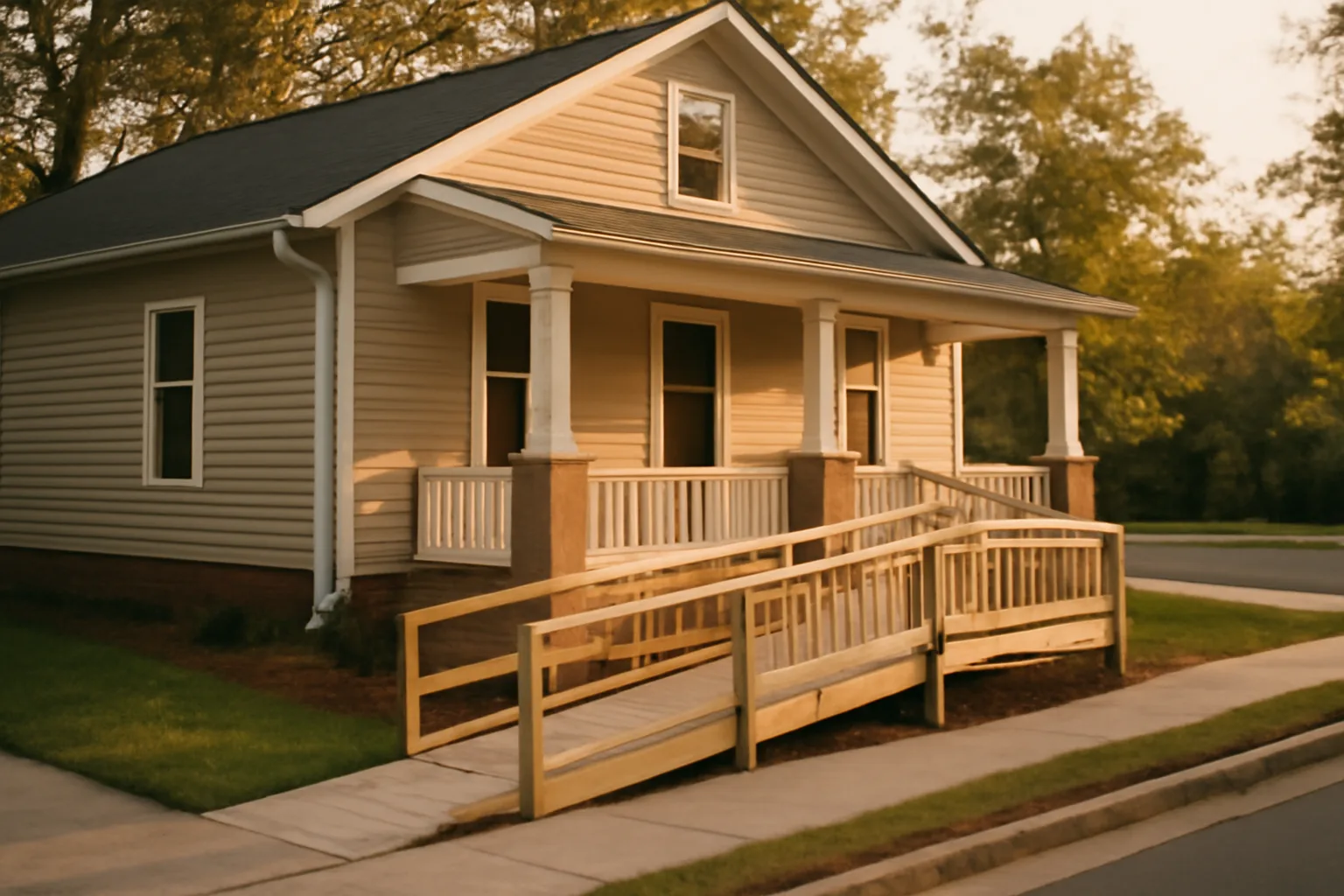
A group home is a residential setting, usually a single family-style house, where a small number of unrelated people live together and receive support with daily activities, supervision, or treatment. The term covers a lot of ground: adult foster care homes, IDD group homes, mental health residential facilities, substance use recovery homes, and residential assisted living (RAL) homes for seniors all get lumped under "group home" in casual conversation, even though each has its own license category in most states. What makes a home a "group home" legally is usually the number of unrelated residents plus the level of care or supervision provided. Many states draw a line at 3 or more unrelated adults needing supervision or personal care, though some set the threshold at 4, 6, or higher depending on the license type. Below that number, a home may not need a license at all under certain state definitions, though local zoning can still treat it differently. If you're comparing models, it helps to look at assisted living as a related but distinct category, since assisted living facilities typically serve larger populations under different staffing and building codes than a small IDD or recovery group home.
What is assisted living?
Assisted living is a licensed residential care option for people, usually seniors, who need help with daily activities like bathing, dressing, medication management, or meals but don't need the round-the-clock skilled nursing care a nursing home provides. It sits between independent living and a nursing facility on the care spectrum. There's no single federal definition. States regulate assisted living under names like "residential care facility," "personal care home," "assisted living residence," or "adult care home," and each sets its own licensing requirements, staffing ratios, and admission/discharge criteria. The Centers for Medicare & Medicaid Services (CMS) does not license assisted living facilities; that authority sits entirely with state agencies [1]. If you're building a business plan around this model specifically, the assisted living facility and assisted living facilities guides break down state-specific bed limits and staffing further.
What is an assisted living facility?
An assisted living facility (ALF) is the physical building and licensed operation where assisted living services happen. It's the legal entity your state licensing agency inspects, more than a description of the care model. Depending on the state, an ALF license might cover anywhere from a handful of residents in a converted house to over 100 residents in a purpose-built facility with a commercial kitchen, sprinkler system, and dedicated activity space. Florida, for example, licenses assisted living facilities under Chapter 429, Part I of its statutes and requires a Standard, Limited Nursing, Limited Mental Health, or Extended Congregate Care license type depending on the acuity of residents served, with the Agency for Health Care Administration handling applications [2]. Texas licenses these as "assisted living facilities" under Health and Safety Code Chapter 247, administered by the Health and Human Services Commission [3]. The paperwork, fees, and inspection frequency differ enough state to state that copying another operator's checklist from a different state is a common and costly mistake. A smaller-scale version of this same concept, run out of a residential home rather than a commercial building, is often what people mean when they search for facility assisted living or assisted living at home setups.
What is the difference between assisted living and a nursing home?
| Federal oversight | None (state-licensed only) | CMS certified under 42 CFR Part 483 [4] | |
|---|---|---|---|
| Nursing staff | Varies by state, often not 24/7 RN | RN required 8+ hrs/day, 7 days/week [4] | |
| Medicare coverage | Generally not covered | Covered for short-term skilled care post-hospitalization | |
| Typical resident | Needs help with ADLs, mostly mobile | Needs ongoing skilled medical/nursing care | |
| Setting | Residential, apartment-style, or group home | Clinical, hospital-adjacent feel | The practical upshot for operators: if your residents need frequent skilled nursing intervention (wound care, IV therapy, ventilator support), you're likely in nursing home territory and need that separate, more heavily regulated license, not an assisted living or group home license. |
Assisted living provides help with daily living activities and some health monitoring, while a nursing home (skilled nursing facility) provides 24-hour licensed nursing care for people with serious medical needs, recovery from surgery, or complex chronic conditions. The distinction matters a lot for licensing, staffing, and Medicare/Medicaid coverage. Nursing homes must have a registered nurse on duty for at least 8 consecutive hours a day, 7 days a week, plus licensed nursing services around the clock, under federal nursing home requirements at 42 CFR 483.35 [4]. Assisted living has no comparable federal staffing mandate; state rules vary from requiring an awake staff member on-site at all times to requiring only periodic nurse consultation depending on the license tier. Here's a side-by-side comparison: | Feature | Assisted living | Nursing home |
Does Medicare cover assisted living facilities?
No. Medicare does not cover the cost of room and board or personal care services at an assisted living facility. Medicare.gov states plainly that Medicare "doesn't cover long-term care (also called custodial care)" if that's the only care you need, and assisted living generally falls into that custodial category [5]. Medicare Part A may cover short-term skilled nursing care in a certified skilled nursing facility after a qualifying hospital stay, and Medicare Part B may cover doctor visits, therapy, or medical equipment used by someone living in assisted living, but the housing and personal care costs themselves are not covered [5]. Medicaid is a different story, though still limited. Many states offer Medicaid Home and Community-Based Services (HCBS) waivers that help cover some assisted living or group home costs for eligible low-income residents, administered under Section 1915(c) of the Social Security Act [6]. Coverage, waiting lists, and eligibility rules differ enormously by state, so confirm with your state Medicaid agency and licensing agency before building a financial model around waiver reimbursement.
What does assisted living provide, exactly?
Assisted living typically provides help with activities of daily living (ADLs) such as bathing, dressing, grooming, toileting, and mobility, along with medication management, meals, housekeeping, laundry, transportation, social activities, and 24-hour supervision or staff availability. It does not typically provide skilled nursing care, though some states allow "enhanced" or "limited nursing" license tiers that add a bit more medical support. Most states require a written service plan or care plan for each resident, updated on a set schedule (often every 90 days or upon a significant change in condition), documenting exactly which services that resident receives and at what frequency. This care plan becomes one of the first things an inspector asks to see, and it's also the document families use to judge whether the facility delivered what was promised. Staffing to meet these services is where a lot of new operators underestimate cost and complexity. A resident who needs two-person transfers or overnight incontinence care requires a different staffing pattern than an independent resident who just needs medication reminders, and your license application typically has to specify which population and acuity level you're approved to serve.
What are the core group home licensing requirements across states?
While every state's rules differ, most group home and residential care licenses require the same basic categories of proof: a completed license application, proof of the physical building meeting fire and building codes, staffing plans with qualification documentation, background checks on owners and staff, a policy and procedure manual, and passing a pre-licensure inspection. Here's what that typically breaks down into: 1. Application and fee. Most states charge an initial license fee, often in the low hundreds to low thousands of dollars depending on capacity, plus a renewal fee. Confirm exact amounts with your state licensing agency since these change and vary by license type and bed count. 2. Background checks. Owners, administrators, and direct care staff almost universally need fingerprint-based criminal background checks and checks against state abuse/neglect registries before working unsupervised with residents. 3. Fire and life safety inspection. Local fire marshals or state fire safety offices inspect for smoke detectors, fire extinguishers, exit signage, sprinkler requirements (which kick in above certain resident counts in many states), and evacuation capability, particularly for non-ambulatory residents. 4. Health and sanitation inspection. Kitchen sanitation, water supply, pest control, and medication storage get checked, often by the same state health department that inspects restaurants and other licensed facilities. 5. Staffing plan. A written plan showing staff-to-resident ratios by shift, required training hours (CPR/First Aid, medication administration, abuse reporting), and a plan for covering call-outs. 6. Policy and procedure manual. Admission/discharge criteria, medication management, emergency preparedness, resident rights, grievance procedures, and incident reporting protocols. 7. Zoning compliance. Proof the property is properly zoned for group residential use, or documentation of a reasonable accommodation request under the Fair Housing Act if local zoning restricts group homes for people with disabilities [7]. A state licensing agency will typically require you to show all seven categories before scheduling the final pre-licensure inspection, and missing even one document is the single most common reason applications get sent back for revision.
How do I start a group home?
Starting a group home takes roughly six steps: pick your population and license type, form your business entity, secure a compliant property, write your policy manual and staffing plan, submit your license application with required documentation, and pass your pre-licensure inspection. The order matters because zoning and property decisions depend on which license type you're pursuing. Step 1: Decide who you'll serve. IDD group homes, mental health residential facilities, adult foster care, substance use recovery homes, and senior residential assisted living all have separate license categories in most states, with different staffing credentials and physical plant rules. Don't try to design a facility that can flex between populations; regulators want a clear population and program description. Step 2: Form your business entity and get an EIN. Most states require the licensee to be a formed business entity (LLC or corporation), not an individual, before they'll process a license application. Step 3: Find and secure a property that fits zoning. Confirm with your local planning department whether your intended use is a permitted use, a conditional use requiring a hearing, or prohibited outright, and understand your rights under the Fair Housing Act if the zoning code treats a group home for people with disabilities more restrictively than an unrelated family of the same size [7]. Step 4: Write your policies, procedures, and staffing plan. This includes admission criteria, medication management protocols, emergency and disaster plans, resident rights notices, grievance procedures, staff training curricula, and shift staffing ratios matched to your resident acuity. Step 5: Submit your license application with the entity documents, property documents (lease or deed, floor plan, fire marshal approval), staffing plan, policy manual, and background check results for owners and key staff. Step 6: Pass your pre-licensure inspection covering fire/life safety, health/sanitation, and a documentation review, then receive your license (often initially provisional or probationary for a set period in many states before a full license is issued). Budget real time for this. Between property acquisition, renovation to meet fire code, and processing an application, six to twelve months from decision to open is a realistic range in many states, and rushing the paperwork stage tends to add months back through resubmissions.
How do I know which license type applies to me?
You determine your license type by matching your intended resident population and the level of care you plan to provide against your state's licensing categories, which you'll find listed on your state's health or social services department website, not by guessing from a general description online. Most states split residential care licenses along these lines: developmental disability (IDD) group homes, licensed separately from behavioral health or mental health residential facilities, which are licensed separately again from adult foster care or family care homes, which are licensed separately from assisted living or residential care for seniors, which are licensed separately from substance use disorder residential treatment (which often needs a second, treatment-specific license on top of the residential one). Call your state licensing agency directly before you sign a lease or start renovations. Licensing specialists field this exact question daily and can tell you in one phone call whether your planned population and services fit an existing license category or fall between categories in a way that needs a different approach entirely.
What staffing and training requirements should I expect?
Expect requirements covering minimum staff-to-resident ratios by shift (often stricter overnight versus daytime), completed background checks before unsupervised contact with residents, and a defined set of initial and ongoing training hours covering CPR/First Aid, medication administration, abuse/neglect recognition and mandatory reporting, and behavior support techniques appropriate to your population. Many states also require an administrator or program manager to hold a specific credential, license, or minimum hours of state-approved administrator training before they can be named as the responsible party on a license application. Direct care staff training requirements commonly range from a set number of orientation hours in the first week of employment to annual continuing education hours, though the exact numbers differ by state and by license type, so confirm your specific hour requirements with your state licensing agency. Documentation is where operators get tripped up during inspections, not usually knowledge. An inspector doesn't just ask if staff got trained; they ask to see the signed training log, the trainer's credentials, and the date it happened. Build your training tracking system before you hire your first employee, not after your first inspection.
What zoning issues come up most often?
The most common zoning issue is a local ordinance that either restricts group homes to specific zoning districts, caps the number of unrelated residents allowed in a single-family zone, or requires a conditional use permit and public hearing that a similarly-sized unrelated household (like roommates) would never need to go through. The federal Fair Housing Act protects people with disabilities from zoning rules that treat a group home for people with disabilities more restrictively than a similarly-sized group of unrelated people without disabilities, and it allows operators to request a "reasonable accommodation" from a zoning rule when needed to provide equal housing opportunity [7]. HUD's guidance on this states that a local government must grant a requested accommodation "if it is reasonable and necessary to afford persons with disabilities an equal opportunity to use and enjoy a dwelling" , though what counts as reasonable gets litigated regularly, and this protection generally applies to homes serving people with disabilities specifically, not every group home category. Senior residential assisted living homes for people without disabilities don't always get the same federal fair housing protection against zoning restrictions, so check your local zoning code directly and don't assume federal law covers your specific population. For more on how zoning maps to license type, the senior assisted living facilities near me guide walks through how proximity to services and neighborhood zoning interact for RAL specifically.
What happens during a group home inspection?
A group home inspection typically covers three areas: physical plant safety (fire/life safety, sanitation, accessibility), records and documentation (resident files, staff training logs, medication administration records, incident reports), and observation of care (staff interaction with residents, meal service, medication pass). Inspectors usually arrive unannounced for routine surveys, though initial licensing inspections are often scheduled once you notify the agency you're ready. Expect the inspector to pull a sample of resident files and staff files, check your fire drill logs and posted evacuation plans, verify your medication storage is locked and your medication administration records match physician orders, and walk the physical space checking for things like unsecured cleaning chemicals, blocked exits, or expired fire extinguisher tags. Deficiencies get documented in a formal report (often called a Statement of Deficiencies or similar, depending on the state), and you'll typically have a set number of days to submit a plan of correction. Repeat or serious deficiencies can trigger a follow-up inspection, a fine, or in severe cases a license suspension. Keeping your own internal audit checklist that mirrors the state's survey tool is the single most useful thing an operator can do to avoid surprises.
Where do the licensing kit and templates fit in?
Building every required document from scratch, the policy manual, staffing plan, incident report forms, medication administration record templates, admission agreements, is the single most time-consuming part of getting licensed, and it's where a lot of first-time operators either stall out or pay a consultant several thousand dollars for boilerplate they could have built themselves with the right starting templates. The GroupHomePath State Group Home Licensing Kit ($299 one-time) gives you editable policy manual templates, staffing plan worksheets, and application checklists organized by state, so you're filling in your specific details rather than drafting from a blank page. It doesn't replace your state's actual application forms or guarantee approval; no legitimate product can promise that, and you should treat any claim of guaranteed or fast-tracked licensing approval as a red flag. What it does is cut down the drafting time on the documents every state requires in some form, so you can spend your energy on the property, staffing, and relationships that actually determine whether your home succeeds. If you want to build your document set against your specific state's requirements, the licensing kit builder walks you through selecting your state and population type first.
Frequently asked questions
What is assisted living in simple terms?
Assisted living is a licensed residential care setting, usually for seniors, that provides help with daily activities like bathing, dressing, and medication management along with meals and supervision, but not the round-the-clock skilled nursing care of a nursing home. Each state licenses and regulates it separately; there's no single federal assisted living standard.
What is a group home in the disability or behavioral health context?
A group home is a licensed residential setting where a small number of unrelated people, often people with intellectual/developmental disabilities, mental illness, or substance use disorders, live together and receive supervision, support, or treatment. Licensing categories and staffing requirements differ by population and by state, so a group home for one population isn't automatically licensed to serve another.
What is an assisted living facility license called in my state?
Names vary widely: "assisted living facility" (Florida, Texas), "residential care facility for the elderly," "personal care home," "adult care home," or "boarding care home" in other states. Search your state health or social services department's website for its residential/adult care licensing division, or call directly, since the category names don't standardize nationally.
What is the difference between assisted living and a nursing home in terms of cost and coverage?
Nursing homes provide 24-hour skilled nursing care and can be covered short-term by Medicare Part A after a qualifying hospital stay. Assisted living provides help with daily living but not skilled nursing, and Medicare generally does not cover its room, board, or personal care costs, per Medicare.gov guidance on long-term custodial care.
Does Medicare cover assisted living facilities at all?
Medicare does not cover the room and board or personal care costs of assisted living. It may cover doctor visits, therapy, or durable medical equipment for someone who happens to live in assisted living, and it may cover short-term skilled nursing facility stays after a hospitalization, but assisted living itself is considered custodial care and isn't a covered Medicare benefit.
How do I start a group home from scratch with no industry experience?
Start by calling your state licensing agency to identify the correct license category for your intended population, then form a business entity, secure a zoning-compliant property, write your staffing plan and policy manual, submit your license application with background checks and required documents, and pass your pre-licensure inspection. Expect six to twelve months from decision to opening in many states.
How much does it cost to get a group home license?
Costs vary enormously by state and license type: application fees alone often range from a few hundred to a few thousand dollars, and that's before property costs, renovations to meet fire code, background check fees, and staff training costs. Confirm exact fee schedules with your state licensing agency since they change and differ by capacity and license category.
What is the minimum number of residents that makes a home a licensed group home?
Many states set the threshold at 3 or more unrelated adults needing supervision or personal care, though some states use 4, 6, or other counts depending on license type. Below that threshold, a home may not need a residential care license under state definitions, but local zoning ordinances can still regulate it differently, so check both state licensing rules and local zoning code.
Can I convert my house into a group home?
Sometimes, if your local zoning permits residential care use in that district (or you successfully request a reasonable accommodation where the Fair Housing Act applies) and the house can be brought up to your state's fire/life safety and building code requirements for the resident count and acuity you plan to serve. Renovation costs to meet fire code (exit widths, sprinklers, smoke detection) are often underestimated by first-time operators.
What background checks are required for group home staff?
Nearly all states require fingerprint-based criminal background checks for owners, administrators, and direct care staff before they have unsupervised contact with residents, plus a check against state abuse/neglect and exclusion registries. Specific disqualifying offenses and lookback periods vary by state, so confirm the exact list with your state licensing agency.
Do group homes need a registered nurse on staff?
It depends on your license type and state. Nursing homes are federally required to have RN coverage at least 8 consecutive hours a day, 7 days a week under 42 CFR 483.35. Assisted living and most group home categories have no comparable federal RN mandate; some states require periodic nurse consultation or delegation oversight for medication administration instead of a full-time RN.
What is the difference between adult foster care and a group home?
Adult foster care typically means a small number of residents (often 1 to 5) living in a caregiver's own home with a more family-style, lower-staff-ratio model, licensed under its own category in many states. A group home usually implies a dedicated staffed residence, potentially with shift-based paid staff rather than a resident caregiver-owner, though exact definitions and thresholds vary by state.
How long does it take to get a group home license approved?
There's no universal timeline; it depends on your state's application backlog, how complete your submission is, and how quickly you pass your fire/life safety and health inspections. Many operators report a realistic range of several months to about a year from application submission to license issuance, and incomplete applications are the most common cause of delay.
Sources
- CMS, Nursing Home Care federal requirements overview: CMS regulates and certifies nursing homes federally; assisted living has no comparable federal CMS licensing authority
- Florida Statutes Chapter 429, Part I (Assisted Living Facilities): Florida licenses assisted living facilities under Chapter 429 with Standard, Limited Nursing, Limited Mental Health, and Extended Congregate Care license types
- Texas Health and Safety Code Chapter 247 (Assisted Living Facilities): Texas licenses assisted living facilities under Health and Safety Code Chapter 247
- 42 CFR 483.35 (Nursing Services requirements): Federal nursing home requirement of RN coverage at least 8 consecutive hours a day, 7 days a week
- Medicare.gov, Long-term care coverage: Medicare does not cover long-term custodial care, including assisted living room and board and personal care costs
- Social Security Act Section 1915(c), Medicaid.gov HCBS waivers overview: Medicaid HCBS waivers under Section 1915(c) can help cover some assisted living and residential care costs for eligible individuals
- U.S. Department of Justice, Fair Housing Act (42 U.S.C. 3601 et seq.) group home guidance: Fair Housing Act protections against discriminatory zoning restrictions on group homes for people with disabilities, including reasonable accommodation requests