Last updated 2026-07-26
TL;DR
Group home requirements differ by state and population served, but nearly all cover licensure through a state agency, staffing and training minimums, fire/life safety inspections, and local zoning compliance. There's no single national standard; Medicaid rules, building codes, and staff-to-resident ratios are set state by state, so your first step is always your state licensing agency's own manual.
What is a group home?
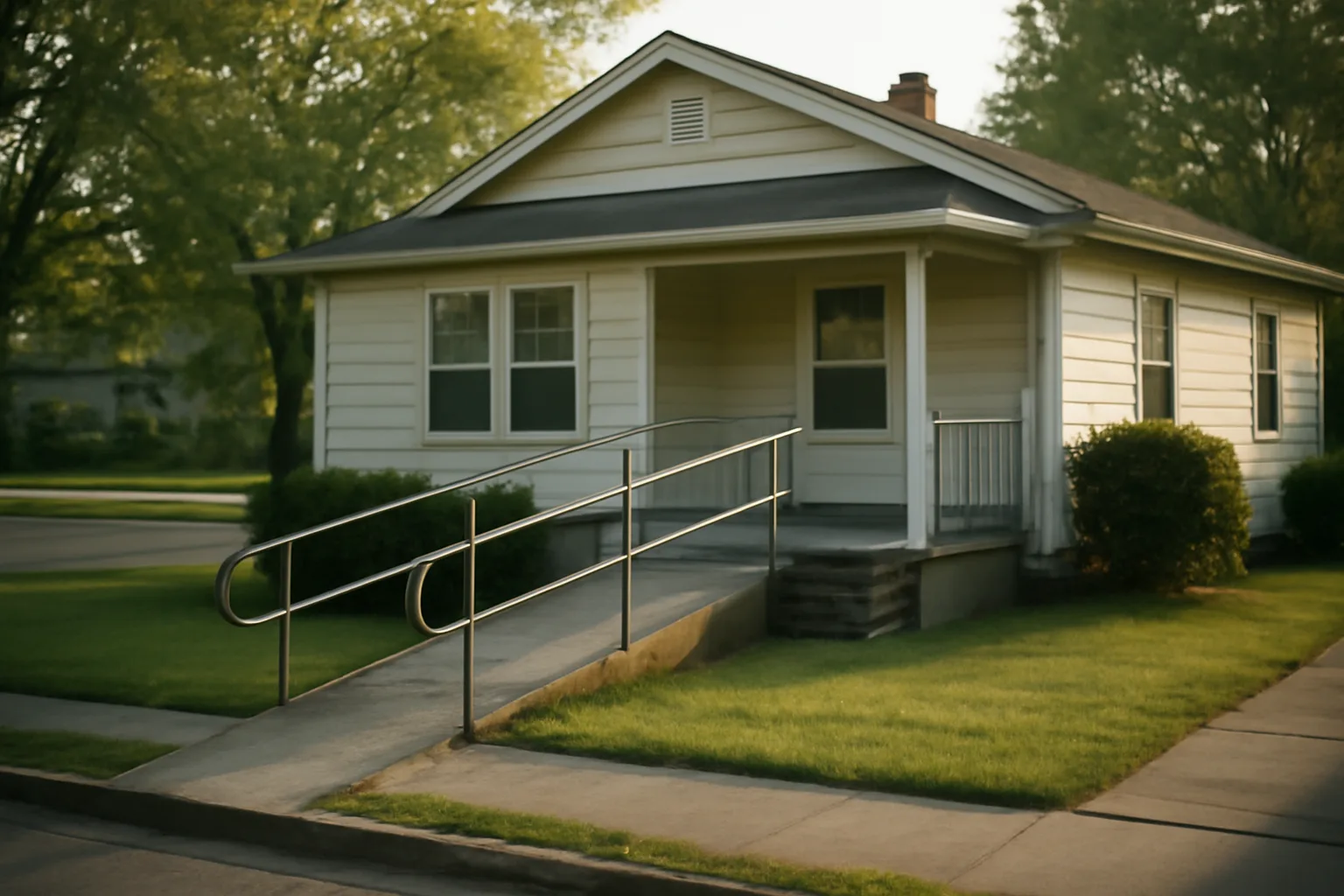
A group home is a residential setting, usually a house or small building in a regular neighborhood, where a small number of people who need support (because of age, disability, mental illness, or recovery from addiction) live together with paid staff on site or on call. It's licensed as a facility, more than rented as housing, which means the state treats it as a regulated care setting subject to inspection. The exact legal name changes by state and by population served. You'll see "adult foster care home," "community residential facility," "residential care home," "assisted living facility," "intermediate care facility for individuals with intellectual disabilities (ICF/IID)," and "community-based residential facility" all describing versions of the same basic concept: a home-like, non-hospital setting with staff support. Most group homes serve somewhere between 3 and 15 residents, though some states cap small facilities at 6 or fewer to keep them out of stricter commercial building code categories. Group homes are distinct from a person's own home receiving in-home services; the group home itself is the licensed entity, and the operator (not the resident) usually holds the lease or owns the property. For a broader look at how this fits alongside other senior and disability housing categories, see assisted living facilities.
What is assisted living?
Assisted living is a state-licensed category of residential care for adults, usually older adults, who need help with daily activities like bathing, dressing, medication reminders, and meals, but who don't need the 24-hour skilled nursing care a nursing home provides. It's a middle tier between fully independent senior living and a nursing facility. Assisted living communities range from large corporate campuses with 100+ units to small "residential care homes" with 6 to 10 beds that look just like a group home from the outside. The Centers for Medicare & Medicaid Services (CMS) doesn't license assisted living directly; states do, through their own health or social services departments, and standards vary a lot from state to state [1]. Because there's no federal licensing standard, one state's "assisted living facility" might allow only light personal care, while another's allows medication administration by unlicensed staff, hospice co-location, or even limited nursing tasks under a waiver. Always pull your specific state's regulation text rather than assuming assisted living means the same thing everywhere.
What is an assisted living facility (and how is it different from a group home)?
An assisted living facility is the licensed building and business entity that provides assisted living services; "assisted living" describes the service model, and "assisted living facility" (ALF) is the legal, licensed thing. In many states the two smaller residential care categories, group homes and small assisted living homes, overlap heavily in physical setup: a converted single-family house with 4 to 10 private or semi-private bedrooms. The real difference is regulatory intent and population. Group home licenses more often target people with intellectual/developmental disabilities (IDD), serious mental illness, or substance use recovery needs, and are frequently funded through Medicaid home and community-based services (HCBS) waivers. Assisted living licenses target primarily older adults needing help with activities of daily living (ADLs), and are more often private-pay or funded through state Medicaid ALF waivers where they exist. Some states use one umbrella license (for example, a "residential care facility" license that covers both populations with different program plans attached), while others keep completely separate statutes and separate licensing units. This is exactly the kind of detail you confirm with your state licensing agency before you draft a business plan, because the paperwork, inspection checklist, and staffing rules can be entirely different chapters of code even when the buildings look identical. If you're comparing the two paths for your own project, our overview on assisted living facility requirements walks through the ALF side in more detail.
What is assisted living vs nursing home, and what does assisted living provide?
| Primary regulator | State licensing agency | State agency + federal CMS certification | |
|---|---|---|---|
| Staffing | Direct care aides, medication aide/tech in many states | RNs, LPNs, CNAs required around the clock | |
| Medical care level | Help with ADLs, medication reminders | Skilled nursing, IVs, wound care, rehab therapy | |
| Typical funding | Private pay; some state Medicaid ALF waivers | Medicare (short-term post-acute) and Medicaid (long-term) | |
| Federal oversight | Minimal; state-driven | Extensive, under 42 CFR Part 483 [2] | Nursing homes must meet federal requirements for participation found at 42 CFR Part 483, including registered nurse coverage and a resident assessment process [2]. Assisted living has no equivalent federal rule. CMS's own guidance confirms that states, not the federal government, carry primary responsibility for regulating and licensing residential care and assisted living [1]. |
Assisted living provides help with daily living activities (bathing, dressing, toileting, mobility, medication reminders), meals, housekeeping, social activities, and 24-hour staff availability, but generally not ongoing skilled nursing or complex medical care. A nursing home (skilled nursing facility) provides that plus licensed nursing care around the clock, rehabilitation therapy, and management of more serious medical conditions, and it's certified under federal Medicare/Medicaid rules in addition to state licensure. Here's the practical breakdown: | Feature | Assisted living | Nursing home (SNF) |
Does Medicare cover assisted living facilities?
No. Medicare does not pay for room and board or personal care in an assisted living facility, group home, or nursing home custodial stay. Medicare.gov states directly that Medicare "doesn't cover: Room and board... Assisted living... or long-term care" as ongoing custodial help [3]. What Medicare will pay for is the medical care itself, wherever the person lives: doctor visits, some home health services, durable medical equipment, and short-term skilled nursing facility care after a qualifying hospital stay (subject to the 3-day inpatient rule and coverage limits). It won't pay the facility's monthly rate for housing, meals, or aide support. Medicaid is a different story and the one most group home operators actually build a business model around. Medicaid can cover personal care and habilitation services delivered inside a licensed residential setting through home and community-based services (HCBS) waivers authorized under section 1915(c) of the Social Security Act, though Medicaid generally still can't pay for room and board itself, only the service component [4]. That distinction (services paid, room/board not paid) trips up a lot of first-time operators, so budget your rate structure with a resident's SSI or SSDI check covering room and board and Medicaid waiver billing covering the care hours. For a walkthrough of how waiver billing actually works day to day, see assisted living.
How do I start a group home? What's the actual licensing process?
Starting a group home means working through five overlapping tracks at once: entity formation, property/zoning, state licensing, staffing, and funding setup. None of them are fast, and skipping ahead on one (like signing a lease before confirming zoning) is the single most common expensive mistake. 1. Pick your population and license category first. IDD group home, adult foster care, mental health residential, substance use recovery residence, and senior residential care/assisted living all sit under different statutes, different licensing units, and often different state departments entirely (health department vs. department of developmental disabilities vs. behavioral health authority). Confirm the exact license name and issuing agency with your state licensing agency before doing anything else. 2. Form your business entity and get an EIN. Most states require the license applicant to be a formed legal entity (LLC or corporation), not an individual, and you'll need a federal Employer Identification Number from the IRS regardless of entity type once you have employees. 3. Confirm zoning before you sign a lease or make an offer. Many states have fair housing / group home protections that treat small group homes (commonly 6 or fewer residents) as a permitted single-family use, meaning a city can't zone them out just because they're a group home. This principle traces back to the Fair Housing Act's protections for people with disabilities. Still, occupancy limits, parking, fire code building classification, and local business licensing can all still apply, so a zoning verification letter from the city or county planning department before you commit to a property saves enormous grief. See our assisted living at home piece for how this plays out with smaller, home-based models. 4. Get the building inspected and certified for occupancy type. Fire marshal sign-off, health department inspection, and sometimes a separate building code occupancy classification review (Group I-1 or R-4 under the International Building Code, in states that use it) all typically have to happen before licensing will issue a certificate. 5. Write your policy and procedure manual. States require a written operations manual covering admission/discharge criteria, medication management, staffing plans, emergency and disaster procedures, resident rights, abuse/neglect reporting, and behavior support plans (for IDD and mental health populations especially). This is usually the single largest paperwork burden in the entire application, and it's where most first-time applicants lose the most time. 6. Hire and train staff to the state's specific hour and certification requirements, which is covered in detail below. 7. Submit the license application, pay the fee, and schedule the pre-licensing inspection. Fees, timelines, and required attachments (background check results, floor plans, fire inspection certificates, staffing plans, financial statements) vary by state; confirm current fee amounts and processing timelines with your state licensing agency, since these numbers change and are set individually by each state's regulations, not federally.
What staffing and training does a group home need?
Every state sets its own staff-to-resident ratio, but the underlying logic is consistent: ratios tighten as resident acuity rises, and awake overnight staff becomes mandatory once residents need help with mobility, seizures, or behavioral crisis response. A home serving residents who are largely independent during the day might get by with one staff person for 8 to 10 residents; a home serving residents with significant behavioral or medical needs might require closer to 1:3 or 1:4, plus an awake staff member overnight rather than someone allowed to sleep on shift. Background checks are close to universal. States require fingerprint-based criminal background checks for all staff with direct resident contact, and most cross-check state and federal abuse/neglect registries as well; a disqualifying offense list (typically covering violent crime, financial exploitation, and abuse/neglect findings) determines who cannot be hired, though look-back periods and waiver processes differ by state. Training requirements commonly include: - First aid and CPR certification (often required within the first 30 to 90 days of hire)
- Medication administration training, if staff will handle medications (many states require a specific state-approved medication aide course, separate from general CPR/first aid)
- Abuse and neglect reporting (mandatory reporter training)
- Population-specific training: crisis intervention/de-escalation for behavioral health and IDD settings, infection control and fall prevention for senior residential care
- Annual continuing education hours, commonly somewhere in the 8 to 24 hour range depending on the state and role A facility administrator or manager credential is required in a lot of states too. Sometimes it's a specific state certification exam, sometimes a combination of education and direct care experience (for example, an associate's degree plus one year of supervisory experience, or a high school diploma plus several years of direct experience). Confirm your state's administrator qualification requirements early, because in several states you cannot even submit a license application until you've named a qualified administrator on the paperwork.
What does a group home's physical building need to meet code?
Group homes generally need to meet three overlapping physical standards: state licensing rules (bedroom size, number of residents per bedroom, bathroom ratios), local building and fire code (occupancy classification, sprinklers, egress), and accessibility requirements where applicable. Common bedroom and bathroom minimums (these vary by state, so verify exact numbers): a minimum square footage per resident in shared bedrooms (often in the 60 to 100 square foot range per person), a cap on how many residents can share one bedroom (commonly 2, sometimes up to 4 in older facilities grandfathered under prior code), and a minimum ratio of toilets/bathing fixtures to residents (a common benchmark is one bathroom per 6 to 8 residents, though ratios differ by state and by whether the home is newly constructed or converted). Fire and life safety is where a lot of otherwise-solid group home projects stall out, because it's expensive and often requires construction, more than paperwork. Depending on resident mobility and the state's adopted building code, a home may need to be reclassified from a standard residential (R-3) occupancy to an institutional or residential board-and-care occupancy (I-1 or R-4 under the International Building Code), which can trigger requirements for hard-wired interconnected smoke detectors, a fire alarm system monitored by a central station, sprinklers, and specific egress widths and door hardware. This is exactly why the zoning and fire marshal conversations need to happen before signing a lease: retrofitting an older house for sprinklers after you've already signed a five-year lease is a very expensive lesson. For operators weighing a small home-based model against a larger purpose-built facility, senior assisted living facilities near me covers how facility size interacts with these code thresholds.
What paperwork and policies does the license application actually require?
Beyond the application form itself, states typically require a packaged set of supporting documents, and missing even one item is the single most common reason applications bounce back for revision instead of moving to inspection. Typical application package contents:
- Certificate of formation/good standing for your business entity
- Floor plan and site plan showing bedroom sizes, egress routes, and fire equipment locations
- Zoning verification or a letter from the local planning department
- Fire marshal inspection certificate
- Health/sanitation inspection results
- Criminal background check results for all owners, administrators, and direct care staff
- Written policies and procedures manual (admission/discharge, medication management, emergency preparedness, resident rights, grievance procedure, behavior support, infection control)
- Staffing plan showing shift coverage and ratios
- Proof of financial capacity to operate (some states require a specific reserve, like enough operating capital to cover a set number of months of expenses)
- Sample resident agreement/admission contract
- Certificate of insurance (general liability, and often professional/abuse liability specific to care facilities) Most states charge an initial licensing fee plus a separate renewal fee, and both amounts differ enormously by state and by facility size; some states scale the fee to bed count. Confirm current fee schedules directly with your state licensing agency's published fee page rather than relying on any secondhand number, since these are updated periodically and vary by category. Building this packet from scratch is the part that eats the most calendar time for first-time applicants, mostly because the policy manual alone can run 60 to 150 pages once you cover every required topic area. This is the exact gap the $299 State Group Home Licensing Kit is built to close: state-specific application checklists and policy manual templates so you're not drafting an emergency preparedness plan or a medication management policy from a blank page.
What happens after you submit the application (inspections and ongoing compliance)?
Once your application is complete, most states schedule a pre-licensing survey/inspection where a licensing surveyor walks the physical building, reviews your policy manual against the checklist, and interviews the administrator about procedures before any resident moves in. Expect this to check fire safety equipment function, emergency supplies, medication storage security, posted resident rights, staff files (background checks, training documentation), and general sanitation. After licensing, group homes are subject to periodic inspections, commonly annual, plus complaint-driven inspections that can happen any time a complaint is filed against the home. Deficiencies found during inspection typically get a corrective action plan with a deadline; failure to correct can lead to a fine, a conditional license, or in serious cases license revocation. Build renewal deadlines and continuing education tracking into your calendar from day one. Licenses typically run one to two years before renewal is required, and letting a license lapse (even briefly, even by paperwork oversight) can force a home to stop accepting new admissions or in the worst case stop operating until relicensed.
How is a group home funded, and what should you plan for financially?
Group home revenue typically layers three sources: the resident's own income (Social Security retirement, SSDI, or SSI), Medicaid HCBS waiver payments for the service/care component, and in some states a state supplemental payment specifically for room and board in licensed residential settings. Medicaid HCBS waivers, authorized under Social Security Act section 1915(c), let states pay for home and community-based services as an alternative to institutional care, but the waiver typically funds the care services, not the rent itself [4]. Because Medicare won't touch custodial room and board or personal care costs [3], operators serving Medicaid-eligible populations need a clear, compliant separation in their books and resident agreements between the room-and-board charge (paid from the resident's own benefit income) and the Medicaid-billed service hours. States audit this separation, and mixing the two in one flat "monthly rate" without documentation is a common audit finding. Before you sign a lease or make a purchase offer, run the numbers on realistic occupancy timelines. Licensing alone (from application submission to opening day) commonly takes several months even in straightforward cases, and it can stretch much longer if the property needs fire code retrofits or if your state's licensing unit has application backlogs. Confirm current processing time estimates with your state licensing agency, since these fluctuate with staffing at the agency itself, more than your paperwork quality.
Frequently asked questions
What is assisted living?
Assisted living is a state-licensed residential care option for adults who need help with daily activities like bathing, dressing, and medication reminders but don't need 24-hour skilled nursing care. States, not the federal government, set licensing rules for assisted living, so requirements and terminology vary considerably from state to state.
What is a group home?
A group home is a licensed residential facility, usually a house in a regular neighborhood, where a small number of residents with disabilities, mental illness, or recovery needs live together with paid staff support. It's regulated as a care facility, distinct from ordinary rental housing, and is licensed by a state agency rather than run informally.
What is an assisted living facility?
An assisted living facility is the licensed building and business that delivers assisted living services: personal care help, meals, housekeeping, and 24-hour staff availability, without the round-the-clock skilled nursing a nursing home provides. States license and inspect these facilities individually; there's no single federal assisted living license.
What is the difference between assisted living and a nursing home?
Assisted living provides help with daily living tasks and medication reminders in a home-like setting; a nursing home provides that plus 24-hour licensed nursing care, rehabilitation therapy, and management of complex medical conditions under federal certification rules in 42 CFR Part 483. Nursing homes have much heavier federal oversight than assisted living.
What does assisted living provide?
Assisted living typically provides help with bathing, dressing, toileting, and mobility; medication reminders; prepared meals; housekeeping and laundry; social and recreational activities; and staff available 24 hours a day. It generally does not provide skilled nursing care, IV therapy, or complex wound care, which are nursing home-level services.
Does Medicare cover assisted living facilities?
No. Medicare.gov states plainly that Medicare doesn't cover room and board or long-term custodial care in assisted living. Medicare only covers the medical care itself (doctor visits, some home health, short-term skilled nursing after a qualifying hospital stay), not the facility's housing or personal care costs.
How do I start a group home?
Start by confirming your exact license category and issuing agency with your state licensing agency, then work zoning, property, staffing, and your written policy manual in parallel before submitting the license application. Expect entity formation, fire/health inspections, background checks, and a detailed operations manual to all be required before a license issues.
How much does it cost to open a group home?
Costs vary enormously by state, property condition, and population served, covering licensing fees, background checks, fire code retrofits (sprinklers or alarm systems if occupancy reclassifies), insurance, and staffing before your first Medicaid payment arrives. There's no single national figure; get a current fee schedule and any bond/reserve requirement directly from your state licensing agency.
What staff-to-resident ratio does a group home need?
Ratios are set by each state and scale with resident acuity; independent populations may need only one staff member per 8 to 10 residents during the day, while homes serving residents with significant behavioral or medical needs commonly require closer to 1:3 or 1:4 plus awake overnight staff. Confirm the specific ratio for your license category with your state agency.
Do group homes need to be sprinklered?
It depends on the building's occupancy classification under your state's adopted fire and building code. Homes reclassified from standard residential to an institutional or board-and-care occupancy (commonly triggered by resident mobility limitations or resident count) often must add sprinklers, monitored fire alarms, and specific egress upgrades, which can be a major retrofit cost on an older house.
Can a city block a group home through zoning?
Not entirely. Federal fair housing protections generally require cities to treat small group homes (commonly 6 or fewer residents) as a permitted single-family use, so a city usually can't zone them out solely because of resident disability status. Cities can still enforce occupancy limits, parking rules, and building/fire code, so verify zoning in writing before signing a lease.
How is a group home different from an assisted living facility on paper?
In many states they're licensed under entirely separate statutes: group home licenses typically target IDD, mental health, or recovery populations and are funded through Medicaid HCBS waivers, while assisted living licenses target older adults needing ADL help and are more often private-pay. Some states use one combined residential care license instead; confirm the structure with your state agency.
Does Medicaid pay for group home room and board?
Generally no. Medicaid HCBS waivers, authorized under Social Security Act section 1915(c), typically fund the care and service hours delivered in a group home, not the room-and-board charge itself. Room and board is usually paid from the resident's own income (SSI, SSDI, or Social Security), sometimes supplemented by a separate state payment.
Sources
- CMS.gov, Nursing Home & Long-Term Care Guidance: States, not the federal government, primarily regulate and license residential care and assisted living facilities.
- eCFR, 42 CFR Part 483 Requirements for States and Long Term Care Facilities: Federal requirements for nursing home participation, including nursing staff coverage and resident assessment, are set in 42 CFR Part 483.
- Medicare.gov, Nursing Home Care Coverage: Medicare does not cover room and board or long-term custodial care in assisted living or nursing home settings.
- Medicaid.gov, Home & Community-Based Services 1915(c): Section 1915(c) HCBS waivers let states pay for home and community-based services as an alternative to institutional care, generally funding services rather than room and board.
- International Code Council, International Building Code occupancy classifications (Group I-1 and R-4): Residential board-and-care and institutional occupancy classifications (I-1, R-4) under the International Building Code can trigger sprinkler, alarm, and egress requirements for group homes.