Last updated 2026-07-25
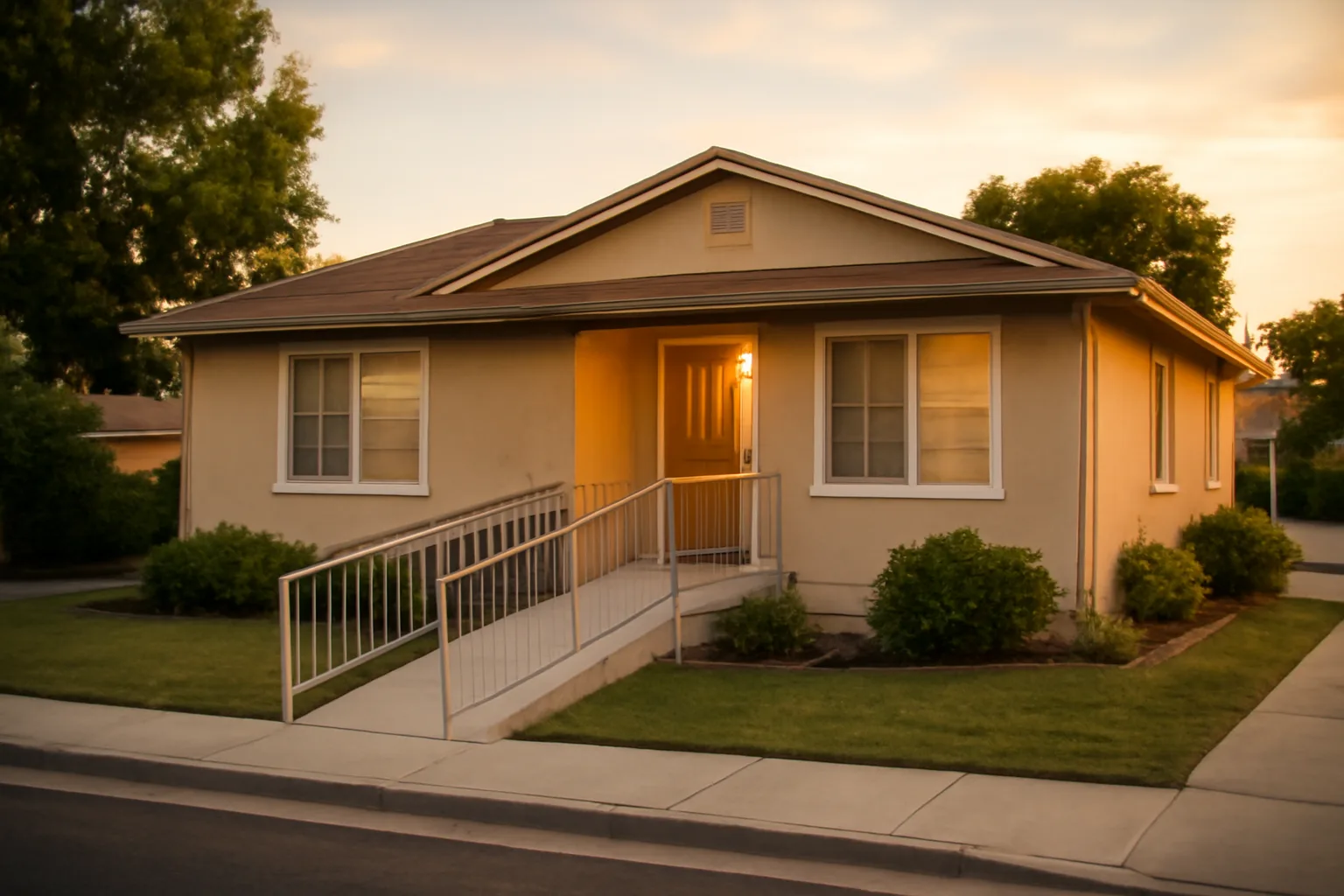
TL;DR
To get a group home license in California, you apply through the California Department of Social Services, Community Care Licensing Division, submit an application packet with fingerprints, a facility plan, and fire clearance, pass a pre-licensing inspection, and hire qualified staff before you can accept residents. Total prep usually takes several months, not weeks.
What is a group home in California, exactly?
In California, "group home" has a specific legal meaning that trips up a lot of new operators. Under the Community Care Facilities Act, a group home is a licensed facility that provides 24-hour non-medical care to children and youth who need services beyond their family's ability to provide, often tied to behavioral, emotional, or placement needs [1]. If you're picturing a home for adults with disabilities or seniors, California actually uses different license categories: Adult Residential Facilities (ARF) for adults with disabilities, and Residential Care Facilities for the Elderly (RCFE) for seniors needing assisted living support [2]. All three fall under the same regulatory umbrella, the Community Care Licensing Division of the California Department of Social Services (CDSS), but each has its own regulations, staffing ratios, and application forms. So before you fill out a single form, figure out which population you're actually serving. A facility built for teenagers in the child welfare system looks nothing like one built for adults with intellectual disabilities or one built for seniors who need help with bathing and medication. Get the category wrong and you'll redo the whole application. This matters for zoning too. California law generally treats small residential care facilities (six or fewer residents) as a residential use of property, not a business use, which protects them from a lot of local zoning fights [3]. Larger facilities don't automatically get that protection, so check with your planning department early.
What is assisted living, and how is it licensed in California?
Assisted living is a level of care where residents live in a home-like setting and get help with daily activities like bathing, dressing, medication reminders, and meals, but don't need the skilled nursing care of a hospital or nursing home. In California, this is licensed as a Residential Care Facility for the Elderly (RCFE), governed by Health and Safety Code Chapter 3.2 [2]. An RCFE is not a medical facility. Staff can help residents take medication and coordinate with outside doctors and home health agencies, but they can't provide skilled nursing care themselves. If a resident's needs get too complex for that model, California requires the facility to work with the resident's physician on a plan, and in some cases the resident has to move to a higher level of care [2]. RCFEs range enormously in size, from a small six-bed home in a residential neighborhood to a 200-unit purpose-built community with a memory care wing. The licensing paperwork is the same underlying process either way, though the physical plant requirements and staffing math scale up fast with resident count.
What is an assisted living facility (RCFE) required to provide?
An RCFE license in California requires the facility to provide room and board, supervision, and assistance with activities of daily living, plus arrange or coordinate incidental medical and dental care [2]. Specifics include help with eating, bathing, grooming, and mobility, medication support, social and recreational activities, and a safe, clean living environment. California regulation (Title 22, Division 6) spells out required staffing ratios based on resident count and need level, required emergency and disaster plans, and required staff training hours before someone can work unsupervised with residents [4]. New administrators of an RCFE have to complete a state-approved initial certification course, typically 80 hours, and pass an exam before CDSS will certify them to run the facility [4]. This is a good spot to be honest about scope: an assisted living facility is not a hospital and not a nursing home. It exists for people who are largely independent but need daily support and oversight. If a resident's care needs exceed what non-medical staff can safely manage, the facility has an obligation to reassess placement, more than keep collecting rent.
What is assisted living vs nursing home, really?
| Licensing agency | CDSS, Community Care Licensing | CA Dept of Public Health | |
|---|---|---|---|
| Care type | Non-medical, custodial support | Skilled nursing, medical | |
| Staff | Caregivers, certified administrator | Licensed nurses, RNs required | |
| Typical resident | Independent with some daily support needs | Needs ongoing medical/nursing care | |
| Medicare coverage | Generally not covered | Short-term rehab stays can be covered | Medicaid, called Medi-Cal in California, works differently for each. Medi-Cal doesn't pay RCFE room and board directly in most cases, though California's Assisted Living Waiver program can help cover some services for eligible low-income seniors in participating RCFEs [6]. Nursing home stays are more commonly covered by Medi-Cal for those who qualify financially and medically. Getting this distinction right matters when you're deciding which license to pursue, because it changes your build-out, your staffing budget, and who you can legally accept as a resident. |
The difference comes down to who provides care and under what license. Assisted living (RCFE in California) is non-medical care in a residential setting, licensed by CDSS. A nursing home, called a Skilled Nursing Facility (SNF) in California, provides 24-hour skilled nursing care ordered by a physician, and is licensed separately by the California Department of Public Health, not CDSS [5]. | Feature | Assisted Living (RCFE) | Nursing Home (SNF) |
Does Medicare cover assisted living facilities?
No. Medicare does not cover the room, board, or custodial care costs of an assisted living facility (RCFE) in California or anywhere else. The Centers for Medicare & Medicaid Services is explicit that Medicare covers medically necessary skilled nursing or rehab care, but "most long-term care isn't medical care" and Medicare does not pay for non-skilled assistance with daily activities like bathing, dressing, or eating [7]. Where Medicare can step in is short-term, on a case-by-case basis, for things like a nurse visit or physical therapy a resident's doctor orders, if that resident happens to qualify under Medicare's home health benefit. But that's not the same as Medicare paying for the facility itself. Families typically pay for RCFE care out of pocket, through long-term care insurance, or occasionally through Medi-Cal waiver programs for those who financially qualify [6]. If you're building a business plan, budget on the assumption that private pay and possibly waiver reimbursement, not Medicare, is your revenue base. Getting this wrong is one of the most common planning mistakes new operators make.
How do I start a group home in California? (Step-by-step)
Here's the actual sequence CDSS expects, condensed from the Community Care Licensing process [8]: 1. Pick your facility type. Decide if you're licensing a Group Home (children/youth), an ARF (adults with disabilities), or an RCFE (seniors/assisted living). Each has a separate application packet. 2. Attend an orientation. CDSS requires prospective licensees to attend an orientation session (in person or online, depending on region) before submitting an application [8]. 3. Secure and prep your property. Confirm zoning allows the use, and get your local fire authority to do a fire clearance inspection. You need this before CDSS will schedule its own inspection. 4. Complete the license application packet. This includes the facility floor plan, an operating budget showing you can sustain the business for at least three months, a plan of operation, personnel records, and criminal background clearance (LiveScan fingerprinting) for the licensee, administrator, and staff [8]. 5. Pay the application fee. CDSS publishes current fee schedules by facility type and capacity on its licensing fee pages; confirm the exact current amount with your state licensing agency, since fees are adjusted periodically . 6. Pass the pre-licensing inspection. A CDSS analyst visits the physical site to check it against Title 22 building, health, and safety standards before issuing the license [8]. 7. Get your administrator certified. For RCFEs specifically, the administrator must complete the required initial certification training and pass the state exam [4]. 8. Receive your license and open. Once CDSS approves the application and inspection, they issue the license, and you can legally begin accepting residents. Realistically, from orientation to open doors, plan for several months, not weeks. Background checks alone can take multiple weeks to clear, and CDSS reviews applications in the order received, so incomplete packets just slow you down further.
What documents and forms does the application packet include?
CDSS requires a specific set of documents for every application, and missing even one delays your file. Core pieces include the licensing application form itself (specific to Group Home, ARF, or RCFE), a detailed facility floor plan showing room use and exits, proof of fire clearance from your local fire marshal, and a plan of operation describing daily routines, admission criteria, and emergency procedures [8]. You'll also need personnel documentation for every staff member, including LiveScan fingerprint clearance through the Department of Justice and FBI, health screenings (like a TB test), and proof of required training hours [4][8]. Financial documents matter too: CDSS wants to see you can operate for at least three months without relying on resident income, which usually means bank statements or a documented line of credit. If you're licensing an RCFE, add the administrator certification proof once training is complete. If it's a Group Home for children and youth, expect additional program statement requirements tied to the population you intend to serve, since group homes serving youth with specific behavioral health needs may fall under additional oversight tied to California's continuum of care reform [1]. Building this packet from scratch, with no template, is where most first-time applicants lose weeks. A structured licensing kit builder can shortcut the document assembly, though you still have to gather the state-specific facts (your fire marshal's contact, your county's zoning language, your local CDSS regional office address) yourself, since those vary by county and change over time.
How much does it cost to get licensed, and how long does it take?
CDSS charges an application fee that varies by facility type and licensed capacity, and also charges an annual fee once you're operating. These amounts change periodically, so confirm the current fee schedule directly with CDSS Community Care Licensing rather than relying on a fixed number here . Beyond the state fee, budget for LiveScan fingerprinting costs per person (roughly in the $50 to $100 range historically, though this varies by county rolling fee plus DOJ/FBI processing fees), fire clearance inspection fees from your local fire authority, administrator certification course tuition if you're doing an RCFE, and whatever renovation costs your property needs to meet Title 22 physical plant standards [4][8]. Timeline-wise, CDSS doesn't guarantee a turnaround time, and it depends heavily on how complete your application is and how backed up your regional office is. A realistic range for most operators, from first orientation to open doors, runs three to nine months. Rushing the paperwork almost always backfires, since CDSS returns incomplete applications rather than working around gaps.
What staffing and training rules apply once you're licensed?
Staffing requirements differ by facility type but share a backbone: adequate staff-to-resident ratios at all times, criminal background clearance for anyone with resident contact, and documented initial and ongoing training [4]. For RCFEs, Title 22 regulations require direct care staff to complete a minimum number of training hours before working unsupervised, covering topics like fire and disaster preparedness, resident rights, and infection control [4]. Administrators carry the heaviest training load. RCFE administrators must complete state-approved initial certification (commonly cited around 80 hours) and pass a written exam, then complete continuing education hours to keep the certification current [4]. Group Home and ARF administrators face parallel, though not identical, training and certification requirements specific to their facility type. Don't treat training as a box to check once. CDSS conducts unannounced visits, and inspectors will ask staff directly about emergency procedures, medication protocols, and resident rights. If your staff can't answer, that's a citation waiting to happen, license or no license.
What happens during the licensing inspection?
Before CDSS issues your license, an analyst visits the physical site to verify it meets Title 22 standards for the facility type. Inspectors check things like exit routes and fire safety equipment, room sizes and bed spacing, kitchen and bathroom sanitation, posted emergency information, and general safety hazards [8]. This is a physical plant inspection, not a paperwork review (that happens separately during application processing). If the inspector finds deficiencies, you'll need to correct them before the license issues, which can add weeks to your timeline if you weren't prepared. After you're licensed, CDSS also conducts periodic unannounced visits and investigates complaints, so the standards you meet on day one need to stay in place every day after. New operators sometimes treat the initial inspection as the finish line; it's actually the starting line for ongoing compliance.
Where do zoning and neighborhood rules fit in?
California has one of the more operator-friendly zoning frameworks in the country for small residential care facilities. State law generally requires cities and counties to treat a residential facility serving six or fewer persons as a permitted residential use, the same as any single-family home, which means you typically don't need a special use permit or zoning variance for a small home [3]. That protection weakens as you scale. Facilities serving more than six residents, or larger purpose-built RCFE communities, often do need conditional use permits, and local requirements vary a lot by city and county. Some jurisdictions add parking, noise, or occupancy conditions on top of the state minimum, and HOA rules (which can't override state protections for small facilities but can add friction) sometimes create real headaches anyway. Before you sign a lease or buy property, call your local planning department and ask directly whether your intended facility type and size trigger a conditional use permit. Don't take a real estate agent's word for it. Confirm with your local planning department and, separately, with your state licensing agency regional office, since they don't always coordinate.
How is a group home different from other senior housing terms people use?
People throw around "assisted living facility," "group home," "board and care," and "senior living community" pretty loosely, and it causes real confusion. In California specifically: "group home" legally means youth/children's facilities, "RCFE" is the license for what most people mean by assisted living for seniors, and "board and care home" is often used informally to describe a small RCFE (six beds or fewer) [1][2]. If you're researching assisted living facilities as a general concept before narrowing to California specifics, it helps to understand that every state licenses this differently, uses different terminology, and sets different staffing ratios. What's called an RCFE in California might be called an Assisted Living Residence in one state and a Personal Care Home in another. Always confirm the exact license category with your state's specific licensing agency before assuming national terminology applies locally. For readers comparing assisted living at home models versus a licensed facility, know that California requires a license for any facility providing 24-hour non-medical care to unrelated adults, regardless of how small or home-like it feels. There's no informal exemption just because it's a small house on a residential street.
Frequently asked questions
What is assisted living?
Assisted living is a residential care model for people, usually seniors, who need help with daily activities like bathing, dressing, and medication but don't need hospital-level medical care. In California this is licensed as a Residential Care Facility for the Elderly (RCFE) under Health and Safety Code Chapter 3.2, regulated by the CDSS Community Care Licensing Division.
What is a group home?
In California, a group home is specifically a licensed facility providing 24-hour non-medical care to children and youth with needs beyond what their family can provide. It is a distinct license category from Adult Residential Facilities (adults with disabilities) and RCFEs (seniors), even though people use the term informally to mean any residential care home.
What is an assisted living facility?
An assisted living facility is a licensed residential setting providing room, board, supervision, and help with daily living activities, without providing skilled medical nursing. California licenses these as RCFEs, requiring a certified administrator, minimum staffing ratios, and compliance with Title 22 physical plant and care standards set by CDSS.
What is the difference between assisted living and a nursing home?
Assisted living (RCFE in California) provides non-medical custodial support in a residential setting, licensed by CDSS. A nursing home (Skilled Nursing Facility) provides 24-hour medical nursing care ordered by physicians, licensed separately by the California Department of Public Health. Staffing, medical oversight, and typical resident needs differ substantially between the two.
Does Medicare cover assisted living facilities?
No. Medicare does not pay for room, board, or custodial care in an assisted living facility. CMS states Medicare covers medically necessary skilled care, not most long-term custodial care. Medicare may cover short-term, doctor-ordered skilled services a resident receives, but not the facility stay itself.
How do I start a group home in California?
Attend a CDSS orientation, secure a property that meets zoning and fire clearance requirements, complete the facility-specific application packet (floor plan, plan of operation, background checks, budget), pay the application fee, pass the state's pre-licensing inspection, and get your administrator certified if required, before CDSS issues the license.
How much does a California group home or RCFE license application cost?
CDSS charges an application fee that varies by facility type and licensed bed capacity, plus an ongoing annual fee once operating. Because fees are adjusted periodically, confirm the current amount directly on CDSS's published fee schedule or with your regional Community Care Licensing office before budgeting.
How long does it take to get licensed in California?
There's no guaranteed timeline, but most operators should plan for three to nine months from initial orientation to receiving the license, depending on how complete the application is, background check processing time, and how backed up the regional CDSS office is.
Do I need a special zoning permit for a small group home in California?
Usually not, if you're serving six or fewer residents. California law generally requires cities to treat small residential care facilities as a standard residential use, not a special business use. Facilities serving more than six residents often do need a conditional use permit; confirm with your local planning department.
What background checks are required for group home staff in California?
All staff with resident contact, along with the licensee and administrator, must clear a LiveScan fingerprint background check through the California Department of Justice and FBI. CDSS also requires health screenings like TB clearance before staff can work unsupervised with residents.
Does Medi-Cal pay for assisted living in California?
Medi-Cal generally does not cover RCFE room and board directly, but California's Assisted Living Waiver program can help cover certain services for eligible low-income seniors in participating facilities. Eligibility and available slots are limited, so confirm current program status with the California Department of Health Care Services.
What training does an RCFE administrator need in California?
RCFE administrators must complete a state-approved initial certification training program, commonly cited around 80 hours, and pass a written state exam before CDSS will certify them. They must also complete ongoing continuing education hours to keep the certification active.
Can I convert my house into a licensed group home?
Potentially, yes, if it meets Title 22 physical plant standards (exits, room sizes, safety features) and passes fire clearance and zoning review. Small facilities of six or fewer residents get zoning protection under state law, but the house still needs a CDSS pre-licensing inspection before you can accept residents.
Sources
- California Department of Social Services, Community Care Licensing Division - Group Home program overview: Definition of a group home as a facility providing 24-hour non-medical care to children and youth
- California Health and Safety Code, Chapter 3.2 (RCFE): Legal basis and required services for Residential Care Facilities for the Elderly (RCFE)
- California Health and Safety Code Section 1566.3: State law treating small residential care facilities of six or fewer as a residential use for zoning purposes
- California Code of Regulations, Title 22, Division 6 (Community Care Facilities) via CDSS Manuals: Staffing ratios, training hour requirements, and RCFE administrator certification requirements
- California Department of Health Care Services, Assisted Living Waiver program: Medi-Cal's Assisted Living Waiver can help cover certain RCFE services for eligible low-income seniors
- Medicare.gov, long-term care coverage information: Medicare does not cover most long-term custodial care, including assisted living room and board
- California Department of Social Services, Community Care Licensing - How to Get a License: Step-by-step licensing process including orientation, application packet, fire clearance, and inspection
- California Department of Social Services, Community Care Licensing fee schedule: Application and annual license fees vary by facility type and capacity and are subject to periodic change