Last updated 2026-07-25
TL;DR
Starting a group home means choosing a population (IDD, mental health, senior, recovery), getting the right state license, meeting zoning and building codes, writing policy manuals, hiring qualified staff, and passing a pre-licensing inspection. Costs and timelines vary hugely by state, but most operators spend several months to a year before opening.
What is a group home?
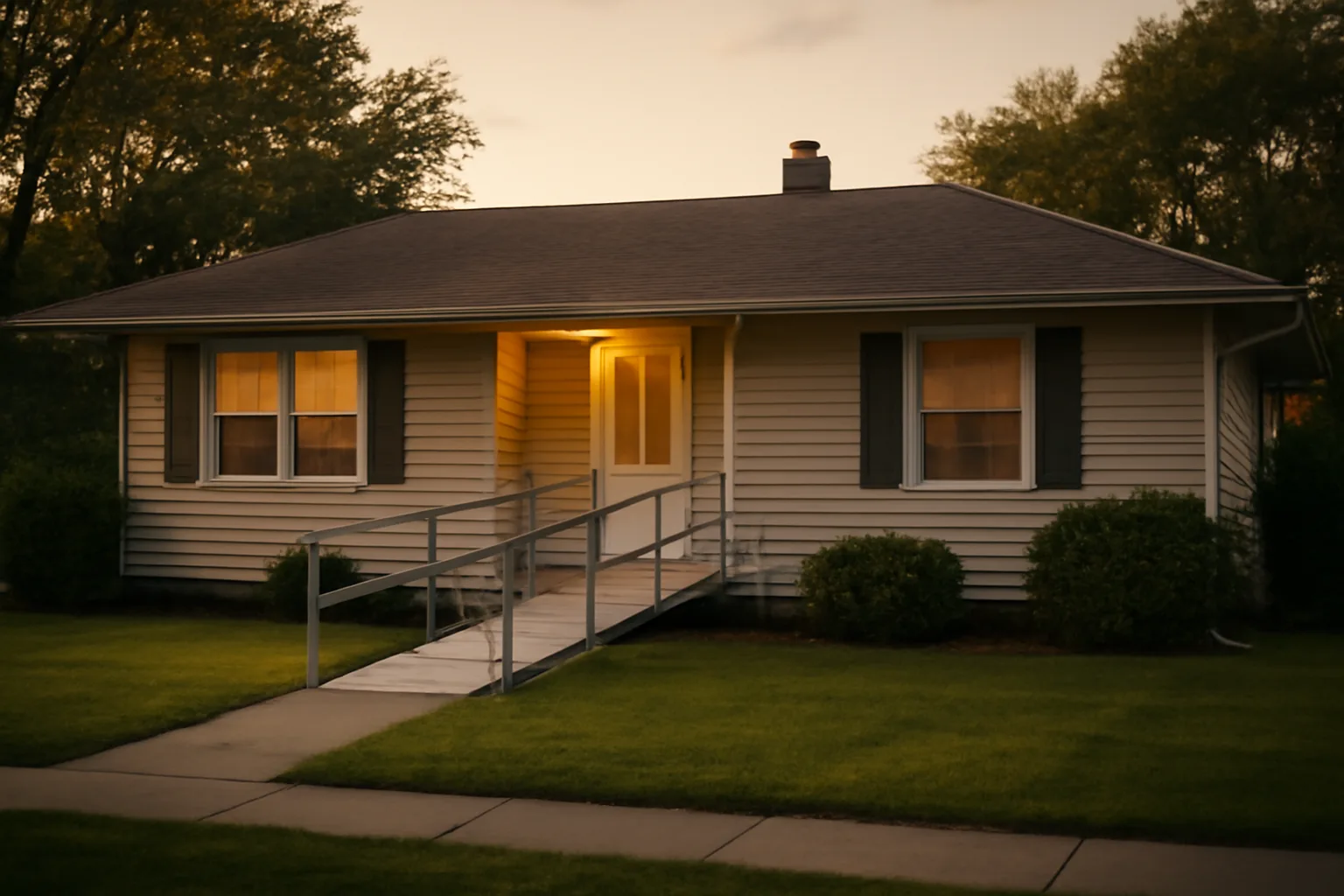
A group home is a licensed residential property where a small number of people who need support (people with intellectual or developmental disabilities, mental illness, substance use recovery needs, or seniors who need help with daily activities) live together with paid staff on site or on call. It's not a hospital and it's not a nursing home. It's a house, usually in a regular residential neighborhood, that operates under a state license instead of under a hotel or landlord model. States use different names for the same basic concept: adult foster care home, community residential facility, personal care home, residential care facility for the elderly (California calls these RCFEs), or intermediate care facility for individuals with intellectual disabilities (ICF/IID). The federal government doesn't license group homes directly. Licensing is a state function, which is why the rules on staff ratios, square footage per resident, and fire code differ so much depending on where you set up shop. Most group homes house somewhere between 2 and 10 residents, though some states allow larger "residential care facilities" with 16 or more beds under a different license tier. If you're comparing which population to serve, the populations served hub breaks down IDD, mental health, recovery, and senior models side by side.
What is assisted living?
Assisted living is a category of licensed residential care for adults, usually seniors, who need help with daily activities like bathing, dressing, medication reminders, and meals but don't need the round-the-clock skilled nursing care a nursing home provides. Assisted living sits in the middle of the care spectrum: more support than independent living, less medical intensity than a nursing facility. There's no single federal assisted living license. Each state writes its own rules on staffing, resident assessments, medication administration, and building requirements, and calls the license by its own name. Because "assisted living" is a licensing category, not a brand, a five-bed converted house and a 120-unit purpose-built building can both hold an assisted living license in the same state, as long as both meet that state's minimum standards for staffing and physical plant.
What is an assisted living facility?
An assisted living facility is the physical building and licensed operation itself, the place where assisted living services happen. It typically includes private or semi-private bedrooms, common dining and activity space, and staff present around the clock (though not always awake overnight, depending on the state's tier of license and resident acuity). Assisted living facilities are regulated at the state level through health departments or social services agencies. For example, California's RCFE program is run through the Department of Social Services under the California Health and Safety Code, and facilities must maintain specific staff-to-resident ratios and complete pre-licensing orientation before an application is approved [1]. Florida licenses assisted living facilities through the Agency for Health Care Administration under Chapter 429 of the Florida Statutes [2]. If you're researching a specific state's rules on assisted living facility licensing, start with the assisted living facility guide and then confirm current fee amounts and forms with your state licensing agency directly, since these numbers change year to year.
What is assisted living vs nursing home?
| Regulator | State (varies by name) | State + federal (42 CFR 483) | |
|---|---|---|---|
| Nursing staff | Not required 24/7 in most states | RN required, 24-hour coverage | |
| Medicare coverage | Generally not covered | Covered for short-term skilled stays | |
| Typical resident | Needs help with ADLs, mobile or semi-mobile | Needs ongoing medical/nursing care | |
| Setting | House or apartment-style building | Hospital-like clinical setting | Group homes for younger populations (IDD, mental health, recovery) aren't nursing homes at all and rarely fall under Medicare/Medicaid nursing home rules; they're licensed under separate state residential care statutes specific to those populations. |
The difference comes down to medical intensity and who pays. Assisted living is personal care and supervision; a nursing home (skilled nursing facility) provides 24-hour licensed nursing care for people with significant medical needs, post-surgical recovery, or complex chronic conditions. Nursing homes must have a registered nurse on duty and are subject to federal Medicare/Medicaid Conditions of Participation under 42 CFR Part 483, because most nursing home stays are billed through those programs [3]. Assisted living facilities are licensed purely at the state level and, in nearly all cases, are not Medicare or Medicaid certified in the same way, so the federal nursing home rulebook doesn't apply to them. Here's a quick side-by-side: | Feature | Assisted Living | Nursing Home |
What does assisted living provide?
Assisted living typically provides a private or shared room, three meals a day, help with activities of daily living (bathing, dressing, toileting, transferring), medication management or reminders, housekeeping, laundry, and some level of social or recreational programming. Staff are on site, though awake overnight staffing requirements vary by state and by the resident acuity level the facility is licensed for. What it does not typically provide is skilled nursing care, ventilator management, or intensive rehabilitation therapy: those services belong to a nursing home or a separate home health provider. Some states allow assisted living facilities to contract with home health or hospice agencies to bring in additional services as a resident's needs increase, which lets a resident "age in place" longer without transferring to a nursing home. A smaller group home version of assisted living (sometimes licensed as adult foster care or a residential care home) provides the same basic service list but in a house with far fewer residents, often with a higher staff-to-resident ratio simply because the group is smaller.
How to start a group home (step-by-step)
Starting a group home is a licensing project first and a real estate project second. Skip the license research and you'll buy or lease the wrong property. Here's the order that actually works. Step 1: Pick your population and license type. IDD, mental health, substance use recovery, and senior residential care each have separate license categories in most states, with different staffing credentials, training hours, and inspection standards. Decide this before you touch a property listing. Step 2: Confirm the specific state agency and license category. Every state's licensing agency publishes an application packet, though the department name varies (Department of Social Services, Department of Health, Department of Human Services, or similar; confirm with your state licensing agency for the exact name and current forms). Read the application checklist end to end before signing a lease. Step 3: Form your business entity and get an EIN. Most states require a legal business entity (LLC or corporation) attached to the license application, plus a federal Employer Identification Number from the IRS. Step 4: Line up the property and clear zoning. Confirm the property is zoned for group or residential care use, or qualifies under state and federal fair housing protections that limit how localities can restrict small group homes in residential zones. See the zoning-and-property hub for how this plays out state by state. Step 5: Write your policy and procedure manual. States require written policies covering admission and discharge criteria, medication management, emergency and disaster planning, resident rights, staff training, and incident reporting. This is where a template or licensing kit saves real time versus starting from a blank page; GroupHomePath's $299 State Group Home Licensing Kit is built around exactly this packet if you want a starting structure instead of drafting cold. Step 6: Hire and train staff to the state's minimum ratios. Background checks, first aid/CPR certification, and population-specific training (medication administration, behavioral crisis intervention, dementia care) are standard requirements, though hours and renewal cycles differ by state. Step 7: Complete building and fire safety inspections. Local fire marshal sign-off and a state licensing inspection typically both happen before a license is issued. Expect a life safety code review, especially around exits, smoke detectors, and sprinkler requirements if the home holds more than a handful of residents. Step 8: Submit the license application with all attachments. This usually includes floor plans, staffing plan, policy manual, proof of financial solvency, and background check clearances for owners and staff. Step 9: Pass the pre-licensing inspection and open. Some states require a mock or "pre-opening" inspection before residents move in. Don't schedule your first admission until you have the license in hand; operating before licensure is a fast way to get shut down and burn your reputation with the regulator before you've started.
How do I start a group home with limited capital?
The honest answer is that startup costs vary enormously by state, license type, and whether you buy, lease, or convert an existing home, and there's no single national number that applies to everyone. Costs typically include license application fees (often a few hundred to a few thousand dollars depending on the state and bed count), property costs or lease deposits, liability insurance, staff wages before you have full occupancy, and the fire/life safety upgrades many older homes need to pass inspection. A few ways operators keep initial costs down: leasing instead of buying until the license is proven out, starting with the smallest bed count your state's license tier allows (smaller homes often have lighter staffing and physical plant requirements), and using an existing single-family home that already meets most fire code requirements instead of a commercial shell that needs a full build-out. What doesn't work is skipping the policy manual or staffing plan to save money up front. States reject incomplete applications, and a rejected application usually costs you the application fee again on resubmission, plus months of delay. If you want a structured starting point instead of researching every requirement from scratch, look at the assisted living and assisted living facilities guides for state-specific requirement breakdowns before you commit to a property.
Does Medicare cover assisted living facilities?
No. Medicare does not pay for the room, board, or personal care costs of assisted living. Medicare.gov states plainly that Medicare "doesn't cover room and board when the main purpose is to provide custodial care, ...like help with bathing, dressing, using the bathroom, and eating" outside of a covered short-term skilled nursing stay [4]. Assisted living is considered custodial (help with daily activities), not medical/skilled care, so it falls outside Medicare's coverage rules almost entirely. Medicare will cover medical services a resident receives while living in assisted living (doctor visits, physical therapy under specific conditions, durable medical equipment), but it will not cover the facility's monthly rent or care fee itself. Medicaid is a different story. Many states offer a Medicaid Home and Community-Based Services (HCBS) waiver under Section 1915(c) of the Social Security Act that can cover personal care services in an assisted living or residential setting, though it typically does not cover room and board either; residents or their families usually pay room and board out of pocket even when a Medicaid waiver covers the care portion [5]. Waiver availability, waitlists, and covered services differ by state, so check the funding-and-medicaid resources for how a specific state structures this.
What license category should I apply for, and does it matter which state I pick?
Yes, hugely. There is no federal group home license, so the category you apply for, and the state you apply in, controls almost everything else about your business: bed count limits, staff credential requirements, physical plant standards, and how fast the agency typically processes applications. Some states split licenses by acuity level within the same broad category (for example, a "basic" personal care tier versus a "specialized" tier for residents needing behavioral support or nursing oversight). Applying for a lower tier than your intended residents actually need is one of the most common reasons operators get cited during their first inspection, because they've accepted residents whose care needs exceed what their license category allows. Before you pick a state or county, call the licensing agency directly and ask three things: current application fee and processing timeline, minimum staff-to-resident ratio for your intended population, and whether there's a moratorium or cap on new licenses in that county (some states cap group home licenses per capita in a given area to prevent over-concentration).
What zoning and property rules trip up new operators?
Zoning is where a lot of first-time operators lose months. Local zoning codes sometimes try to treat a group home like a boarding house or commercial use, which would block it from a residential neighborhood entirely. Federal fair housing law limits how far a locality can go with that. The Fair Housing Act, as amended, prohibits discrimination in housing based on disability. The statute's text at 42 U.S.C. 3604(f) makes it unlawful to discriminate in the sale or rental of a dwelling because of a disability of the buyer, renter, or a person associated with them, and courts have applied this to zoning restrictions that single out group homes for people with disabilities [6]. That doesn't mean zoning boards can't apply any rules (occupancy limits, spacing requirements between group homes, and safety codes generally still apply), but a blanket ban on group homes in residential zones is a common legal flashpoint. Beyond zoning, expect to deal with: fire marshal review (especially exit width, smoke/CO detectors, and sprinkler requirements for homes above a certain bed count), ADA or state accessibility requirements if you're serving residents with mobility limitations, and local business licensing on top of the state care license. For a deeper look at how this plays out property by property, see the zoning-and-property hub.
What staffing and training does a group home need?
Staffing requirements are set state by state, but nearly every state requires criminal background checks for owners and direct-care staff, a minimum staff-to-resident ratio that scales with resident acuity, and some number of initial and annual training hours (typically covering first aid/CPR, medication administration, abuse/neglect reporting, and population-specific training like behavioral crisis intervention or dementia care). Most states also require a designated administrator or manager who meets specific education or experience thresholds and, in many states, must pass a state administrator exam or complete a state-approved training course before the license is issued. If you're staffing a home that serves residents with significant behavioral or medical needs, expect the ratio requirements to be tighter and the training list longer than a lower-acuity personal care home. Budget real time for this. Background check turnaround alone can take two to six weeks depending on the state's system, and you generally can't submit a complete license application until staff files are done.
What happens during the licensing inspection?
The pre-licensing inspection is where the state confirms, in person, that what you put on paper matches what actually exists at the property. Inspectors typically check bedroom square footage per resident, exit routes and fire safety equipment, kitchen and food storage sanitation, medication storage (usually a locked cabinet or designated area), posted emergency evacuation plans, and staff files (background checks, training certificates, TB tests where required). Most states also do unannounced follow-up inspections after you're licensed and operating, often annually, sometimes more often if there's been a complaint. Keep your policy manual, staff files, and resident records organized and easy to pull, because an inspector who has to wait around for paperwork tends to look harder at everything else. For the fuller walkthrough of what inspectors check and how to prepare, see the inspections hub.
Frequently asked questions
What is a group home?
A group home is a licensed residential property where a small number of people needing support, such as people with intellectual or developmental disabilities, mental illness, or seniors needing help with daily activities, live together with paid staff. States regulate them under different names (adult foster care, personal care home, RCFE) with their own staffing and building rules.
What is assisted living?
Assisted living is licensed residential care for adults who need help with daily activities like bathing and medication reminders but don't need 24-hour skilled nursing care. It's regulated at the state level, with no single federal assisted living license, so rules on staffing and services vary by state.
What is an assisted living facility?
An assisted living facility is the licensed building where assisted living services are delivered: private or shared rooms, common dining space, and on-site staff. States like California and Florida regulate them through their own health or social services agencies and statutes, such as Florida's Chapter 429.
What is the difference between assisted living and nursing home?
Assisted living provides personal care and supervision under state licensing; a nursing home provides 24-hour skilled nursing care under both state licensing and federal Medicare/Medicaid rules (42 CFR Part 483), including a required registered nurse on duty. Nursing homes serve residents with more intensive medical needs.
What does assisted living provide?
Assisted living typically provides a room, meals, help with bathing/dressing/medication, housekeeping, laundry, and social activities, with staff on site. It generally does not provide skilled nursing, ventilator care, or intensive rehab therapy, which belong to a nursing home or a separate home health provider.
How to start a group home?
Pick your population and license category, confirm the exact requirements with your state licensing agency, form a business entity, secure a property that clears zoning and fire code, write required policy manuals, hire and train staff to state ratios, pass building and licensing inspections, then submit your full application before admitting residents.
How do I start a group home?
Start by identifying which state licensing category fits the population you want to serve (IDD, mental health, recovery, or senior care), then work backward from that agency's published application checklist. Property, staffing, and policy decisions should all follow the license requirements, not the other way around.
Does Medicare cover assisted living facilities?
No. Medicare does not cover room, board, or custodial care in assisted living. Medicare.gov confirms it doesn't pay for care 'when the main purpose is to provide custodial care.' Medicare may cover specific medical services a resident receives while living there, but not the facility's care fees.
Does Medicaid cover assisted living or group homes?
Sometimes, through state Medicaid Home and Community-Based Services waivers under Section 1915(c) of the Social Security Act, which can cover personal care services in a residential setting. Room and board is usually still paid out of pocket. Coverage and waitlists differ significantly by state.
How much does it cost to start a group home business?
Costs vary too widely by state, license type, and bed count to give one number honestly. Expect application fees, property or lease costs, insurance, pre-opening staff wages, and any fire/life safety upgrades an older home needs. Confirm current fee schedules directly with your state licensing agency.
Can a group home operate in any residential neighborhood?
Usually yes, within limits. The Fair Housing Act restricts how local zoning can single out group homes for people with disabilities, and courts have found blanket bans in residential zones generally unlawful. Local occupancy limits, spacing rules, and safety codes can still apply.
How long does it take to get a group home license?
Timelines vary by state and license category, often ranging from a couple of months to closer to a year depending on inspection backlogs, background check processing, and how complete your initial application is. Incomplete applications are the most common cause of delay, so confirm current processing times with your state agency.
What's the difference between an ICF/IID and a regular group home?
An ICF/IID (Intermediate Care Facility for Individuals with Intellectual Disabilities) is a specific Medicaid-certified license category with federal certification requirements on top of state licensing, generally for higher-acuity residents. A standard group home is licensed purely at the state level without that federal Medicaid certification layer.
Sources
- California Health and Safety Code, RCFE licensing provisions: California's Health and Safety Code governs RCFE licensing standards
- California Department of Social Services, Community Care Licensing Division, RCFE program: California licenses assisted living facilities (RCFEs) through the Department of Social Services
- Florida Statutes Chapter 429, Assisted Care Communities: Florida licenses assisted living facilities under Chapter 429 through the Agency for Health Care Administration
- Code of Federal Regulations, 42 CFR Part 483: Nursing homes must meet federal Conditions of Participation including 24-hour registered nurse coverage
- Medicare.gov, Long-term care: Medicare does not cover room and board when the main purpose is custodial care
- Social Security Act Section 1915(c), Home and Community-Based Services Waivers: States can offer HCBS waivers under Section 1915(c) covering personal care services in residential settings
- Fair Housing Act, 42 U.S.C. 3604(f): The Fair Housing Act prohibits discrimination in housing based on disability, which applies to zoning restrictions on group homes