Last updated 2026-07-25
TL;DR
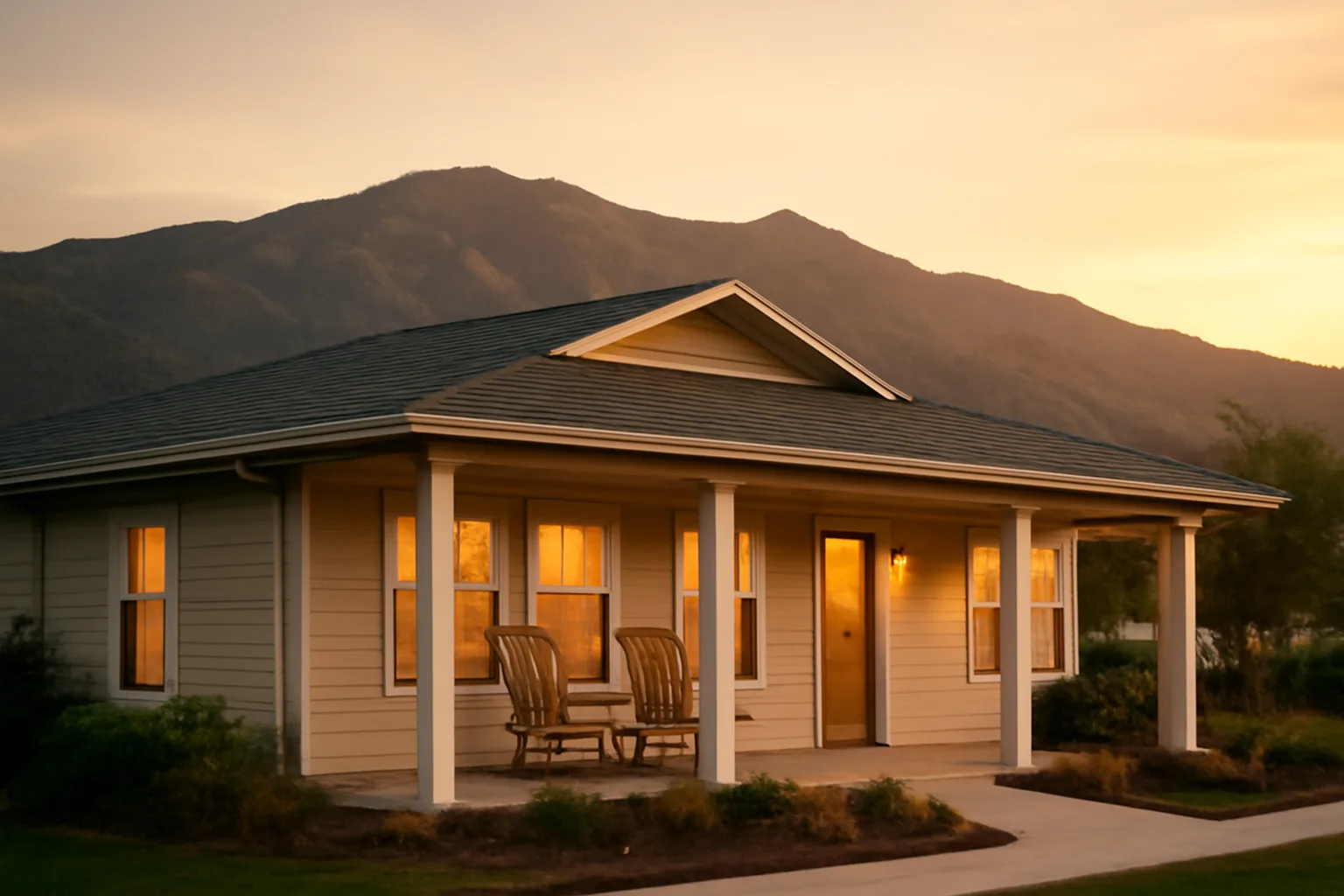
Mountain view residential assisted living usually means a small, home-like assisted living facility marketed around a scenic setting, not a specific license type. It provides housing, meals, and help with daily activities for seniors who don't need nursing-home-level medical care. Medicare doesn't pay for the room and board; Medicaid may help through state waiver programs, depending on where the home is located.
what is assisted living?
Assisted living is a licensed housing option for adults, usually seniors, who need help with daily activities like bathing, dressing, medication management, or meal prep, but who don't need the round-the-clock skilled nursing care you'd get in a nursing home. Every state licenses these facilities under its own name and rule set (residential care facility, assisted living facility, personal care home, adult foster care) and every state sets its own staffing ratios, admission criteria, and inspection cycle. The Centers for Medicare & Medicaid Services (CMS) doesn't operate a single national assisted living license. Instead, CMS defers to states, which is why a "mountain view residential assisted living" facility in Colorado looks different on paper than one in Arizona, even if the building itself, the daily routine, and the marketing photos look almost identical. If you're researching a specific property with "mountain view" in its name, the name is almost always a marketing choice tied to location or a scenic name a developer picked. It is not a regulatory category. Most assisted living communities fall somewhere between fully independent senior apartments and a nursing home. Residents typically have their own room or small apartment, share common dining and activity space, and get help from staff who are awake and on-site but not necessarily licensed nurses. For a broader breakdown of what counts as assisted living versus other senior housing types, state licensing pages are the most reliable source, since terminology shifts state to state.
what is a group home?
A group home is a licensed residential setting where a small number of unrelated people (often 4 to 10, though state caps vary widely) live together and receive support services, supervision, or care from paid staff. The term covers a lot of ground: group homes serve people with intellectual and developmental disabilities (IDD), people in mental health or substance use recovery, and, in some states, seniors who need assisted-living-level support in a smaller, more home-like setting than a big commercial building. The defining features of most group homes are small resident count, a residential (not institutional) building, and staff who are present but not necessarily medical professionals. Licensing usually falls under a state's department of health, department of social services, or department of developmental disabilities, and the specific license name changes depending on the population served. An adult foster care home serving three seniors and an IDD group home serving six adults with disabilities might sit in completely different chapters of the same state's code, even though both get called "group homes" informally. If a "mountain view" property advertises itself as a group home for seniors rather than a licensed assisted living facility, dig into which license it actually holds. Some smaller senior group homes are licensed as adult foster care or adult family homes rather than assisted living, and the resident protections, staffing rules, and Medicaid coverage differ under each.
what is an assisted living facility (and what does the license actually require)?
An assisted living facility (ALF) is the licensed building and organization that provides assisted living services. Getting licensed as an ALF generally means clearing four hurdles: a facility application with your state's licensing agency, a life-safety and building inspection (often through the state fire marshal or local fire authority), background checks and training documentation for staff, and a written policy manual covering admission, medication management, emergency procedures, and resident rights. Most states require a designated administrator who holds a specific certification or license, separate from the facility license itself. Staffing ratios are usually written as a minimum staff-to-resident ratio during waking hours and a lower one overnight, and these ratios are set in each state's administrative code, not by CMS. Building requirements typically include minimum square footage per resident, a cap on how many people can share a room (commonly two), accessible bathrooms, and a sprinkler or fire alarm system that meets the local fire code. Because these thresholds vary this much, confirm exact staffing ratios, resident caps, and inspection frequency with your state licensing agency before you sign a lease or make an offer on a property. A building that's zoned and laid out perfectly for six residents in one state might be one bedroom short of the minimum in another.
what is assisted living vs nursing home?
| Licensed by | State (varies by name) | State + CMS Medicare/Medicaid certification |
|---|---|---|
| Staffing | Aides, medication techs, awake staff | Licensed nurses (RN/LPN) around the clock |
| Medicare coverage | Not covered (room and board) | Short-term skilled care covered under conditions |
| Typical resident | Needs help with ADLs, medically stable | Needs ongoing nursing or rehab care |
| National median cost (2023) | $5,900/month | $9,733/month (semi-private room) [2] |
The core difference is the level of medical care. Assisted living is for people who need help with daily activities but are medically stable; nursing homes (also called skilled nursing facilities) are for people who need ongoing medical treatment, rehabilitation, or hands-on nursing care around the clock. Nursing homes are staffed with licensed nurses on every shift and are certified to bill Medicare and Medicaid for skilled care; assisted living facilities are licensed by the state but are not Medicare-certified. CMS describes nursing homes as facilities that provide "a level of care that includes 24-hour, 7-day-a-week nursing staff" [1], which is a bar most assisted living facilities are not built, staffed, or licensed to clear. Assisted living residents generally can walk, or move with minor assistance, manage their own medications with reminders, and don't require a hospital bed or IV-level nursing support. Once a resident's needs cross into needing daily skilled nursing, most states require them to be discharged from assisted living and admitted to a nursing home instead, and the assisted living license itself usually caps how much nursing care the facility is allowed to provide before it's operating outside its scope. | Feature | Assisted living facility | Nursing home |
what does assisted living provide?
Assisted living generally provides a private or semi-private room, three meals a day, help with activities of daily living (bathing, dressing, toileting, transferring), medication management or reminders, housekeeping and laundry, 24-hour staff presence, and some level of social or recreational programming. Most states require a written service plan for each resident that's reviewed periodically, usually every 6 to 12 months or after a significant health change, and updated whenever the resident's needs shift. What's not typically included: skilled nursing care, physical therapy beyond what a resident's own outside provider brings in, and hands-on medical treatment like wound care beyond a basic level. Facilities that want to offer more (medication administration by a nurse, higher levels of memory care, hospice coordination) often need an additional license tier or a special waiver from the state, and this is one of the most common places new operators get tripped up, assuming their base assisted living license covers services it doesn't. Daily rates and what's bundled into them vary by state and even by individual community. Some charge a flat monthly rate that includes everything; others use a base rate plus add-on charges for higher care levels (medication management, incontinence care, mobility assistance). If you're comparing a specific assisted living facility to a competitor, ask for the itemized rate sheet, more than the advertised starting price, since the difference between base rate and fully-loaded rate for a resident needing moderate care can be substantial.
what is the difference between assisted living and nursing home (cost and coverage)?
Beyond care level, the two differ sharply in who pays. Nursing home stays can be covered by Medicare for a limited period after a qualifying hospital stay (up to 100 days per benefit period, with a copay kicking in after day 20), per CMS Medicare coverage rules [3]. Assisted living has no equivalent Medicare benefit at all. Long-term nursing home stays and assisted living costs are instead paid out of pocket, through long-term care insurance, or through Medicaid once a resident spends down assets to meet their state's eligibility limit. Median national costs reflect this split. Genworth's 2023 Cost of Care Survey put the median assisted living cost at $5,900/month and the median nursing home semi-private room at $9,733/month [2]. Both numbers vary heavily by state and even by metro area, so treat any national median as a starting point for budgeting conversations, not a quote.
does medicare cover assisted living facilities?
No. Medicare does not cover the room and board cost of assisted living, and CMS is direct about this: Medicare.gov states that Medicare "doesn't cover long-term care (also called custodial care)" if that's the only kind of care a person needs [4]. Medicare Part A and Part B may still cover medically necessary services a resident receives while living in an assisted living community, things like doctor visits, physical therapy ordered by a doctor, or durable medical equipment, but the facility's monthly charge itself is not a Medicare-covered expense anywhere in the country. Medicaid is a different story, though it's not automatic either. Many states offer a Home and Community-Based Services (HCBS) waiver under Medicaid that can help cover the personal care and service costs (not room and board) in an assisted living setting for residents who financially qualify. Medicaid.gov describes HCBS waivers as a way for states to "waive certain Medicaid statutory requirements" to allow long-term services in a home or community setting rather than an institution [5]. Whether a specific state's waiver covers assisted living, how long the waitlist is, and what income and asset limits apply are all things you need to confirm with your state Medicaid agency directly, because the differences between states are large enough that a national answer would mislead you.
how to start a group home?
Starting a group home (whether for seniors, IDD, mental health, or recovery populations) follows a similar sequence in almost every state, even though the specific forms and agency names differ. 1. Pick your population and license type. Confirm with your state licensing agency which license category fits: adult foster care, assisted living, IDD group home, or a mental health/recovery residential license. This decision drives every rule that follows, from staffing ratios to building code. 2. Check zoning before you sign anything. Group homes for people with disabilities are generally protected under the federal Fair Housing Act. The Fair Housing Act, as amended in 1988, prohibits discrimination in housing based on disability, and courts have repeatedly held that this protection limits how municipalities can zone against group homes for people with disabilities compared to similarly sized groups of unrelated people, per 42 U.S.C. 3604 [6]. That protection doesn't mean zoning is a non-issue; local occupancy limits, spacing requirements between homes, and building code still apply, and getting this wrong after signing a lease is one of the costliest mistakes new operators make. 3. Write your policies and procedures manual. States require a written manual covering admissions criteria, medication management, emergency and disaster procedures, resident rights, grievance processes, and staff training requirements. This isn't a box-checking document; state inspectors will ask staff questions during a survey to confirm the policies are actually followed, more than filed away. 4. Build your staffing plan. Calculate staff-to-resident ratios for day, evening, and overnight shifts based on your state's minimums, then add a margin for call-outs and turnover. Background check requirements (often through a state or FBI fingerprint system) and required training hours (first aid, CPR, medication administration, abuse reporting) apply to every direct care employee. 5. Apply for your license and schedule your inspection. Most states require the application, a facility floor plan, proof of business registration, background check clearances, and a fee before they'll schedule the pre-licensing inspection. Confirm your state's fee amount and processing timeline directly with the agency, since both vary and change over time. 6. Pass the life-safety and health inspection. This usually involves the state licensing surveyor and, separately, the local fire marshal, checking exits, fire suppression, resident room sizes, and sanitation before they'll issue the license. A lot of first-time operators underestimate how much of this work is paperwork before it's ever about the residents. Building the policy manual, staffing plan, and application packet correctly the first time saves months of resubmissions. That's the exact gap the $299 State Group Home Licensing Kit is built to close: a state-specific set of policy templates and application checklists so you're not starting from a blank page.
how do i start a group home? (the practical checklist)
If you already know your population and license type, here's the practical order of operations most successful applicants follow, condensed from the steps above: - Confirm the exact license name and issuing agency with your state (department of health, department of social services, or a dedicated aging/disability agency, depending on the state).
- Secure a property that meets zoning, occupancy, and building code before signing a long lease or closing on a purchase.
- Draft your policy and procedures manual covering admissions, medications, incident reporting, and emergency plans.
- Build a staffing plan with ratios that meet or exceed your state's minimum, plus written job descriptions and training schedules.
- Complete background checks for every owner, administrator, and direct care staff member.
- Submit your application with the required fee, then prepare for the pre-licensing inspection.
- Set up your admission agreement and resident rights documents, since most states require these be signed before a resident moves in. The agencies involved and the order they want documents submitted in differ by state, so treat this as a planning checklist, not a substitute for your state's actual application instructions.
zoning and building considerations for a mountain-view or scenic-location property
Properties marketed with "mountain view" or similar scenic branding are often in unincorporated county areas, hillside zoning districts, or planned developments with their own restrictions on group living arrangements, septic capacity, road access, and fire evacuation planning. Wildfire-prone hillside and mountain locations frequently carry extra fire marshal scrutiny: defensible space requirements, evacuation route width, and backup power for medical equipment during outages are common asks in these areas even when the base assisted living code doesn't mention them explicitly. Before committing to a scenic property, verify three things with local planning and your state licensing agency: that the zoning district allows a group residential use (more than single-family residential), that the parcel's septic or sewer capacity supports the number of residents and staff you're planning for, and that the fire district serving that address can meet response-time and access requirements for a licensed care facility. A gorgeous view doesn't offset a zoning denial or a septic system rated for four bedrooms when your license needs eight.
how inspections typically work once you're licensed
Once licensed, assisted living and group home facilities go through periodic state inspections (commonly annual, though frequency depends on your state and any past compliance history) plus complaint-driven inspections that can happen any time a resident, family member, or staff member files a report with the licensing agency. Inspectors typically review resident files, medication logs, staff training records, incident reports, and the physical building, then walk the halls talking to residents and staff directly. The most common citation categories nationally tend to cluster around medication management errors, incomplete staff training documentation, and outdated resident service plans, though the exact citation categories and their names are defined in each state's code. Keeping your policy manual, training logs, and service plans current between inspections (not scrambled together the week before) is the single best way to keep a routine inspection routine.
Frequently asked questions
what is assisted living?
Assisted living is a state-licensed housing option for adults who need help with daily activities like bathing, dressing, or medication management but don't need 24-hour skilled nursing care. Residents typically live in a private or semi-private room, share common areas, and receive support from staff who are on-site but usually not licensed nurses. Rules, names, and staffing ratios vary by state.
what is a group home?
A group home is a licensed residential setting where a small number of unrelated people live together and receive support or supervision from paid staff. It's an umbrella term covering senior care, IDD services, and mental health or recovery housing. The specific license, resident cap, and rules depend on which population the home serves and which state it's in.
what is an assisted living facility?
An assisted living facility is the licensed building and organization providing assisted living services: housing, meals, help with daily activities, and medication management for residents who don't need nursing-home-level care. It requires a state license, a designated administrator, background-checked staff, and a written policy manual, all confirmed and inspected by the state licensing agency before opening.
what is assisted living vs nursing home?
Assisted living serves people who need help with daily activities but are medically stable; nursing homes serve people who need ongoing skilled nursing care, 24/7 licensed nursing staff, and often rehabilitation. Nursing homes are Medicare-certified for short-term skilled care; assisted living facilities are not. National median costs also differ: about $5,900/month for assisted living versus $9,733/month for a nursing home semi-private room in 2023, per Genworth.
what does assisted living provide?
Assisted living typically provides a room, three daily meals, help with bathing, dressing, and mobility, medication reminders or management, housekeeping, laundry, 24-hour staff presence, and social or recreational activities. It generally does not include skilled nursing care or hands-on medical treatment; residents needing that level of care usually transition to a nursing home.
does medicare cover assisted living facilities?
No, Medicare does not cover the room and board cost of assisted living. Medicare.gov states Medicare doesn't cover long-term custodial care when that's the only care a person needs. Medicare may still pay for medically necessary services a resident receives there, like doctor visits or physical therapy, but not the facility's monthly charge itself.
how do i start a group home?
Confirm the right license type with your state agency, secure a property that meets zoning and building code, write a policy and procedures manual, build a compliant staffing plan, complete background checks, submit your application and fee, and pass the pre-licensing life-safety inspection. The exact agency names, fees, and timelines vary by state, so verify each step directly with your state licensing agency.
how much does it cost to start a group home?
Startup costs vary hugely by state, property type, and population served, ranging from tens of thousands of dollars for a small home-based license to several hundred thousand for a purpose-built facility. Costs include the property or lease, renovations to meet fire and building code, licensing fees, staff training, and working capital. Confirm exact licensing fees with your state agency; they range widely and change over time.
is mountain view residential assisted living a specific type of license?
No. "Mountain view" in a facility name is almost always a marketing or location reference, not a regulatory category. The facility still operates under whatever license type your state issues, such as assisted living, adult foster care, or residential care home. Confirm the actual license held by any specific property with your state licensing agency.
what is the difference between assisted living and a nursing home in terms of medicaid coverage?
Medicaid can cover nursing home care directly in all states for eligible residents. For assisted living, coverage usually comes through a state Home and Community-Based Services (HCBS) waiver that pays for personal care services, not room and board, and availability, waitlists, and eligibility rules differ significantly by state.
does zoning affect where I can open an assisted living or group home?
Yes, but federal Fair Housing Act protections generally prevent municipalities from treating small group homes for people with disabilities differently than other residential households in the same zoning district. Local occupancy limits, spacing rules, and building code still apply, so confirm zoning compatibility with your local planning department before signing a lease or purchase agreement.
how often are assisted living facilities inspected?
Most states conduct routine inspections on an annual basis, plus additional complaint-driven inspections whenever a resident, family member, or staff member files a concern with the licensing agency. Exact frequency and triggers for more frequent inspections depend on your state's regulations and the facility's compliance history, so confirm specifics with your state licensing agency.
what staffing ratio does an assisted living facility need?
Staffing ratios are set by each state's administrative code and typically require higher staff-to-resident ratios during waking hours than overnight. There is no single national ratio. Confirm your state's minimum ratio requirements, required staff certifications, and overnight staffing rules directly with your state licensing agency before finalizing your staffing budget.
Sources
- CMS, Nursing Home Care: Nursing homes provide 24-hour, 7-day-a-week nursing staff and Medicare coverage rules for skilled nursing care
- Genworth, Cost of Care Survey 2023: Median assisted living cost of $5,900/month and nursing home semi-private room cost of $9,733/month in 2023
- Medicare.gov, Skilled Nursing Facility Care: Medicare covers up to 100 days of skilled nursing facility care per benefit period after a qualifying hospital stay
- Medicare.gov, Long-Term Care: Medicare doesn't cover long-term custodial care
- Medicaid.gov, Home & Community-Based Services 1915(c): States can use HCBS waivers to waive certain Medicaid requirements and cover long-term services in community settings
- 42 U.S.C. 3604, Fair Housing Act (Cornell Legal Information Institute): Fair Housing Act protections limit how municipalities can restrict group homes for people with disabilities in residential zones