Last updated 2026-07-24
TL;DR
A residential group home is a licensed residential setting, usually a house, where a small number of unrelated people with disabilities, mental illness, or care needs live together with paid staff support. It differs from assisted living (larger, senior-focused, hospitality model) and nursing homes (24-hour skilled nursing). Starting one means state licensing, zoning approval, staffing plans, and a policy manual before you ever take a resident.
What is a residential group home?
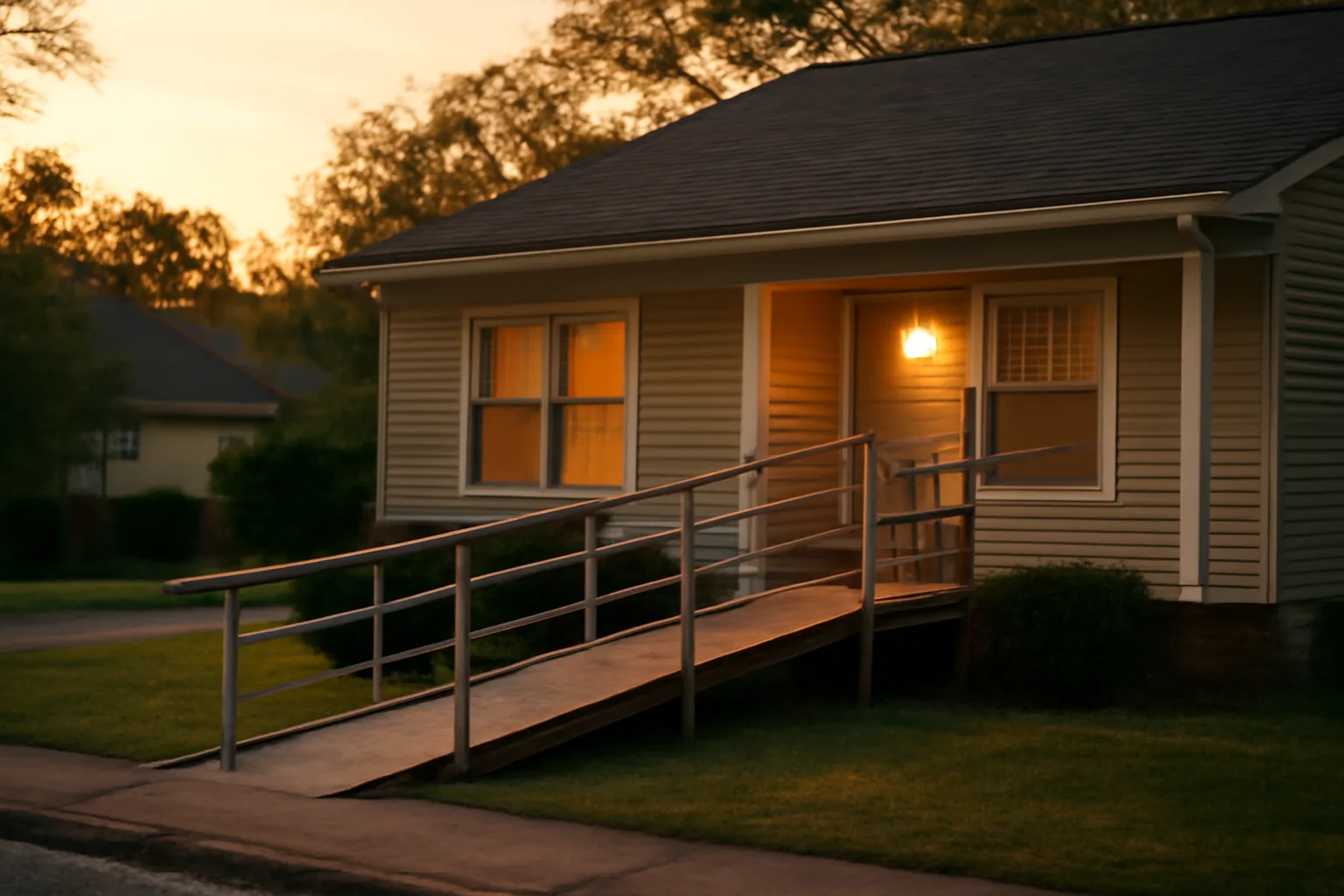
A residential group home is a licensed home, typically a single-family house or small multi-unit building, where a small number of people live together and receive support from paid staff. The population varies by state and program: intellectual and developmental disabilities (IDD), mental illness, substance use recovery, or aging adults who need help with daily activities but not skilled nursing care. Most states cap group homes at 4 to 8 residents to keep them "residential" in character rather than institutional. That cap is not arbitrary. It usually determines which building and fire code applies (residential occupancy versus institutional occupancy) and which licensing category you fall under. States use different names for the same basic concept: adult foster care, adult family home, community residential facility, group home, or residential care facility for the elderly. The legal backbone in most states is a home and community-based services framework tied to Medicaid. The Centers for Medicare & Medicaid Services describes home and community-based services (HCBS) as programs that "provide opportunities for Medicaid beneficiaries to receive services in their own home or community rather than institutions" [1]. Group homes for IDD and mental health populations are frequently funded through HCBS waivers under this authority, even though the home itself is licensed at the state, not federal, level. If you're comparing group homes to other residential care models, our guides on assisted living and assisted living facility licensing break down where the lines get blurry, especially in states that license small assisted living homes under similar rules to group homes.
What is assisted living?
Assisted living is a residential care model for people, usually seniors, who need help with activities of daily living (bathing, dressing, medication reminders, meals) but do not need the level of medical care a nursing home provides. It sits between independent living and skilled nursing on the care spectrum. There is no single federal definition. Assisted living is regulated entirely at the state level, and every state has its own licensing category, resident capacity rules, staffing ratios, and admission/discharge criteria. Some states call it "residential care facility," others "personal care home," others "assisted living facility." The National Center for Assisted Living, the industry's primary trade group, estimates there are roughly 28,900 to 30,600 licensed assisted living communities in the U.S., though exact counts shift as states update their registries [2]. Because licensing categories vary this much, the honest answer to "what is assisted living in my state" is: check your state's specific statute and licensing agency page, not a national definition. Our assisted living facilities hub walks through how to find your state's exact category and rule citation.
What is an assisted living facility?
An assisted living facility is the licensed building and business entity that provides assisted living services under a state's specific regulatory category. The word "facility" here is doing legal work: it means the state has issued (or requires) a license tied to that address, that operator, and often that specific resident capacity. Most states divide assisted living facilities into tiers based on size and acuity. A small facility (sometimes 6 residents or fewer) might fall under lighter staffing and building code requirements than a large facility with 50+ beds and a licensed nurse on staff. Some states also have a separate, lower tier for memory care or dementia-specific units within an assisted living facility, with its own staff training hours and secured-unit requirements. The practical difference between a "residential group home" and an "assisted living facility" often comes down to population and funding source, not the physical building. A group home is more likely to serve IDD, mental health, or recovery populations and be funded through Medicaid HCBS waivers or state mental health authority contracts. An assisted living facility is more likely to serve seniors and be private-pay or, in some states, Medicaid-waiver funded for room and board offsets. Confirm with your state licensing agency which category actually applies to the population you intend to serve, because operating the wrong category (even accidentally) can trigger a cited deficiency or a stop-placement order.
What is the difference between assisted living and nursing home?
| Regulator | State licensing agency | State agency + CMS certification | |
|---|---|---|---|
| Nursing care | Limited, not 24-hour skilled nursing | 24-hour skilled nursing required | |
| Typical resident | Needs help with ADLs, largely independent | Needs ongoing medical/rehab care | |
| Medicare coverage | Not covered (room and board) | Short-term skilled stays can be covered | |
| Federal oversight | None (state-only) | 42 CFR Part 483 [3] | A residential group home for IDD or mental health populations is closer to assisted living on this spectrum: it is a non-medical, state-licensed residential model, not a nursing facility. |
The core difference is the level of medical care. Assisted living provides help with daily living activities and some medication management, but it is not licensed to deliver ongoing skilled nursing care. A nursing home (also called a skilled nursing facility) provides 24-hour nursing care, rehabilitation services, and is licensed to treat residents with complex medical needs. CMS regulates nursing homes under a federal framework tied to Medicare and Medicaid certification, requiring things like a registered nurse on duty at least 8 hours a day and specific resident assessment protocols under 42 CFR Part 483 [3]. Assisted living facilities have no equivalent federal certification requirement; they are licensed and inspected purely at the state level, which is why standards vary so much from one state to the next. Here's a simple side-by-side: | Feature | Assisted living | Nursing home |
What does assisted living provide?
Assisted living typically provides help with activities of daily living, meals, housekeeping, laundry, social and recreational activities, and some level of health monitoring, plus a room or apartment. Exactly what's included depends on the state's licensing rules and the individual community's service agreement. Common services across most state definitions include: assistance with bathing, dressing, toileting, and mobility; medication administration or reminders (states vary on whether unlicensed staff can administer versus just remind); three meals a day; housekeeping and linen service; transportation to medical appointments; and 24-hour staff availability for emergencies. What is usually NOT included: skilled nursing care, ventilator or feeding-tube management, and (in most states) care for residents who are bedbound or need two-person transfer assistance, unless the facility has a specific higher-acuity license. States require a written service or care plan for every resident, usually redone every 90 days to annually, that documents exactly which of these services the resident is receiving and at what frequency. This is one of the first documents inspectors ask to see, and a mismatch between the plan and the resident's actual observed condition is a common citation.
Does Medicare cover assisted living facilities?
No. Medicare does not cover the cost of room and board at an assisted living facility. Medicare.gov states plainly that "Medicare doesn't cover long-term care (also called custodial care)" if that's the only kind of care needed, and assisted living room-and-board costs fall into that custodial category [4]. Medicare can still cover specific medical services delivered while someone lives in assisted living, like doctor visits, physical therapy, or durable medical equipment, the same way it would in any home setting. What it will not pay for is the rent, meals, or personal care staff costs of the facility itself. Medicaid is a different story, but it's complicated too. Medicaid does not pay for room and board in assisted living either, but many states use Medicaid HCBS waivers to cover the personal care services delivered inside an assisted living or group home setting, leaving the resident (or their family, or SSI) to cover rent and food separately. CMS's HCBS overview confirms this waiver authority is what allows states to fund community-based personal care as an alternative to nursing facility placement [1]. If you're building a funding model for a group home, do not assume Medicaid will cover the building costs; check your specific state's waiver rate structure with your state Medicaid agency before you finalize a business plan.
How to start a group home
Starting a group home means completing four parallel workstreams before you can accept your first resident: business formation, real estate/zoning, state licensing, and staffing/policy documentation. States differ on the exact order and requirements, but the shape is consistent nationally. Step 1: Decide your population and license category. Confirm with your state licensing agency (often the state Department of Health, Department of Human Services, or a specific developmental disabilities or behavioral health division) which specific license applies to the population you plan to serve, IDD, mental health, recovery, or elderly/RAL. This decision drives every other requirement, from staff-to-resident ratios to fire code. Step 2: Form your business entity and get an EIN. Most states require the applicant to be a formed legal entity (LLC or corporation) before a license application will even be accepted. Step 3: Secure your property and confirm zoning. Group homes are frequently protected under the Fair Housing Act. HUD's Office of Fair Housing and Equal Opportunity has affirmed in guidance and enforcement actions that zoning and land-use decisions cannot treat housing for people with disabilities less favorably than similar housing for unrelated individuals generally, under 42 U.S.C. 3604(f) [5]. Local occupancy and spacing rules still apply and vary widely, so get zoning confirmation in writing before you sign a lease or close on a property. Step 4: Build your policy and procedure manual. This includes admission/discharge criteria, medication management protocol, emergency and disaster plans, resident rights, grievance procedures, staff training curriculum, and incident reporting procedures. Most state licensing applications require this manual as a submitted attachment, more than an internal document. Step 5: Hire and train staff to your state's required ratios and background check standards, then schedule your pre-licensing inspection. Step 6: Submit your license application with all attachments (financials, floor plan, policies, staffing plan, background checks) and pay the application fee, which varies by state and by facility size; confirm the current fee schedule with your state licensing agency. This is the exact sequence where most first-time applicants lose months, usually from submitting a policy manual that doesn't match their state's specific citation requirements, or signing a lease before zoning is confirmed. A prebuilt, state-specific document set (our $299 State Group Home Licensing Kit is built for exactly this problem) can shortcut the drafting stage, but it does not replace your own zoning and licensing confirmation calls.
How do I start a group home in a specific state?
The process nationally follows the same six steps above, but the specific agency name, fee amount, statute number, and staffing ratio differ by state, and sometimes by county for zoning. There is no shortcut around confirming these details directly with your state's licensing division. A few things that are worth checking state by state before you write a business plan: the exact resident capacity cap for your license type (commonly 4, 6, 8, or 10, but confirm the number for your category), whether the state requires a certificate of need or a moratorium waiver in your service area (some states cap the total number of licensed beds), the required staff-to-resident ratio during waking and sleeping hours (these are often different), and whether a registered nurse or licensed clinician must be on call or on staff depending on acuity level. Do not assume your neighboring state's rules apply to you, even if the population served looks identical. Two states can use the word "group home" for wildly different licensing categories, fee structures, and inspection cycles.
What staffing does a group home need?
Staffing requirements depend on your state's specific license category and the acuity of your population, but nearly every state requires a minimum staff-to-resident ratio during waking hours, a separate (usually lower) ratio during sleeping hours, and documented staff training before a new hire can work unsupervised with residents. Common training topics required across states include: CPR/first aid certification, medication administration training (often a state-specific certification course, more than on-the-job training), abuse and neglect reporting (mandatory reporter training), behavior intervention or de-escalation training for IDD and mental health populations, and fire/life safety and evacuation drills, usually documented quarterly. Background check requirements are almost universal: state criminal history checks, checks against state abuse/neglect registries, and often a federal fingerprint-based check through the FBI for anyone with direct resident contact. Skipping or delaying this step is one of the most common reasons licensing applications get sent back for correction.
What does the group home inspection process look like?
Inspections happen at two points: pre-licensing (before you can accept your first resident) and ongoing (annual or biennial, depending on the state, plus any complaint-triggered visits). Inspectors typically check life safety systems (smoke detectors, fire extinguishers, exit signage, evacuation plans), medication storage and administration logs, resident files and care plans, staff training and background check documentation, and physical building condition (plumbing, heating, accessibility features). A written notice of deficiency, if issued, usually comes with a required correction timeline, often 30 to 60 days depending on severity, though life-threatening deficiencies can trigger immediate action or license suspension. Keep every piece of paper your state asks for in a format that's easy to hand an inspector on demand; disorganized documentation is one of the most common reasons a routine inspection turns into a longer, more painful process than it needed to be.
Frequently asked questions
What is a group home exactly?
A group home is a licensed residential setting, usually a house, where a small number of unrelated people (often 4 to 8, depending on the state) live together with paid staff support. It typically serves people with intellectual/developmental disabilities, mental illness, or those in substance use recovery, and it operates under state, not federal, licensing rules.
What is assisted living?
Assisted living is a residential care option, usually for seniors, that provides help with daily activities like bathing, dressing, and medication reminders, along with meals and housekeeping, without providing 24-hour skilled nursing care. It's licensed and defined entirely at the state level, so the exact rules vary by state.
What is an assisted living facility?
An assisted living facility is the specific licensed building and operator combination approved by a state to deliver assisted living services under that state's regulatory category. The license is tied to the address, the resident capacity, and often the acuity level the facility is approved to serve.
What is the difference between assisted living and a nursing home?
Assisted living helps with daily activities but does not provide 24-hour skilled nursing care and has no federal certification requirement. A nursing home provides 24-hour skilled nursing and rehabilitative care and is certified under federal rules (42 CFR Part 483) tied to Medicare and Medicaid participation.
Does Medicare cover assisted living facilities?
No. Medicare.gov states Medicare doesn't cover long-term custodial care, which includes assisted living room and board. Medicare can still pay for specific medical services (doctor visits, therapy, equipment) delivered to someone living in assisted living, just not the cost of the residence or personal care staff.
Does Medicaid pay for group homes or assisted living?
Medicaid generally does not pay for room and board in either setting, but many states use Medicaid Home and Community-Based Services (HCBS) waivers to cover the personal care and support services delivered inside a group home or assisted living facility. Confirm your state's specific waiver coverage with your state Medicaid agency.
How do I start a group home?
Decide your population and license category, form a business entity, confirm zoning in writing, build a state-compliant policy manual, hire and train staff to your state's ratios and background check standards, then submit your license application with all required attachments and fees to your state licensing agency.
How much does it cost to start a group home?
Costs vary enormously by state, population served, and whether you're buying, leasing, or already own the property. Application fees alone range from under $100 to several thousand dollars depending on the state and license type; confirm the current fee schedule with your state licensing agency before budgeting.
How many residents can live in a group home?
Most states cap group homes at 4 to 8 residents to keep the license in a 'residential' rather than 'institutional' building and fire code category. The exact cap depends on your state's specific license type and sometimes on local zoning; confirm the number for your category directly with your state agency.
Do group homes need to be zoned differently than regular houses?
Group homes for people with disabilities are generally protected under the Fair Housing Act's disability provisions at 42 U.S.C. 3604(f), which limit how municipalities can single them out through zoning. But local occupancy limits, spacing requirements between facilities, and permit processes still apply and vary by city and county, so confirm before signing a lease.
What's the difference between a group home and assisted living facility?
The buildings can look identical, but group homes typically serve IDD, mental health, or recovery populations under human services or behavioral health licensing, while assisted living facilities typically serve seniors under a separate elder-care licensing category. Funding sources, staffing training, and inspection standards differ between the two even in the same state.
What staff-to-resident ratio does a group home need?
Ratios vary by state, license category, and time of day; most states set a higher staff-to-resident ratio during waking hours and a lower one overnight. There's no single national number, so confirm the specific ratio for your license category with your state licensing agency before finalizing a staffing budget.
Sources
- Medicaid.gov, Home & Community Based Services: HCBS programs let Medicaid beneficiaries receive services in their own home or community rather than in institutions
- National Center for Assisted Living, Assisted Living State Regulatory Review: Estimated number of licensed assisted living communities in the U.S.
- eCFR, Title 42 Part 483 (Requirements for States and Long Term Care Facilities): Federal requirements for skilled nursing facility staffing and certification
- Medicare.gov, Long-Term Care: Medicare doesn't cover long-term custodial care, including assisted living room and board
- U.S. Code, 42 U.S.C. 3604 (Fair Housing Act, discriminatory housing practices): Fair Housing Act protections limit how municipalities can zone against housing for people with disabilities, under the disability provisions at 42 U.S.C. 3604(f)
- eCFR, 42 CFR 483.35 (Nursing services requirements for long-term care facilities): Federal nursing service staffing requirements for skilled nursing facilities, including registered nurse coverage