Last updated 2026-07-26
TL;DR
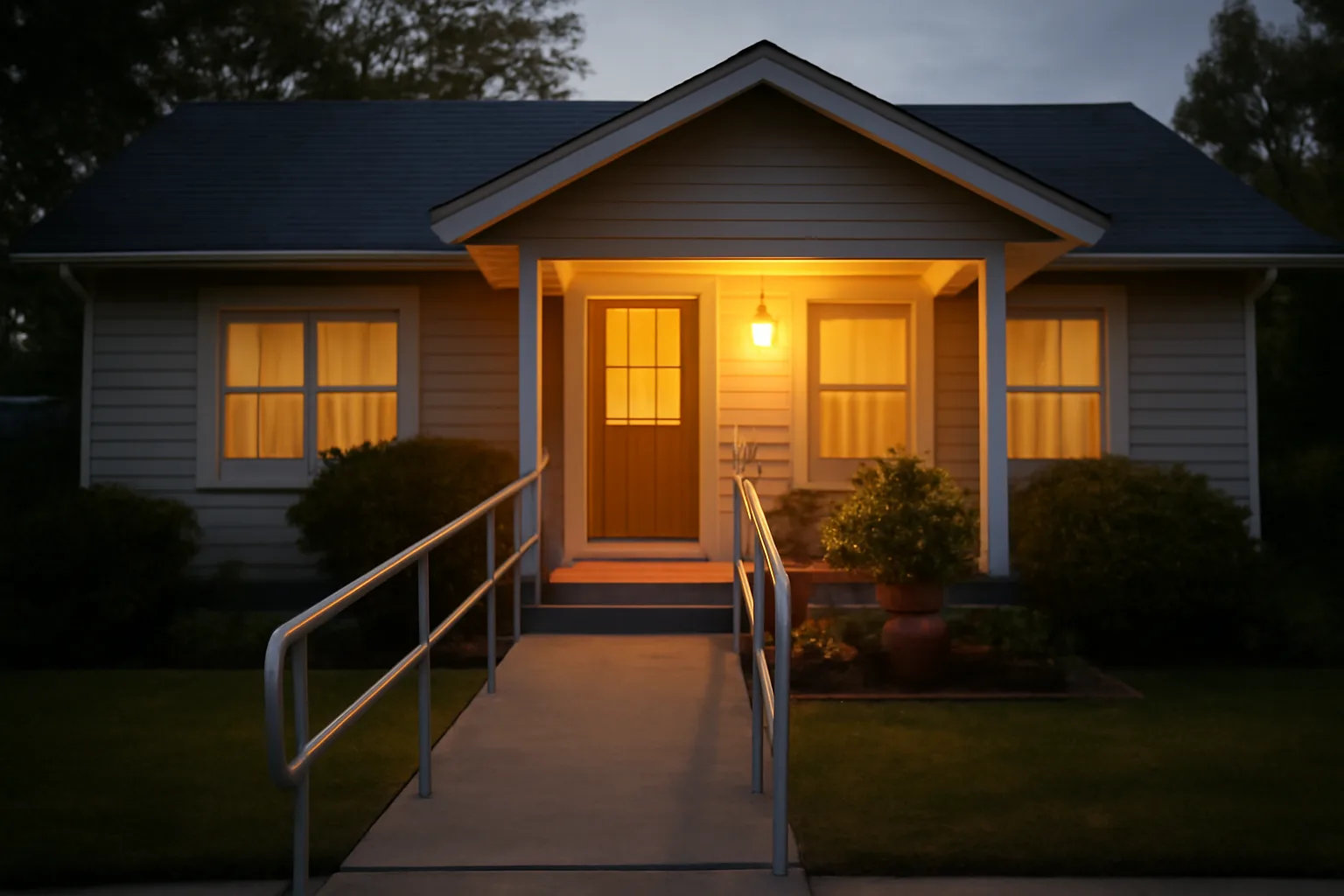
"Springfield homes" residential assisted living refers to small, house-scale assisted living settings (often 6-16 beds) that provide help with bathing, meals, and medication in a home-like building rather than an institutional facility. Licensing rules, staffing ratios, and fees vary by state; you apply through your state's assisted living or residential care licensing agency, not a federal one.
What is assisted living?
Assisted living is a category of licensed residential care for people who need help with daily activities like bathing, dressing, medication management, and meals, but who don't need the round-the-clock medical care of a nursing home. It sits between independent living and skilled nursing on the care spectrum. The federal government doesn't run or define assisted living. There's no single national license. Each state writes its own rules, licenses its own facilities, and inspects them on its own schedule. That's why the same building type might be called "assisted living," "residential care facility for the elderly," "personal care home," or "adult foster care" depending on which state you're in [1]. Small, house-scale assisted living homes, sometimes marketed under names like "Springfield homes" in various local markets, are usually just residential assisted living (RAL) operating out of a converted single-family house or a purpose-built small structure, licensed under the state's residential care rules rather than its larger institutional facility rules. The name "Springfield" isn't a licensing category; it's a brand or property name you'll see attached to specific homes in specific towns. What matters for licensing purposes is the bed count, the level of care offered, and which state program the home falls under.
What is a group home?
A group home is a licensed residential setting where a small number of unrelated people live together and receive support services, staffing, and supervision matched to their needs. The term covers a lot of ground: group homes serve seniors needing personal care, adults with intellectual or developmental disabilities (IDD), people in mental health recovery, and youth in child welfare systems. What separates a group home from an unlicensed roommate situation is the presence of paid staff, a state license, and a documented plan of care or service plan for each resident. Group homes are typically smaller than institutional facilities, often 4 to 10 residents, though state caps vary widely. Some states cap adult foster care homes at 5 residents. Others allow larger assisted living-licensed group homes up to 16 beds or more before different fire and building code tiers kick in. If you're building a business around senior residential care specifically, you'll want to look at assisted living facility licensing rules rather than the youth or behavioral health group home rules, since the resident population, staffing certifications, and inspection checklist differ substantially.
What is an assisted living facility?
An assisted living facility (ALF) is a licensed building, ranging from a converted house to a large campus, where staff provide personal care services, meals, housekeeping, and often medication assistance to older adults or adults with disabilities who live there. The exact regulatory definition and required license category comes from state statute, not federal law. Florida defines an assisted living facility under Chapter 429 of its statutes as any building or buildings, section or distinct part of a building, private home, boarding home, home for the aged, or other residential facility, whether operated for profit or not, that provides housing, meals, and one or more personal services for a period exceeding 24 hours to one or more adults who are not relatives of the owner [2]. California licenses similar homes as Residential Care Facilities for the Elderly (RCFEs) under Title 22 of the California Code of Regulations, administered by the Department of Social Services [3]. The practical differences that matter to an operator: minimum square footage per resident, staff-to-resident ratios by shift, required training hours for direct care staff, medication administration rules (some states require a licensed nurse to administer certain medications, others allow trained aides), and fire/life safety code tier based on resident mobility. None of this is uniform across state lines, so treat every number here as a starting point to confirm with your state licensing agency, not a final answer.
What is assisted living facility care actually like day to day?
Day to day, assisted living facility care means help with the tasks that get harder with age or disability: getting dressed, bathing, using the bathroom, taking medications on schedule, getting to and from meals, and having someone nearby if something goes wrong. It is not medical treatment in the way a hospital or nursing home delivers it. Most state rules divide ALF services into categories: personal care assistance (ADLs), medication management or administration, meal service meeting nutritional standards, housekeeping and laundry, social and recreational activities, and 24-hour staff awareness or supervision. Some states allow ALFs to hold a specialized memory care endorsement for residents with dementia, which usually comes with additional staffing, training, and secured-egress requirements [3]. What an ALF is generally not allowed to do, in most states, is deliver skilled nursing care like wound care, IV therapy, or ventilator management, unless the state has a specific "limited nursing services" or enhanced license tier that permits it under a nurse's supervision. If a resident's needs exceed what the facility's license allows, most states require either a plan of care exception, hospice involvement, or discharge to a higher level of care.
What is assisted living vs nursing home, exactly?
| Regulator | State licensing agency (varies by state) | State agency + federal CMS oversight | |
|---|---|---|---|
| Medical staffing | No federal RN mandate; state rules vary | RN required 8+ hrs/day, licensed nurse 24/7 [4] | |
| Typical resident | Needs help with ADLs, largely mobile | Needs skilled nursing, rehab, or complex medical care | |
| Medicare coverage | Not covered for room and board [5] | Covers short-term skilled stays under Part A, with conditions [6] | |
| Setting | House-scale to campus-scale | Institutional, medically-equipped | A lot of families and even some new operators assume "higher level of care" always means "nursing home." That's not quite right. Some assisted living facilities, especially in states with enhanced or "limited nursing" license tiers, can keep residents with moderate medical needs if they bring in home health or hospice services. Whether that's allowed depends entirely on the state license category a given home holds. |
Assisted living and nursing homes differ in the level of medical care provided, the staffing required, and how each is paid for. Assisted living is personal care and supportive housing; a nursing home (skilled nursing facility) provides 24-hour licensed nursing care for people with significant medical needs, post-hospital rehab, or conditions requiring a physician's ongoing oversight. Nursing homes must have a registered nurse on duty for at least 8 consecutive hours a day, 7 days a week, and licensed nursing coverage 24 hours a day, under federal nursing home requirements at 42 CFR 483.35 [4]. Assisted living has no equivalent federal staffing mandate at all; staffing ratios are set state by state, and many states don't require an RN on-site around the clock. | Feature | Assisted Living | Nursing Home |
What does assisted living provide, specifically?
Assisted living provides a private or semi-private room or apartment, meals, housekeeping, and staff support with activities of daily living, plus medication management and 24-hour staff availability. Beyond that baseline, what's included varies a lot by state rule and by the individual home's license level. Common core services required by most state assisted living regulations include: three meals a day meeting a minimum nutritional standard, assistance with bathing/dressing/toileting/transferring, medication reminders or administration (depending on state and staff licensure), housekeeping and linen service, an emergency call system or equivalent, and some form of scheduled social or recreational programming. Many states also require a written, individualized service plan or care plan for each resident, updated on a set schedule, often every 90 days or upon a significant change in condition. What's usually NOT included in a base assisted living rate: skilled nursing visits, physical therapy, transportation beyond scheduled facility outings, and specialized memory care programming (which typically requires a separate license endorsement and often costs more). If you're comparing that to at-home options, our page on assisted living at home breaks down how in-home personal care differs from licensed residential settings.
Does Medicare cover assisted living facilities?
No. Medicare does not cover the cost of room and board or personal care services in an assisted living facility. Medicare.gov states plainly that Medicare does not pay for "long-term care (also called custodial care)" and specifically lists assisted living facilities among the settings it does not cover for room and board [5]. Medicare Part A will pay for a short stay in a skilled nursing facility after a qualifying hospital stay, but only for skilled nursing or rehab services, and only under specific conditions: a hospital stay of at least 3 consecutive days as an inpatient, admission to a Medicare-certified skilled nursing facility within 30 days of that hospital stay, and a doctor-certified need for skilled care [6]. That is a nursing home benefit, not an assisted living benefit, and it is time-limited (up to 100 days per benefit period, with a daily coinsurance charge starting on day 21). Some Medicare Advantage plans have added limited supplemental benefits since 2019 that can cover things like home modifications or some personal care, but this is plan-specific, not a general assisted living benefit, and coverage details change yearly. Families typically pay for assisted living out of pocket, through long-term care insurance, or through Medicaid Home and Community-Based Services (HCBS) waivers in states that cover assisted living-type settings under those waivers [7]. Medicaid coverage rules and waiver availability are state-specific; check with your state Medicaid agency and the state licensing agency together before assuming coverage.
What is the difference between assisted living and nursing home cost and payment?
The core payment difference: assisted living is almost always private-pay or Medicaid HCBS waiver-funded, while nursing home stays can be covered short-term by Medicare Part A and long-term by Medicaid nursing facility benefits (a federally mandated Medicaid service). This is a bigger practical difference for families than the care itself in many cases. Medicaid is required, under federal law, to cover nursing facility services for eligible individuals as part of its mandatory benefit package [8]. Assisted living services are optional for states to cover, usually delivered through a Medicaid HCBS waiver (like a 1915(c) waiver) rather than as a guaranteed entitlement, which means availability, waitlists, and covered services vary enormously by state [7]. If you're an operator building a business model, this distinction drives your payer mix strategy. A nursing home has a more predictable, federally-anchored payment pathway. An assisted living or residential group home operator has to figure out, state by state, whether Medicaid HCBS waiver funding is available in that state for the population served, what the waitlist looks like, and what your private-pay rate needs to be to stay viable while waiver reimbursement rates (often set well below private-pay rates) come in on some beds.
How to start a group home: what's the real sequence?
Starting a group home means, in rough sequence: pick your population and state, confirm zoning for the property, write your policy and procedure manual, hire and train staff to meet state ratios, pass a pre-licensing inspection, and get your license before you accept your first resident. Skipping steps in this order is the single biggest reason new applications get delayed or denied. Here's the sequence most state licensing agencies expect, roughly in order: 1. Decide which population you're licensing for (seniors/RAL, IDD, mental health, adult foster care) and identify the specific state agency and license type that governs it. This is not the same agency in every state, and sometimes not even the same agency for different populations within the same state. 2. Confirm the property's zoning allows a group home or residential care use, including any occupancy or bed-count caps, before signing a lease or purchase agreement. Many states have laws limiting how local zoning can restrict small group homes for people with disabilities, tied to the federal Fair Housing Act, but local requirements (fire code, parking, occupancy limits) still apply. 3. Write your policy and procedure manual: admissions criteria, medication management protocol, emergency and disaster plan, staff training plan, resident rights, grievance procedure, and incident reporting process. Most states require this as a submitted document, more than an internal reference. 4. Build your staffing plan to meet the state's required ratios by shift and any required certifications (CPR/first aid, medication aide certification, dementia-specific training hours, criminal background checks/fingerprinting for all staff). 5. Submit your license application with the required fee, floor plan, fire marshal approval, and any required surety bond or liability insurance certificate. 6. Pass the pre-licensing inspection, covering life safety (fire extinguishers, smoke detectors, egress), sanitation, food service, and physical plant standards. 7. Receive your license (often initial licenses are shorter, like 1 year, before a standard 2-year renewal cycle) and begin accepting residents only after the license is active. For a step-by-step build of your actual application packet, our assisted living facilities guide walks through the paperwork most states ask for, and a $299 one-time State Group Home Licensing Kit gives you editable policy manual templates, a staffing plan worksheet, and a state-by-state document checklist so you're not starting the manual from a blank page.
How do I start a group home if I've never run one before?
If you've never operated a licensed care setting before, the honest starting point is working for or shadowing an existing licensed home in your target population before you sign a lease or spend money on licensing fees. Most state applications ask about the administrator's or operator's prior experience, and some states require a minimum number of hours of relevant experience or a specific administrator certification before they'll even accept your application. Many states require the facility administrator to hold a state-issued Assisted Living Administrator license or certificate, which usually requires a training course, an exam, and sometimes supervised hours in a licensed facility. This isn't uniform, so confirm the administrator qualification rule with your specific state licensing agency before you assume you or your hire meets it. Beyond the administrator credential, first-time operators underestimate three things consistently. The cash needed to cover 3 to 6 months of operating costs before occupancy stabilizes. The time it takes to pass a fire marshal inspection in an older building, sometimes requiring sprinkler retrofits that cost far more than the license fee itself. And the staffing turnover that hits direct care roles in the first year. None of these show up clearly on the state's published fee schedule, but they show up on your bank statement fast.
What paperwork and inspections should I expect before opening?
Expect, at minimum: a completed license application with a floor plan, a fire/life safety inspection from your local fire marshal or state fire authority, a sanitation and food service inspection, a background check clearance for every staff member and often the operator, and a documented policy and procedure manual covering admissions through discharge. Some states also require a separate zoning compliance letter from the local planning department before they'll schedule the licensing inspection. The policy manual is usually the single largest paperwork lift for a first-time applicant, because it has to cover resident rights, grievance procedures, medication management, emergency preparedness (including evacuation drills on a set schedule), infection control, incident and injury reporting, and staff training documentation, often all cross-referenced to specific state code sections. States commonly require these plans to be facility-specific, not generic, meaning a manual written for a different state or a different bed count usually gets kicked back during review. After the license is issued, expect ongoing inspections too. Most states inspect assisted living and residential care homes at least once a year, and unannounced complaint-based inspections can happen any time a complaint is filed. Keep your file of required documents (staff certifications, fire drill logs, medication administration records) current and on-site, because inspectors typically ask to see them on the spot, not by request a week later.
Frequently asked questions
What is assisted living in simple terms?
Assisted living is licensed housing for people who need help with daily tasks like bathing, dressing, and medications, but not full-time skilled nursing care. It combines a private or shared living space with staff support, meals, and supervision. Rules and terminology vary by state, so the exact services included depend on your state's licensing category.
What is a group home in the context of senior or disability care?
A group home is a small, licensed residential setting, often a single house, where a limited number of residents live together with paid staff providing care and supervision matched to their needs. It's used across several populations: seniors, adults with IDD, people in mental health recovery, and youth, each under different state licensing rules.
What is an assisted living facility legally?
Legally, an assisted living facility is defined and licensed under each state's own statute, not a federal law. For example, Florida Statutes Chapter 429 defines it as a residential facility providing housing, meals, and personal services to non-relative adults for over 24 hours. Check your specific state's licensing statute for the exact legal definition.
What is the difference between assisted living and nursing home care?
Assisted living provides personal care and supportive housing without the round-the-clock licensed nursing staffing nursing homes must provide under federal rule (42 CFR 483.35). Nursing homes serve people with significant medical or rehab needs and have mandatory RN coverage; assisted living has no equivalent federal staffing mandate and staffing rules vary by state.
Does Medicare cover assisted living facilities?
No. Medicare.gov confirms Medicare does not pay for room and board in assisted living or other long-term custodial care settings. Medicare Part A can cover a short skilled nursing facility stay after a qualifying 3-day hospital stay, but that is a nursing home benefit, not an assisted living benefit, and it's time-limited to 100 days per benefit period.
How do I start a group home from scratch?
Start by choosing your population and state, confirming zoning allows residential care use at your property, writing a policy and procedure manual, building a staffing plan that meets state ratios, and submitting your license application with the required fee and floor plan. Passing the pre-licensing inspection comes last, before you can accept any resident.
How much does it cost to license a group home?
License application fees vary enormously by state and by bed count, often ranging from under $200 to several thousand dollars, and that's before construction, staffing, and insurance costs. There's no single national fee. Confirm the exact current fee schedule with your state's licensing agency, since fees change and often scale with the number of licensed beds.
What does assisted living provide that home care doesn't?
Assisted living provides 24-hour staff availability, on-site meals, housekeeping, and a built-in social environment, alongside personal care help. In-home care provides similar personal care assistance but in the person's own house, usually for scheduled hours rather than around-the-clock presence. Neither includes skilled nursing care unless a state's enhanced license or added home health service covers it.
Can a nursing home resident move to assisted living instead?
It depends on the resident's medical needs and the assisted living facility's license level. If the person needs ongoing skilled nursing, IV therapy, or complex wound care, most standard assisted living licenses don't cover that; some states have enhanced or limited nursing service tiers that allow more medical support with additional staffing and state approval.
Do all states use the term 'assisted living facility'?
No. States use different names for very similar licensed settings: California calls them Residential Care Facilities for the Elderly, other states use personal care homes, residential care homes, or adult foster care. The services and populations overlap a lot, but the licensing statute, agency, and specific requirements differ by the name and state used.
What staffing ratio does an assisted living home need?
There's no federal staffing ratio for assisted living. Each state sets its own minimum staff-to-resident ratio by shift, often tied to resident acuity and bed count, and some states have no fixed numeric ratio at all, just a requirement of 'sufficient staff.' Confirm the exact ratio required with your state licensing agency before building your staffing plan.
Is a background check required to work in a group home?
Yes, in virtually every state. Most state licensing rules require criminal background checks and often fingerprinting for the operator, administrator, and all direct care staff before they can work with residents. Some states also check a state abuse/neglect registry. The exact scope and disqualifying offenses list varies by state, so confirm with your licensing agency.
Sources
- NCAL (National Center for Assisted Living), Assisted Living State Regulatory Review: State assisted living terminology and regulatory categories vary widely
- Florida Legislature, Florida Statutes Chapter 429, Assisted Living Facilities: Florida's statutory definition of an assisted living facility
- California Department of Social Services, Residential Care Facilities for the Elderly Program: California licenses assisted living-type homes as RCFEs under Title 22
- eCFR, 42 CFR 483.35 Nursing Services: Nursing homes must have RN coverage 8 consecutive hours a day, 7 days a week, and licensed nurse coverage 24 hours a day
- Medicare.gov, Long-Term Care: Medicare does not cover room and board in assisted living or other long-term custodial care
- Medicare.gov, Skilled Nursing Facility Care Coverage: Medicare Part A skilled nursing facility coverage requires a qualifying 3-day inpatient hospital stay and is limited to 100 days per benefit period
- Medicaid.gov, Home and Community-Based Services: Assisted living type services are typically covered through state Medicaid HCBS waivers rather than as a guaranteed benefit
- Medicaid.gov, Mandatory & Optional Medicaid Benefits: Nursing facility services are a mandatory Medicaid benefit for eligible individuals