Last updated 2026-07-25
TL;DR
Starting a group home means picking a population (IDD, mental health, seniors, recovery), getting your state license from the agency that regulates that population, clearing zoning, writing policy manuals, hiring qualified staff, and passing a pre-opening inspection. Costs and timelines vary hugely by state; expect months, not weeks, and real cash for buildout and reserves.
What is a group home?
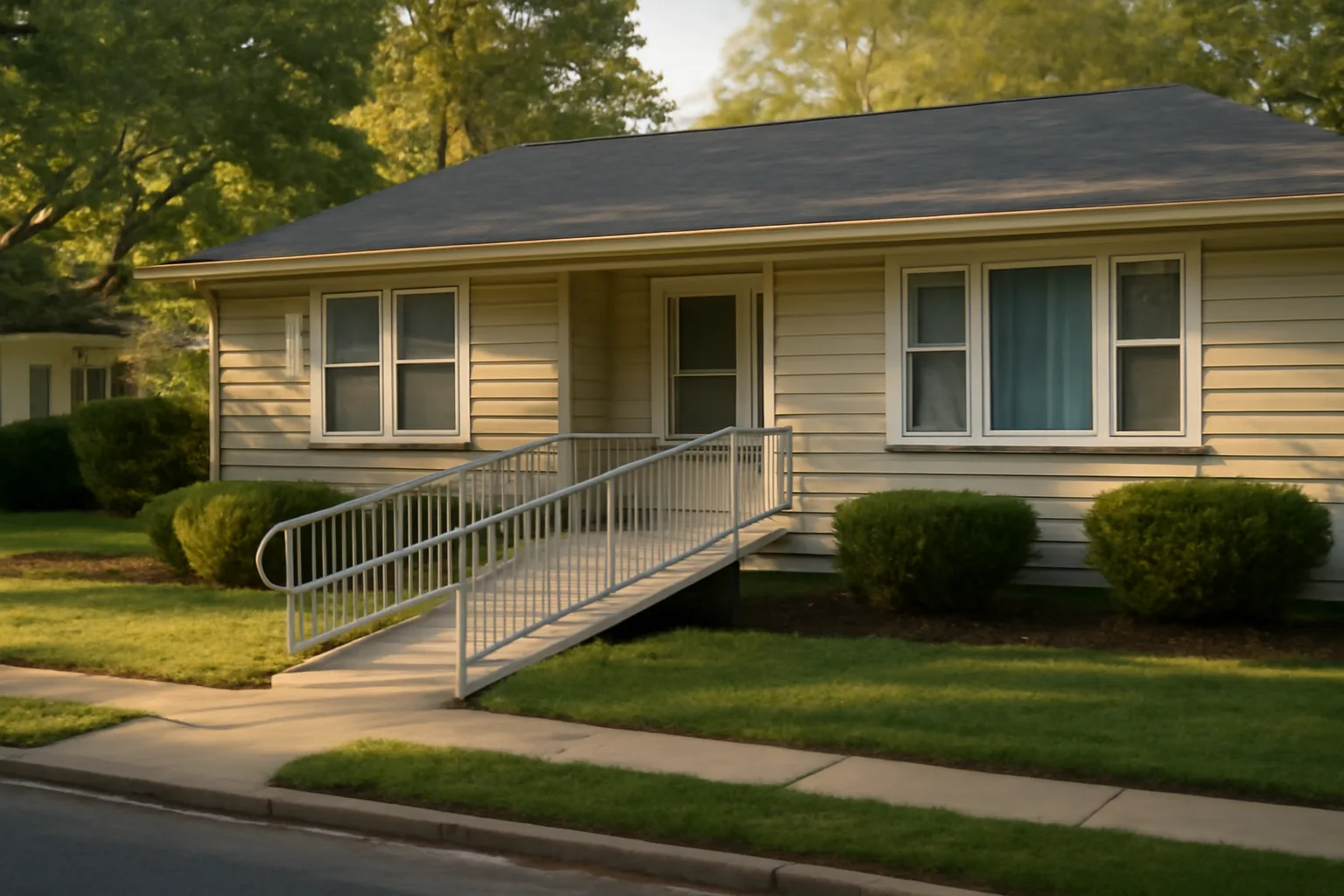
A group home is a residential property, usually a regular house or small apartment building, where a small number of unrelated people live together and receive support services because of age, disability, or a behavioral health condition. It is not a hospital and not a nursing home. It is licensed housing plus care, and the exact rules depend entirely on which state agency regulates the population you serve. The term covers a lot of ground. An adult foster care home for two or three seniors, a home for adults with intellectual and developmental disabilities (IDD), a residential mental health facility, and a sober living or recovery residence are all commonly called "group homes," but each answers to a different regulator and a different rulebook. The federal Centers for Medicare & Medicaid Services (CMS) does not license group homes directly; states do, often through a department of health, department of human services, or department of social services [1]. Most group homes serve somewhere between 2 and 15 residents, though the cap depends on your state's definition and your zoning classification. Cross that number and you're usually reclassified as an assisted living facility or an institution, which triggers a different (and usually stricter) set of building and staffing rules.
What is assisted living?
Assisted living is a licensed residential care category, generally for seniors, that provides housing plus help with daily activities like bathing, dressing, medication reminders, and meals, without the 24-hour skilled nursing care found in a nursing home. It sits between independent living and a nursing facility on the care spectrum. States use different names for this license: assisted living facility, residential care facility for the elderly, personal care home, or adult foster care home. Whatever the label, the model is the same: private or shared rooms, staff on-site around the clock or on a schedule, and a service plan tailored to each resident. If you're building a business model around a specific population, it helps to compare the assisted living facility licensing track against IDD or mental health group home tracks before you pick a lane, because the staffing ratios and inspection checklists differ substantially.
What is an assisted living facility?
An assisted living facility (ALF) is the licensed building and program itself, the physical home plus the staff, policies, and state license that together let you legally provide housing and personal care to seniors or adults with disabilities. Every state has its own licensing statute defining minimum square footage, staff-to-resident ratios, and required services for an ALF [1]. Most states require a separate ALF license from a nursing home license, and many states further split ALF licenses by size (small, 6 beds or fewer, versus large) or by acuity level (basic personal care versus memory care/dementia care endorsement). Confirm with your state licensing agency which subcategory applies to your building and resident mix before you sign a lease or a purchase agreement, because the wrong classification can force an expensive re-application later. See our state-by-state breakdown of assisted living facilities licensing categories for how this plays out across different states.
What does assisted living provide?
Assisted living provides a private or semi-private room, meals, housekeeping, laundry, medication management or reminders, help with activities of daily living (bathing, dressing, toileting, transferring), social and recreational programming, and 24-hour staff availability for emergencies. It does not typically provide skilled nursing care, ventilator management, or complex wound care; those fall under a nursing home license. CMS describes assisted living as part of the broader continuum of long-term services and supports, distinct from the skilled nursing benefit covered under Medicare Part A [1]. A resident who needs IV therapy, post-surgical rehab, or round-the-clock licensed nursing generally isn't a fit for assisted living and should be in a skilled nursing facility instead. A well-run assisted living home also provides a written, individualized service plan, updated on a schedule your state defines (often every 30, 60, or 90 days), documenting what care each resident actually receives. Inspectors ask for these plans first. If yours are generic or out of date, that's usually the fastest way to earn a citation.
What is the difference between assisted living and nursing home?
| Primary regulator | State health/social services agency | State agency + CMS (if Medicare/Medicaid certified) | |
|---|---|---|---|
| Care level | Help with ADLs, medication reminders | Skilled nursing, rehab, complex medical care | |
| Staffing | Caregivers, some states require an administrator license | Licensed nurses (RN/LPN) required around the clock | |
| Typical Medicare coverage | Not covered as room and board | Part A covers up to 100 days of skilled care per benefit period, after a qualifying hospital stay [3] | |
| Setting | Home-like, private or semi-private rooms | Often more clinical/institutional | If a resident's needs escalate past what your license allows (say, they now need a feeding tube or two-person transfers your staff isn't trained for), most states require you to either get a higher-acuity endorsement or discharge/transfer the resident to an appropriate level of care. That transfer trigger is usually spelled out in your state's residential care regulations, so read that section closely before you accept a resident who's borderline. |
The core difference is the level of medical care and the license type. Assisted living offers help with daily living activities and light supervision; a nursing home (skilled nursing facility) provides 24-hour licensed nursing care for people with serious medical needs, under federal Medicare/Medicaid nursing home requirements set out in 42 CFR Part 483 [2]. Here's a side-by-side comparison: | Feature | Assisted living | Nursing home |
Does Medicare cover assisted living facilities?
No. Medicare does not pay for the room and board costs of assisted living. Medicare.gov states plainly that Medicare "doesn't cover long-term care (also called custodial care)" if that's the only kind of care a person needs [4], and assisted living room-and-board falls squarely into that custodial category. Medicare Part A will cover short-term skilled nursing care in a certified nursing facility after a qualifying hospital stay, subject to the coinsurance schedule CMS publishes each year, but that's a nursing home benefit, not an assisted living benefit [3]. Medicare Part B may cover some medical services a resident receives while living in assisted living (doctor visits, physical therapy), but not the housing or personal care itself. Medicaid is a different story and the one most operators actually rely on for revenue. Many states use Medicaid Home and Community-Based Services (HCBS) waivers, authorized under Section 1915(c) of the Social Security Act, to pay for personal care services in residential settings, even though Medicaid still generally can't pay for the room and board portion directly [5]. If you're building a business model around Medicaid waiver residents, get familiar with your state's specific waiver program name and reimbursement rules before you assume any revenue will flow through it.
How do I start a group home? (step-by-step)
Starting a group home means completing five parallel tracks: choosing your population and license type, securing a zoning-compliant property, writing your policies and procedures manual, hiring and training qualified staff, and passing your state's pre-licensing inspection. None of these can really be done in isolation; your property choice affects zoning, your zoning affects your license category, and your license category dictates your staffing plan. Step 1: Pick your population and license type. IDD group homes, mental health residential facilities, adult foster care, and recovery residences are regulated differently even within the same state. Decide this first because it determines which state agency you'll be dealing with for the next two years. Step 2: Find the right property and confirm zoning. Most jurisdictions treat small group homes (6 or fewer residents) as a permitted residential use under the federal Fair Housing Act's reasonable accommodation provisions, which limits how much a local zoning board can restrict them compared to a typical single-family home . Larger homes often need a conditional use permit or special exception. Check occupancy limits, fire code (many states require sprinklers above a certain bed count), and parking requirements before you commit to a lease. Step 3: Write your policy and procedure manual. States require written policies covering admission and discharge criteria, medication management, emergency procedures, resident rights, grievance processes, staffing plans, and incident reporting. This is the document your inspector will read cover to cover, and it's also the document new staff actually use day to day, so don't just copy a template and hope. If you want a structural head start rather than a blank page, the assisted living hub covers what belongs in each policy section, and GroupHomePath's $299 State Group Home Licensing Kit gives you state-specific policy templates and the application checklist so you're not reinventing every document from scratch. Step 4: Hire and train staff to your state's ratios. Staffing requirements vary by population and by shift (day versus overnight), and most states require background checks, CPR/first aid certification, and population-specific training (behavior support for IDD homes, medication administration training for personal care homes) within a set number of days of hire. Budget real time for this; background check turnaround alone can take two to six weeks depending on your state's fingerprinting system. Step 5: Submit your application and pass inspection. Your state licensing agency will review your application, your policies, your staffing plan, your floor plan, and your background check results, then schedule a pre-licensing inspection of the physical property. Expect the inspector to check fire extinguishers, exit signage, smoke detectors, medication storage, resident bedroom square footage, and posted emergency evacuation plans. Realistic timeline: from the day you start gathering documents to the day you get a license, most operators should plan for 3 to 9 months, depending on the state, whether the property needs construction or renovation, and how quickly your local fire marshal and building inspector can schedule visits. Rushing this timeline is the single most common reason applications bounce back for revisions.
What does it cost to start a group home?
Startup costs for a group home generally run in two buckets: one-time licensing and buildout costs, and ongoing operating reserves you need before you have paying residents. There is no single national number because license application fees, background check fees, and required insurance minimums are all set at the state level, so confirm exact fee schedules with your state licensing agency before budgeting. That said, the categories are consistent everywhere: state application and license fees (commonly a few hundred to a couple thousand dollars depending on the state and facility size), property costs (purchase, lease deposit, or renovation to meet fire and accessibility code), staff costs before you're at capacity (you generally need trained staff on-site before residents move in, not after), liability and property insurance, and a cash reserve to cover 2 to 3 months of operating expenses while occupancy ramps up. Many small operators underestimate the renovation costs of meeting fire code (sprinkler retrofits, wider doorways, egress windows) far more than they underestimate the licensing fee itself; get a fire marshal walkthrough before you sign any lease, not after.
What do inspectors actually check before licensing a group home?
Pre-licensing inspectors generally check life safety systems, medication storage and documentation, staff files, resident files, and posted policies. Expect them to test smoke detectors and fire extinguishers, confirm exit routes and posted evacuation plans, measure bedroom square footage against your state's minimum per-resident requirement, and review your medication administration records for completeness. They'll also cross-check your staffing plan against actual staff files: current CPR/first aid cards, completed background checks, and any population-specific training certificates your state requires. If your policy manual says overnight staff must have a certain certification and your staff file doesn't have it, that's a citation, even if the person is otherwise qualified. Keep a single binder (physical or digital) with every staff certification and every resident's current service plan; it's the fastest way to move an inspection along instead of stalling it while someone digs through file cabinets.
How do zoning rules affect where I can open a group home?
Zoning determines whether your chosen property can legally operate as a group home at all, separate from your state license. Local zoning codes classify group homes by resident count, and many jurisdictions must treat small group homes (typically 6 or fewer unrelated residents with disabilities) the same as any other single-family residential use, under the Fair Housing Act's protections against discriminatory zoning . Larger homes, or homes in areas zoned for single-family use only, may need a conditional use permit, a variance, or a special exception, which usually means a public hearing and possible neighbor objections. Some cities also cap how many licensed group homes can operate within a certain distance of each other ("spacing" or "dispersal" requirements), intended to prevent over-concentration in one neighborhood. Confirm your local zoning classification with the city or county planning department before you sign a lease; a property that looks perfect on paper can be a dead end if it sits in the wrong zoning district or too close to another licensed home.
How is a group home different from assisted living at home or in-home care?
A group home is a licensed residential facility where multiple unrelated residents live together and receive on-site staff support; assisted living at home or in-home care instead brings caregivers into a person's own private residence, without a separate facility license for the building itself. The regulatory frameworks are almost entirely different. In-home care agencies are typically licensed as home care or personal care agencies, a different license category than a residential facility license, and the agency doesn't own or lease the home where care happens. If you're deciding between the two business models, group homes require more upfront capital (property, buildout, facility license) but create a more controlled care environment; in-home care requires less real estate risk but means your staff are traveling between multiple client homes, which changes your staffing math and liability profile substantially.
Where do I find licensing information near me?
Every state licenses group homes and assisted living facilities through a specific state agency, and that agency's website is the only authoritative source for current fee schedules, application forms, and inspection checklists. There is no single federal group home license; searching for senior assisted living facilities near me or similar location-based terms will surface providers, but for licensing requirements you need your specific state's regulatory agency, not a directory site. Start with your state's department of health or department of human services, search for "residential care licensing" or "assisted living licensing" plus your state name, and confirm you're looking at current-year fee schedules and regulations, since these are updated periodically. If your state has separate licenses for IDD group homes, mental health residential facilities, and senior assisted living, make sure you're reading the regulation that actually matches the population you plan to serve; the requirements are genuinely different documents, more than different sections of the same one.
Frequently asked questions
What is assisted living?
Assisted living is a licensed residential care option, usually for seniors, that combines housing with help for daily activities like bathing, dressing, and medication reminders, without full-time skilled nursing care. It's less medically intensive than a nursing home but more supportive than independent living. States regulate it under names like assisted living facility, residential care facility, or personal care home.
What is a group home?
A group home is a licensed residential property where a small number of unrelated people, often seniors, adults with IDD, or people in mental health or substance recovery treatment, live together with on-site staff support. It's regulated by a state agency specific to the population served, not by a single national group home law.
What is an assisted living facility?
An assisted living facility is the licensed building, staff, and program that together provide housing plus personal care services to residents, typically seniors, who need help with daily activities but not full-time skilled nursing. States define minimum staffing ratios, room sizes, and services required under each state's ALF statute.
What is the difference between assisted living and a nursing home?
Assisted living provides help with daily activities and light supervision in a home-like setting; a nursing home provides 24-hour licensed nursing care for residents with serious medical needs, regulated federally under 42 CFR Part 483 for facilities that accept Medicare or Medicaid. Nursing homes have licensed nurses on staff around the clock; assisted living generally does not.
Does Medicare cover assisted living facilities?
No. Medicare does not cover the room and board or custodial care costs of assisted living. Medicare.gov states Medicare doesn't cover long-term custodial care when that's the only care needed. Medicare Part A may cover a short skilled nursing stay after a qualifying hospital admission, but that's a nursing home benefit, not assisted living.
How do I start a group home?
Pick your population and license type, secure a property that clears local zoning, write your required policy and procedure manual, hire and train staff to your state's ratios, then submit your license application and pass the state's pre-licensing inspection. Realistically plan for 3 to 9 months from start to open, depending on your state and property condition.
How much does it cost to start a group home?
Costs vary by state and population type but generally include state license and application fees (often a few hundred to a couple thousand dollars), property purchase or lease and renovation to meet fire code, pre-opening staffing costs, insurance, and 2 to 3 months of operating reserves. Confirm exact fee schedules with your state licensing agency.
Do I need a special license for a mental health group home versus an IDD group home?
Usually yes. Most states license mental health residential facilities and IDD group homes under separate regulations with different staffing ratios, training requirements, and inspection checklists, even though both fall under the general umbrella of 'group homes.' Confirm which specific license category applies with your state's health or human services agency before applying.
Can a group home operate in a residential neighborhood?
Often yes, especially for homes with 6 or fewer residents, which the Fair Housing Act generally protects from being zoned differently than any other single-family residential use. Larger group homes may need a conditional use permit or special exception from local zoning, so confirm classification with your city or county planning department before signing a lease.
What's the difference between assisted living and independent living?
Independent living involves no personal care services, just housing and amenities for seniors who don't need daily assistance. Assisted living adds help with activities of daily living, medication management, and staff availability around the clock, making it appropriate for residents who need more support than independent living provides but less than a nursing home.
Do group homes accept Medicaid?
Many do, through state Medicaid Home and Community-Based Services (HCBS) waivers authorized under Section 1915(c) of the Social Security Act, which can cover personal care services in residential settings. Medicaid generally doesn't pay the room and board portion directly, so operators typically combine waiver reimbursement with resident-paid room and board or other funding sources.
How long does it take to get a group home license approved?
Most operators should plan for 3 to 9 months from starting the application process to receiving a license, depending on the state, how quickly background checks clear, whether the property needs renovation to meet fire code, and how backed up the state's inspection schedule is. Rushing rarely helps; incomplete applications just get sent back.
Sources
- CMS, Home & Community Based Services: States, not CMS directly, license group homes and residential care facilities
- eCFR, 42 CFR Part 483: Nursing homes accepting Medicare/Medicaid are regulated under 42 CFR Part 483 requirements for long-term care facilities
- Medicare.gov, Skilled Nursing Facility Care: Medicare Part A covers skilled nursing facility care under specific conditions after a qualifying hospital stay
- Medicare.gov, Long-Term Care: Medicare doesn't cover long-term custodial care when that is the only care a person needs
- Social Security Act Section 1915(c), via Medicaid.gov HCBS waivers: Section 1915(c) HCBS waivers let states use Medicaid to cover personal care services in residential settings