Last updated 2026-07-25
TL;DR
Texas group homes for adults with disabilities, mental illness, or seniors are licensed by the Health and Human Services Commission (HHSC), mostly under Assisted Living Facility rules (26 TAC Chapter 553) or HCSSA/HCS provider rules for IDD group homes. Expect a pre-application orientation, a facility license application, life safety code inspection, criminal history checks, and staffing plans tied to resident acuity. Processing commonly takes several months.
What is a group home, exactly?
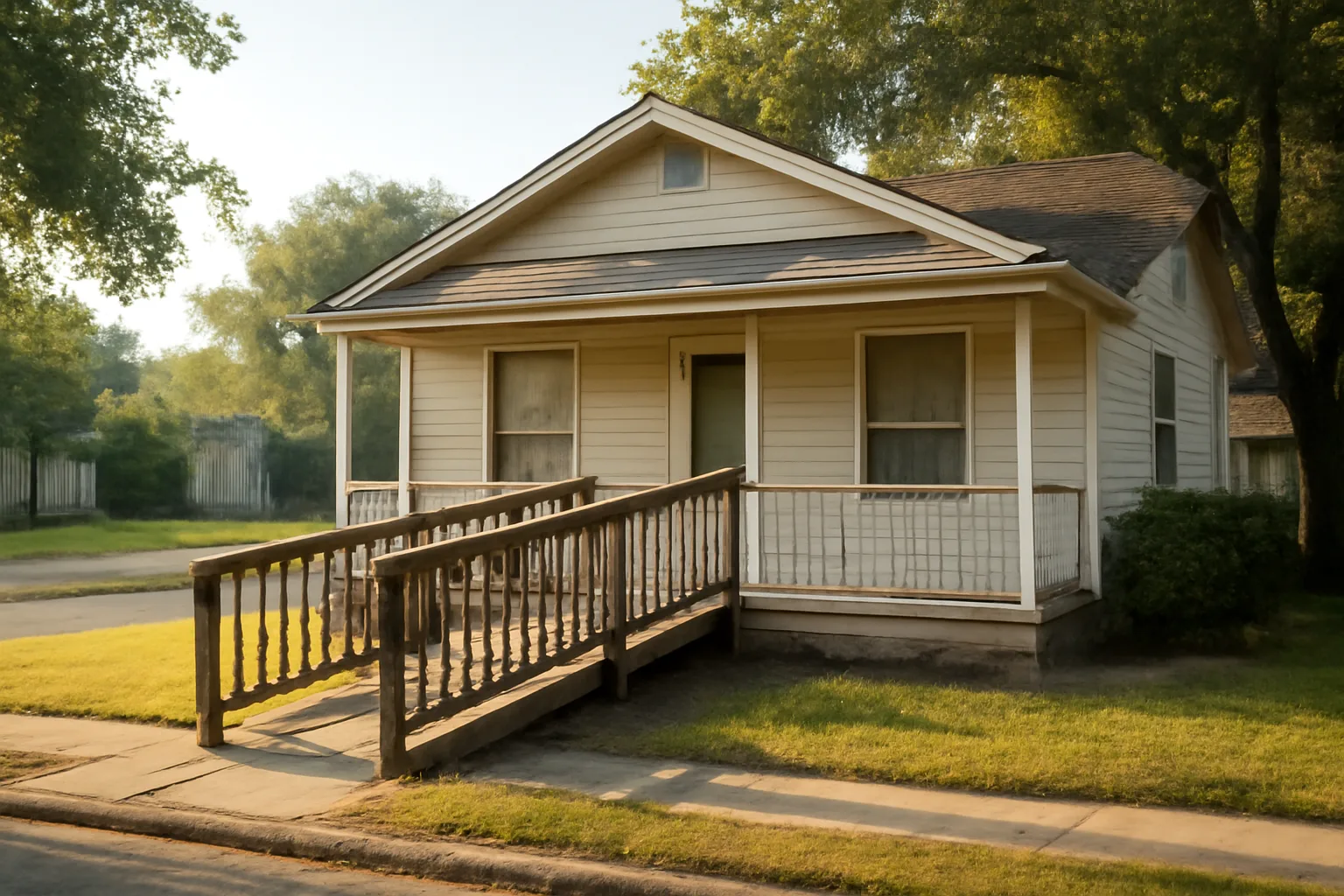
A group home is a residential setting, usually a single-family style house, where a small number of unrelated people live together and receive some level of support, supervision, or personal care. The support level varies enormously depending on who lives there. A group home for adults with intellectual or developmental disabilities (IDD) looks different from a group home for people in mental health recovery, which looks different again from a small assisted living home for seniors. In Texas, the term "group home" is not one single license type. Instead, the state licenses several categories of residential care depending on population and service level: Assisted Living Facilities (ALFs) under 26 TAC Chapter 553 [1], Home and Community-based Services (HCS) group homes for people with IDD, and various behavioral health residential programs. If you say "I want to open a group home in Texas," the very first question HHSC staff will ask is who you plan to serve, because that determines which chapter of rule applies to you. This matters for planning. A four-bed assisted living home for seniors needing help with bathing and medication has different staffing ratios, physical plant rules, and inspection checklists than an HCS group home serving adults with autism or an intermediate care facility (ICF/IID). Get the population and license type nailed down before you sign a lease or start renovations.
What is assisted living, and what is an assisted living facility?
Assisted living is a category of residential care that provides housing plus help with daily activities like bathing, dressing, medication reminders, and meals, without the round-the-clock skilled nursing care of a nursing home. An assisted living facility (ALF) is the physical, licensed location where that care happens. Texas defines an assisted living facility in statute as an establishment that "provides food, shelter, and personal care services" and may provide medication administration or nursing services, for four or more people not related to the owner [2]. Texas Health and Safety Code Chapter 247 is the statutory backbone, and 26 TAC Chapter 553 is the operating rule HHSC actually enforces day to day [1]. Texas licenses ALFs at two main license types: Type A (residents who are physically able to move themselves out of the building in an emergency, without physical or verbal help, and who do not have moderate to severe cognitive impairment) and Type B (residents who need staff assistance to evacuate, or who have moderate to severe cognitive limitations). There is also a Type C designation for certain smaller adult foster care-like settings and an Alzheimer's/dementia certification add-on. The type you apply for drives your staffing ratios, physical plant requirements (like alarmed doors and evacuation capability), and the acuity of residents you're legally allowed to admit [1].
What is assisted living vs nursing home, and what does assisted living provide?
The short version: assisted living provides help with daily living and some health monitoring; a nursing home (skilled nursing facility) provides ongoing medical and nursing care for people with more serious health needs. Assisted living residents are generally more independent. Nursing home residents often need daily skilled nursing, wound care, IV therapy, or rehab services that assisted living staff are not licensed to provide. Assisted living typically provides: a private or semi-private room, three meals a day, help with activities of daily living (bathing, dressing, toileting, transferring), medication management or reminders, housekeeping, laundry, social activities, and 24-hour staff availability for supervision and emergencies. What it generally does not provide is ongoing skilled nursing care, ventilator management, or complex wound care, though some Texas ALFs with the appropriate license type and staffing can offer higher levels of service. Nursing homes in Texas are licensed separately under a different chapter and are regulated more like mini-hospitals, with required RN coverage, more frequent state surveys, and Medicare/Medicaid certification requirements layered on top of state licensing. If your target resident needs daily nursing intervention, you're probably looking at a nursing facility license, not an ALF or group home license, and that is a much heavier regulatory lift.
Does Medicare cover assisted living facilities?
No. Medicare does not pay for the room-and-board or personal care costs of assisted living. CMS is explicit that "Medicare doesn't cover long-term care (also called custodial care)" including assisted living and most nursing home stays that aren't for short-term skilled rehab [3]. Medicare Part A may cover a limited skilled nursing facility stay after a qualifying hospital admission, but that is nursing home rehab care, not assisted living. Medicaid is different and matters more for Texas group home operators. Texas Medicaid covers home and community-based services through waiver programs (like HCS and Texas Home Living for people with IDD, and STAR+PLUS for other populations) that can pay for personal care and habilitation services delivered in a licensed residential setting, though it generally does not pay directly for room and board [4]. If your business model depends on Medicaid waiver reimbursement, you need a separate provider enrollment process through HHSC on top of your facility license, and waiver slots are often limited and waitlisted. Most small assisted living operators in Texas rely on private pay, long-term care insurance, or in some cases the state's ALF Medicaid program option in limited counties. Confirm current Medicaid waiver availability and reimbursement structure with your state licensing agency and the HHSC Medicaid and CHIP Services division before building a financial model around it.
How do I start a group home in Texas? (Step-by-step)
Starting a licensed group home in Texas follows a fairly predictable sequence, though timelines and specific requirements shift depending on population and license type. Here is the realistic order of operations. 1. Decide your population and license type. IDD, mental health, or general assisted living each route to a different HHSC program area and rule chapter. This decision drives everything downstream. 2. Check zoning and find a property. Most Texas cities allow small group homes (typically six or fewer residents) as a right in residential zones under fair housing protections, but always confirm with your local planning department before signing a lease. Larger facilities may need special use permits. 3. Attend HHSC's pre-application orientation or review the licensing rule set for your program area. HHSC requires applicants for most facility types to review specific application materials before submitting [1]. 4. Submit the license application and fee to HHSC Long Term Care Regulation. Fees vary by facility size and type; confirm current fee schedules with HHSC directly since they are adjusted periodically. 5. Pass a life safety code inspection. This covers fire alarms, sprinklers where required, exit signage, evacuation capability, and general building safety, often coordinated with the State Fire Marshal's Office for certain facility sizes. 6. Complete criminal history and background checks for owners, administrators, and staff, run through the Texas Department of Public Safety and HHSC's own registry checks (including the Employee Misconduct Registry and Nurse Aide Registry where applicable) [1]. 7. Hire and train a qualified administrator. Texas ALFs must have a designated administrator who meets HHSC qualification and, for larger facilities, continuing education requirements [1]. 8. Write your policy and procedure manuals: admission and discharge criteria, medication management, emergency preparedness, resident rights, abuse/neglect reporting, staffing plan, and infection control. 9. Undergo the initial licensing survey/inspection. An HHSC surveyor visits before or shortly after opening to verify the physical plant and paper compliance match what you submitted. 10. Receive your license and post it as required, then prepare for ongoing unannounced inspections, which happen on a regular cycle plus in response to complaints. If you want a structured way to organize the paperwork side of this (application forms, sample policy manual templates, staffing plan worksheets), the licensing kit builder walks through the document set state by state, including Texas-specific checklists.
What license type do I need for an IDD group home in Texas?
Group homes serving people with intellectual or developmental disabilities in Texas typically operate under the HCS (Home and Community-based Services) program or as an Intermediate Care Facility for Individuals with an Intellectual Disability (ICF/IID), both regulated by HHSC but under different rule sets than the ALF chapter [5]. HCS group homes are Medicaid waiver-funded residential settings, usually serving three to four people, that provide habilitation, supervision, and support so residents can live in the community rather than an institutional setting. To become an HCS provider, an agency must go through HHSC's provider enrollment process, meet program-specific staffing and training rules under 26 TAC Chapter 263, and pass provider certification reviews in addition to any local facility licensing [5]. ICF/IID facilities are a more institutional, higher-staffing model, licensed and Medicaid-certified with more intensive federal oversight, generally reserved for individuals needing a higher level of support than a typical HCS group home provides. If you're planning an IDD group home, don't assume the ALF license path applies. Contact HHSC's IDD program area directly early in your planning, because the provider enrollment, contracting, and staffing requirements are substantially different from senior assisted living and the waiver waitlist situation affects how quickly you can actually fill beds.
What are the staffing requirements for a Texas group home?
Staffing requirements in Texas depend on your license type and the acuity of residents, but a few baseline rules apply across most assisted living settings. Facilities must have staff awake and on duty 24 hours a day, and staffing levels must be sufficient to meet residents' scheduled and unscheduled needs, evacuate the building in an emergency, and provide required supervision [1]. Type A facilities (residents who can self-evacuate) generally require fewer direct care staff per resident than Type B facilities (residents needing evacuation assistance or with cognitive impairment), because the acuity and risk profile differ. HHSC rule requires facilities to conduct and document a staffing plan based on resident assessments, more than a flat ratio pulled from a table [1]. Medication aides and unlicensed staff who administer medication must complete state-approved training and registration, and facilities administering medications need a documented medication management system reviewed as part of survey. Administrators of ALFs must meet qualification standards under HHSC rule, which for larger or Alzheimer's-certified facilities can include specific hours of dementia-care training. Don't understaff to save money on the theory that inspectors won't notice. Staffing citations are one of the most common deficiency categories in long-term care surveys nationally, and a documented pattern of understaffing is one of the fastest ways to trigger a plan of correction or, in repeat cases, adverse licensing action.
What does the Texas group home inspection process look like?
Texas assisted living facilities undergo an initial licensing survey before opening and then unannounced inspections on a recurring basis, plus complaint investigations that can happen any time. HHSC Long Term Care Regulation staff conduct these surveys using state rule as the standard, checking physical plant safety, staffing documentation, resident records, medication management, and resident rights compliance [1]. A typical survey day includes: a records review of resident files and staff personnel files, a walkthrough of the physical building checking things like exit routes, smoke detectors, water temperature, and food storage, interviews with residents and staff, and a review of your policy manuals against actual practice. If violations are found, HHSC issues a statement of deficiencies and the facility must submit a plan of correction with a timeline. Common deficiency categories nationally and in Texas surveys include incomplete medication administration records, missing or outdated staff training documentation, physical plant issues (blocked exits, non-functioning smoke alarms), and incomplete resident care plans. Building your policy manual and your actual daily practice to match, and keeping documentation current before an inspector ever walks in, is the single highest-leverage thing an operator can do to avoid citations. Severe violations, especially those involving resident health and safety, can lead to an immediate jeopardy finding, which can trigger emergency enforcement action including license suspension. Confirm current survey frequency and any risk-based inspection tiering with your state licensing agency, since HHSC has adjusted survey cycles in past years based on facility history and funding for the inspection program.
What zoning and property rules apply to Texas group homes?
Zoning is one of the most misunderstood parts of opening a group home, and it trips up more new operators than the licensing paperwork itself. Federal law, specifically the Fair Housing Act, generally protects small group homes for people with disabilities from being excluded from single-family residential zones the way a commercial use would be, because a small group home is treated as a residential use, not a business use, for zoning purposes. Most Texas municipalities allow group homes of six or fewer residents as a permitted residential use without special zoning approval, following the general pattern set by fair housing case law and many state group home statutes around the country. Above that resident count, or if you're adding features like large parking lots, signage, or structural additions, you may trigger special use permit review or site plan requirements at the city or county level. Building and fire code matters separately from zoning. Even in a home explicitly zoned as residential, HHSC and, for larger facilities, the State Fire Marshal's Office will require compliance with applicable life safety code provisions: adequate exits, smoke detection, in some cases sprinklers depending on facility size and resident mobility, and accessible routes. Before signing a lease, call your city or county planning department and ask directly whether a licensed group home of your intended size is a permitted use at that address, and separately confirm fire marshal requirements for the building's age and construction type. Don't rely on a landlord's assurance that "it should be fine."
What does it cost, realistically, to license a Texas group home?
HHSC charges license application and renewal fees that vary by facility size and type, and these fee schedules are updated periodically, so the exact dollar amount you'll pay should be confirmed directly with HHSC Long Term Care Regulation at the time you apply. Beyond the state fee itself, real costs include background check fees for owners and staff, life safety inspection or fire marshal review fees, any required physical plant upgrades (fire alarms, sprinkler retrofits, grab bars, accessible bathrooms), liability insurance, and staff training/certification costs. Most of the real cost of starting a group home isn't the license fee, it's the property and staffing buildout: getting a home up to fire and building code, hiring a qualified administrator, and covering payroll during the weeks or months before you have a full census. Underestimating the cash runway needed between opening your doors and reaching stable occupancy is one of the most common reasons small operators struggle in year one. A well-organized document package, application forms, staffing plan templates, and a policy and procedure manual built around Texas's specific rule chapters, can meaningfully cut down the back-and-forth with your licensing reviewer. That's the gap the $299 State Group Home Licensing Kit is built to close: a one-time toolkit of state-specific application checklists and editable policy templates, not a guarantee of approval or a substitute for your own attorney and licensing consultant review.
What policies and procedures does HHSC expect in your manual?
Every Texas ALF or group home license applicant needs a written policy and procedure manual that survey staff will check against actual practice. At minimum, expect to need documented policies covering: admission and discharge criteria and process, resident rights and grievance procedures, medication management and storage, emergency preparedness and evacuation plans, abuse/neglect/exploitation reporting procedures, infection control, staffing plans and training requirements, and food service/dietary management if you provide meals. HHSC rule requires facilities to have an emergency preparedness plan that addresses evacuation, sheltering in place, and continuity of care during disasters, a requirement that got more scrutiny nationally after hurricane-related nursing home deaths led to tightened federal and state emergency preparedness rules for long-term care providers . Resident rights policies must reflect the specific rights guaranteed under Texas rule, things like the right to privacy, the right to manage personal finances, the right to be free from unnecessary restraint, and the right to file a complaint without retaliation. These aren't boilerplate, surveyors will ask residents directly whether they know their rights and whether staff have explained them. Writing these manuals from scratch, in a way that actually maps to HHSC's specific rule citations rather than generic industry templates, is where a lot of first-time applicants lose weeks. If you're comparing this to assisted living facility licensing in other states, Texas's rule structure (statute plus administrative code) is fairly typical, but the specific forms and fee schedule are unique to HHSC.
Frequently asked questions
What is assisted living?
Assisted living is residential care that combines housing with help for daily activities like bathing, dressing, medication reminders, and meals, without the intensive skilled nursing care found in a nursing home. It's meant for people who need some support but don't require daily medical or nursing intervention.
What is a group home?
A group home is a residential setting where a small number of unrelated people live together and receive supervision or care matched to their needs, whether that's seniors needing help with daily living, adults with intellectual or developmental disabilities, or people in mental health recovery. The specific license type depends on the population served.
What is an assisted living facility?
An assisted living facility is the licensed physical location, usually a house or small residential building, where assisted living services happen. Texas defines it in Health and Safety Code Chapter 247 as an establishment providing food, shelter, and personal care services to four or more unrelated residents [2].
What is the difference between assisted living and nursing home?
Assisted living provides housing and help with daily activities for people who are relatively independent. A nursing home provides ongoing skilled nursing and medical care for people with more serious health conditions, staffed with RNs and licensed under separate, stricter rules than assisted living facilities.
Does Medicare cover assisted living facilities?
No. CMS states Medicare does not cover long-term custodial care, which includes assisted living room and board and personal care costs [4]. Medicare may cover a short skilled nursing facility stay after a qualifying hospitalization, but that's separate from assisted living.
How do I start a group home in Texas?
Decide your population and license type (IDD, mental health, or general ALF), confirm zoning with your city or county, complete HHSC's application and fee process, pass a life safety inspection and background checks, hire a qualified administrator, build your policy manuals, and pass the initial licensing survey before opening.
How much does a Texas group home license cost?
Fees vary by facility size and license type and are updated periodically by HHSC, so confirm the current schedule directly with HHSC Long Term Care Regulation. Beyond the license fee, budget for background checks, fire marshal review, physical plant upgrades, and staff training.
What's the difference between an ALF and an HCS group home in Texas?
An ALF (Assisted Living Facility) under 26 TAC Chapter 553 is generally for seniors or adults needing personal care help. An HCS group home is a Medicaid waiver-funded residential setting for people with intellectual or developmental disabilities, regulated under a separate HHSC program with its own provider enrollment process [6].
Do Texas group homes need a special zoning permit?
Usually not for homes of six or fewer residents, which most municipalities treat as a permitted residential use consistent with fair housing protections. Larger facilities may need special use permits. Always confirm the specific zoning classification with your local planning department before signing a lease.
What staffing is required in a Texas assisted living facility?
Staff must be awake and on duty 24 hours a day, at levels sufficient to meet residents' scheduled and unscheduled needs and to evacuate the building in an emergency. Exact staffing ratios depend on your license type (Type A vs Type B) and resident acuity as documented in your staffing plan [1].
Can a Texas group home accept Medicaid?
Some Texas group homes, particularly IDD-focused HCS providers, are funded through Medicaid waiver programs that pay for personal care and habilitation services, but this requires separate provider enrollment beyond your facility license. Medicaid generally doesn't cover room and board directly; confirm current program details with HHSC Medicaid and CHIP Services.
How long does it take to get a group home license in Texas?
There's no single fixed timeline, and it depends on license type, application completeness, and inspection scheduling. Applicants should plan for a multi-month process covering application review, background checks, life safety inspection, and the initial licensing survey. Confirm current processing estimates with HHSC directly.
Sources
- Texas HHSC, 26 TAC Chapter 553 (Licensing Standards for Assisted Living Facilities): Assisted living facility licensing rules, license types, staffing, survey, and administrator requirements
- Texas Health and Safety Code Chapter 247: Statutory definition of an assisted living facility in Texas
- Texas HHSC, Nursing Facility Requirements: Nursing facilities are licensed and regulated separately from assisted living in Texas
- Medicare.gov, Long-Term Care coverage: Medicare does not cover long-term custodial care including assisted living
- Medicaid.gov, Home & Community-Based Services: Medicaid HCBS waivers can fund personal care and habilitation services in community residential settings
- Texas HHSC, 26 TAC Chapter 263 (HCS Program): HCS group home provider enrollment and program rules for people with IDD