Last updated 2026-07-25
TL;DR
The Lodge at Palmer Point is a residential assisted living community; the name itself doesn't map to a single national chain or public licensing record we could verify. Use it as a case study in what RAL means, then follow your state's actual assisted living licensing process, staffing rules, and Medicaid coverage limits before you open anything.
What is The Lodge at Palmer Point?
We couldn't verify a single, nationally indexed licensing record tied to the exact name "The Lodge at Palmer Point" across major state assisted living registries at the time of writing. That's not unusual. Names like this get reused across states (there are "Palmer Point" and "Lodge" branded senior communities in more than one region), and small residential assisted living (RAL) homes often don't show up in national databases the way big chains do. So rather than guess at specifics we can't confirm, we're using this as the jumping off point for what actually matters to you: understanding what a property calling itself a "lodge" style residential assisted living really is, how it's licensed, and what you'd need to open something comparable. If you're researching a specific property named The Lodge at Palmer Point for a placement decision or licensing comparison, the right move is to pull up your state's assisted living or residential care facility license lookup tool and search the exact name and county. Every state licensing agency maintains one, usually through the health department or department of social/human services. We link to the general processes below, but always [confirm with your state licensing agency] for the live status of a specific facility.
What is assisted living?
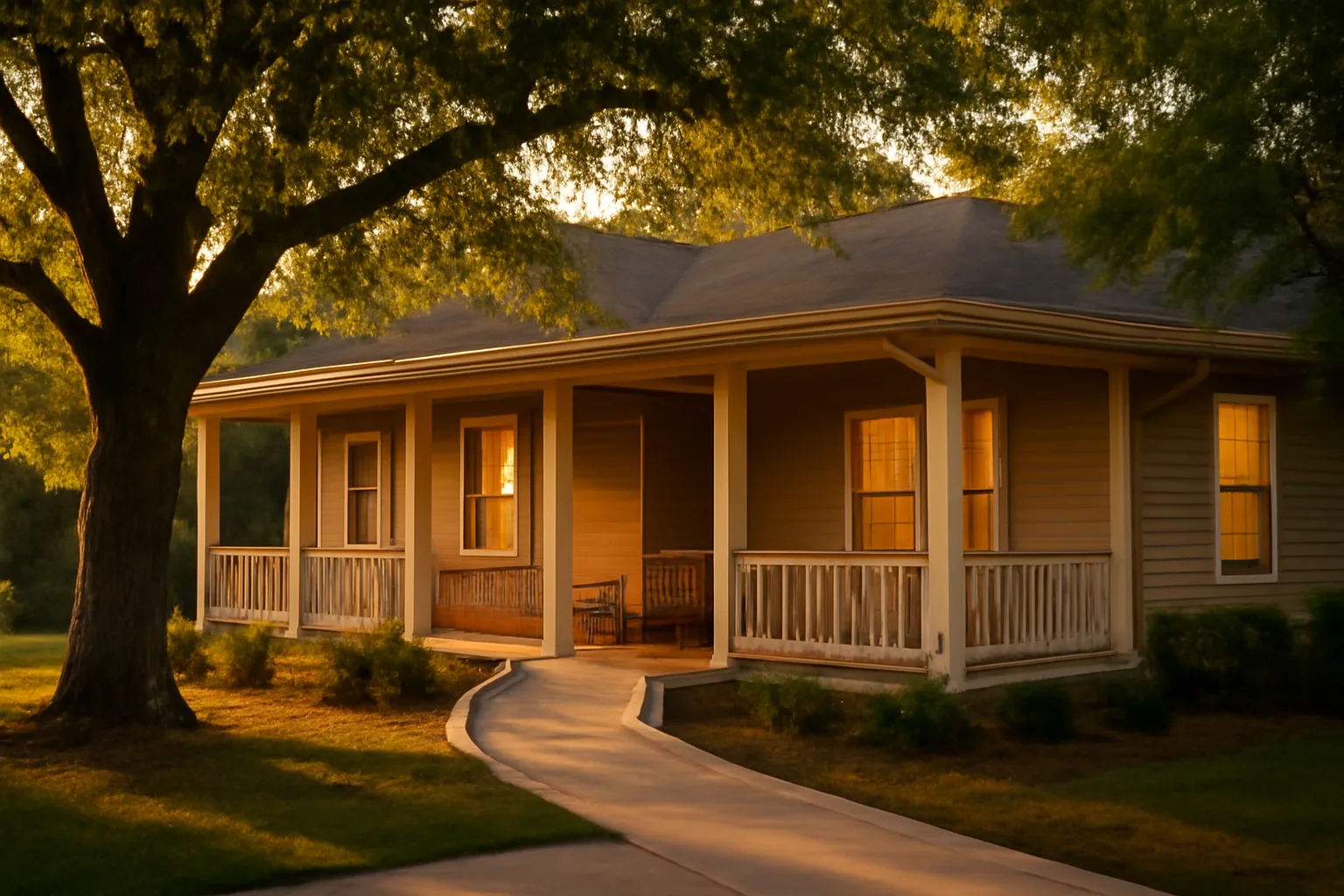
Assisted living is a residential care model for adults, usually seniors, who need help with daily activities like bathing, dressing, medication reminders, and meals but who don't need the round-the-clock skilled nursing care a nursing home provides. It sits in the middle of the care spectrum: more support than independent living, less clinical intensity than a nursing facility. The Centers for Medicare & Medicaid Services (CMS) describes nursing homes and related long-term care settings on Medicare.gov, drawing a line between facilities that provide custodial help with daily activities in a home-like setting and facilities that must meet federal skilled nursing standards [1]. Every state licenses assisted living differently, which means the exact scope of services, staffing ratios, and even the terminology (some states say "residential care facility," others say "personal care home" or "adult foster home") varies a lot. A smaller variation of this model, often called residential assisted living (RAL) or a "group home for seniors," operates out of a converted single-family house rather than a large purpose-built building. These homes typically serve 6 to 16 residents, staffed around the clock, with a more intimate, family-style setup. "The Lodge at Palmer Point" branding fits that residential, smaller-scale style of assisted living rather than a large campus.
What is a group home?
A group home is a licensed residential setting where a small number of people (commonly 4 to 10, though state caps vary) live together and receive support services from paid staff. The term covers a lot of ground: group homes exist for seniors needing assisted living support, for adults with intellectual or developmental disabilities (IDD), for people in mental health recovery, and for adults in addiction recovery. What makes it a group home rather than just a rental house is the license. States require a specific operating license tied to the population served, background-checked staff, a written policy manual, fire and safety inspections, and ongoing state oversight. Without that license, calling a home a "group home" and charging for care is illegal in every state. If you're comparing group home models across populations, our guide on assisted living facilities breaks down how senior-focused RAL licensing differs from IDD or behavioral health group home licensing in terms of staffing ratios and required training hours.
What is an assisted living facility (and how is it different from a group home)?
An assisted living facility is the licensed business entity, the building and the operation together, that provides assisted living services under a state license. "Group home" is more of a physical and cultural description (small, residential, home-like); "assisted living facility" is the regulatory term states actually use on the license itself. In practice, a small assisted living facility licensed for 6 residents in a converted house and a group home for seniors are often the exact same thing, just described with different words depending on which state you're in. Florida, for example, licenses these under its Assisted Living Facilities statute, Chapter 429, Part I of the Florida Statutes, which defines an ALF as a facility that provides housing, meals, and personal care services to residents who need assistance with activities of daily living [2]. Some states draw a sharper line: California licenses small senior group homes as Residential Care Facilities for the Elderly (RCFEs) under Title 22, while a facility labeled "assisted living" might carry additional or different requirements depending on advertised service level [3]. The label on the sign matters less than the license number on file with the state.
What does assisted living provide?
| ADL assistance | No | Yes | Yes | |
|---|---|---|---|---|
| Medication management | Self only | Yes, staff-assisted | Yes, nurse-administered | |
| 24-hour staff | No | Yes | Yes | |
| Skilled nursing care | No | Rare / limited | Yes | |
| Typical resident ratio | N/A | 1 staff to 8-15 residents (varies by state) | Higher staff-to-resident, RN required | If a facility markets memory care, dementia care, or a locked unit, that's usually a separate license add-on or endorsement in most states, not something that comes automatically with a base assisted living license. |
Assisted living provides help with activities of daily living (ADLs), which typically means bathing, dressing, toileting, mobility, and eating, plus medication management, meals, housekeeping, laundry, social activities, and 24-hour staff supervision. What it does not typically provide is skilled nursing care, ventilator support, or complex wound care, though some states allow "enhanced" or "limited nursing" tiers with additional licensing. A typical day in a residential assisted living home includes staff-assisted morning routines, three meals plus snacks, scheduled medication passes (often by a certified medication aide, not a nurse), light activities or outings, and overnight awake or on-call staff depending on state minimums. Some states require a licensed nurse to be available or on staff part-time; others allow unlicensed caregivers to handle most day-to-day care under a delegated nursing model. Here's a simple table comparing what's typically included at different care levels, though your state's specific service definitions govern what any one facility can legally advertise: | Service | Independent Living | Assisted Living / RAL | Nursing Home (SNF) |
What is the difference between assisted living and a nursing home?
The core difference is medical intensity and staffing. Nursing homes (also called skilled nursing facilities, or SNFs) are licensed to provide 24-hour skilled nursing care under federal Medicare/Medicaid conditions of participation, with a registered nurse on duty and physician oversight built into the model. Assisted living is a non-medical, custodial care model regulated at the state level, with no federal licensing framework at all. Federal nursing home rules are codified at 42 CFR Part 483, Subpart B, which sets specific requirements including registered nurse coverage and total nurse staffing hours per resident per day for any facility that participates in Medicare or Medicaid [4]. Assisted living facilities are not subject to this federal framework at all; they're "licensed and regulated by the state," with licensing requirements, inspection frequency, and staffing minimums set entirely by each state's own statutes and administrative code. Practically, this means a resident who needs IV medications, wound vacs, or has advanced dementia with significant behavioral needs usually needs a nursing home level of care, not assisted living. A resident who needs help getting dressed, taking pills on schedule, and getting to meals, but is otherwise medically stable, is the right fit for assisted living or RAL.
Does Medicare cover assisted living facilities?
No. Medicare does not cover the room and board or personal care costs of assisted living. Medicare.gov states plainly that long-term custodial care, the kind of ongoing help with bathing, dressing, and daily activities that assisted living provides, is not a covered Medicare benefit, distinct from short-term skilled nursing facility stays [5]. Medicare Part A may cover short-term skilled nursing stays after a qualifying hospital admission, but that's a different setting entirely. Medicaid is a different story, though still limited. Some states cover a portion of assisted living services (not room and board) through a Medicaid Home and Community-Based Services (HCBS) waiver under Section 1915(c) of the Social Security Act, which allows states to pay for services that would otherwise require institutional (nursing home) care [6]. Medicaid.gov describes these waivers as letting states furnish services to people in home and community-based settings as an alternative to institutional care, but coverage, eligibility, and waitlists vary enormously by state, and many states don't cover room and board at all under any Medicaid program [6]. So the honest answer for a family or an operator: assisted living is usually private-pay, sometimes supplemented by a state HCBS waiver for the service component only, and it is not a Medicare benefit.
How to start a group home (or a residential assisted living facility)
Starting a group home or small assisted living facility is a licensing project before it's anything else. Here's the realistic sequence, and none of these steps can be skipped or meaningfully shortcut: 1. Pick your population and state. Senior RAL, IDD, mental health, and recovery group homes are licensed under different statutes with different staffing rules, even within the same state. 2. Check zoning first, before you sign a lease or buy property. Many jurisdictions treat small group homes as a permitted residential use under fair housing law, but occupancy caps and any modifications (ramps, fire doors, sprinklers) still need local sign-off. See our guide on assisted living for how zoning and licensing interact. 3. Write your policy and procedure manual. States require documented policies on medication management, emergency procedures, resident rights, grievance processes, and staff training before they'll issue a license. 4. Build your staffing plan. Most states set minimum staff-to-resident ratios and require background checks, TB testing, CPR/first aid certification, and a set number of training hours (often both pre-service and annual continuing education). Confirm exact ratios with your state licensing agency, since they range widely, some states set explicit numeric ratios, others require "sufficient staff to meet resident needs" language that's enforced at inspection. 5. Pass the life safety and fire marshal inspection. This is where a lot of first-time applicants get stuck. Sprinkler requirements, exit signage, and evacuation capability standards differ by occupancy classification. 6. Submit your license application with all required attachments (floor plan, policies, staffing plan, background check clearances, proof of insurance, fire inspection approval) and pay the application fee. 7. Pass your pre-licensing inspection before you can accept your first resident. This is also where a lot of operators either burn months redoing paperwork the state kicks back, or pay a consultant several thousand dollars to assemble what is, honestly, a documentation package. That's the gap our $299 State Group Home Licensing Kit is built to close: state-specific policy manual templates, staffing plan templates, and application checklists, so you're not starting from a blank page or guessing what the surveyor wants to see.
How do I start a group home if I've never operated one before?
If you have zero operator experience, the honest starting point is your state licensing agency's own applicant guide, not a franchise pitch or a real estate agent's sales pattern. Every state that licenses assisted living or residential care publishes an applicant handbook or provider manual; read it cover to cover before you spend money on property. From there, most successful first-time operators do three things in parallel rather than in sequence: they start the license application process (which takes time regardless), they line up a qualified administrator or manager (some states require a specific administrator license or certification, separate from the facility license), and they get zoning and property questions answered in writing from the local planning department. Budget realistically for the licensing timeline. Application review alone commonly runs 60 to 120 days in many states once a complete application is submitted, not counting the time it takes to prepare the application itself, and that's before any requested corrections extend the clock. Facilities with incomplete or resubmitted applications routinely take longer. None of this is fast-tracked by paying more money to the state; the fee covers review, not priority. If you're weighing whether to buy an existing licensed facility (sometimes marketed with lodge, manor, or estate names) versus building from scratch, note that licenses are almost never transferable between owners. Buying an operating facility still typically requires a change-of-ownership application and, in many states, a fresh inspection.
What should I know before touring or choosing a facility like The Lodge at Palmer Point?
If you're a family evaluating a specific facility, whatever its name, ask to see the current license certificate posted on-site and the facility's most recent state inspection or survey report. Most states publish these online through the licensing agency's facility search tool, and a facility that hesitates to show you either document is a red flag worth taking seriously. Ask specifically about staff-to-resident ratios on the overnight shift (this is where understaffing shows up first), medication administration procedures (who administers, what training they have), and what happens if a resident's care needs increase beyond what the facility is licensed to provide. Every state sets a "level of care" ceiling for basic assisted living licenses; find out what triggers a required discharge or transfer to a higher level of care. Finally, ask about the admission agreement's refund and deposit terms in plain language, and get any verbal promises in writing before move-in. Assisted living admission contracts are private agreements, not standardized like nursing home Medicare paperwork, so the protections you get depend entirely on what's actually written down.
How do zoning and property requirements affect a facility like this?
Small residential assisted living homes usually operate out of single-family zoned property, which raises a predictable question: is that legal? In most states, yes, under both state law and federal fair housing protections, small group homes for people with disabilities (which includes many seniors needing assisted living) are treated as a permitted residential use, not a commercial one, up to a certain occupancy threshold. The federal Fair Housing Act (42 U.S.C. § 3604) prohibits municipalities from using zoning to categorically exclude group homes for people with disabilities, and HUD's guidance on reasonable accommodation confirms that requirement applies when a zoning code would otherwise block a small group home from operating in a residential zone . That said, "reasonable accommodation" isn't a blank check. Occupancy limits, parking requirements, and life-safety modifications (fire separation, sprinklers above a certain resident count) still apply and vary by local jurisdiction and by exact resident count. Before committing to a property, get written confirmation from your local planning or zoning office that a residential assisted living use at that resident count is permitted, and separately confirm the state licensing agency's physical plant requirements (minimum square footage per resident, number of bathrooms, egress requirements). These are two different approval processes and clearing one doesn't clear the other. Our guide on assisted living facility walks through how these two tracks typically run in parallel.
What ongoing compliance does a licensed facility face after opening?
Licensing is not a one-time event. Most states require annual or biennial relicensing, unannounced inspections (sometimes annual, sometimes more frequent if there have been complaints), and incident reporting for falls, medication errors, elopements, and deaths. Failing an inspection typically results in a corrective action plan with a deadline, and repeated or serious violations can lead to fines, admission holds, or license revocation. Staff training requirements also don't stop at hire. Many states require annual continuing education hours per staff member, refreshed CPR/first aid certification, and updated background checks on a periodic cycle. Keeping a training log current is one of the most common gaps inspectors flag, not because operators don't train staff, but because the paperwork proving it wasn't kept up. If you're building or refreshing your compliance documentation, our policies and procedures resources and inspection prep guidance cover the specific document types (medication logs, incident reports, staff training records) that inspectors ask to see first.
Frequently asked questions
What is assisted living?
Assisted living is a state-licensed residential care model for adults who need help with daily activities like bathing, dressing, and medication management but don't need full-time skilled nursing care. It provides 24-hour staff supervision, meals, and personal care in a home-like setting, regulated entirely at the state level with no single federal licensing standard.
What is a group home?
A group home is a licensed residential setting where a small number of people, often 4 to 16 depending on the state, live together and receive paid staff support. Group homes exist for seniors, people with intellectual/developmental disabilities, mental health recovery populations, and addiction recovery populations, each under separate state licensing rules.
What is an assisted living facility?
An assisted living facility is the licensed operation, building and business together, that provides housing, meals, and personal care assistance to residents. States use varying terms (RCFE, personal care home, residential care facility) for essentially the same concept, and the specific license type determines what services the facility can legally provide.
What is the difference between assisted living and a nursing home?
Assisted living is non-medical custodial care regulated by states, with no federal staffing mandate. Nursing homes (skilled nursing facilities) must meet federal conditions of participation under 42 CFR Part 483, including registered nurse staffing requirements, and provide medical care for residents who need more intensive, ongoing clinical support than assisted living offers.
Does Medicare cover assisted living facilities?
No. Medicare does not pay for assisted living room, board, or custodial care costs. Medicare Part A may cover a short-term skilled nursing facility stay after a qualifying hospitalization, but that's a distinct benefit from long-term assisted living. Some state Medicaid HCBS waivers cover a portion of assisted living services, not room and board.
How do I start a group home?
Pick your population and state, confirm zoning allows your planned resident count, write your required policy manual and staffing plan, complete staff background checks and training, pass your fire/life-safety inspection, then submit your full license application with the required fee and pass a pre-licensing inspection before accepting residents.
How long does it take to get a group home license?
Timelines vary widely by state and population type, but application review alone commonly takes 60 to 120 days once a complete application is submitted, not counting the weeks or months needed to prepare policies, staffing plans, and pass zoning and fire inspections beforehand. Incomplete applications add significant delay.
Is The Lodge at Palmer Point a licensed facility?
We could not verify a specific, current public license record for a facility under this exact name at the time of writing. If you're evaluating this specific property, search your state's assisted living facility license lookup tool by name and county, and ask to see the posted license certificate on-site.
What's the difference between a group home and an assisted living facility?
They often describe the same thing. "Group home" is a general, physical description of a small residential care setting; "assisted living facility" is the specific regulatory term states use on the actual license. A small state-licensed assisted living facility in a converted house is commonly called a group home in everyday conversation.
Can I convert my house into a licensed assisted living home?
Often yes, if local zoning permits residential care use at your planned resident count and the property can meet state physical plant standards (bathroom ratios, egress, fire separation). Confirm zoning in writing with your local planning department and physical plant standards with your state licensing agency before signing a purchase agreement.
Do I need a nursing license to operate a residential assisted living home?
Usually not to operate the business itself, but most states require a licensed administrator (sometimes a specific administrator certification, not necessarily a nursing license) and may require a part-time or on-call licensed nurse depending on the services offered. Requirements vary significantly; confirm with your state licensing agency.
What does assisted living provide that independent living doesn't?
Assisted living adds staff assistance with activities of daily living (bathing, dressing, mobility), medication management, 24-hour staff supervision, and often housekeeping and meal service built into the model. Independent living typically offers none of these support services, functioning more like age-restricted housing with optional amenities.
Sources
- Medicare.gov, Nursing Home Care: Assisted living facilities provide help with activities of daily living in a residential, non-hospital setting and are distinguished from federally regulated nursing homes
- Florida Statutes, Chapter 429, Part I: Florida defines assisted living facilities and their licensing requirements under Chapter 429, Part I
- California Department of Social Services, Title 22 RCFE Regulations: California licenses small senior group homes as Residential Care Facilities for the Elderly under Title 22
- 42 CFR Part 483, Subpart B: Nursing homes must meet federal Medicare/Medicaid conditions of participation including staffing requirements not imposed on assisted living
- Medicare.gov, Long-term care coverage: Medicare does not cover long-term custodial care of the kind provided in assisted living
- Medicaid.gov, Home & Community-Based Services 1915(c): States can cover home and community-based services, including some assisted living services, through Section 1915(c) Medicaid waivers instead of requiring institutional care