Last updated 2026-07-25
TL;DR
You need a state license from your health or social services agency, a building that passes life-safety and fire code inspection, a staffing plan meeting your state's ratios, an approved policy manual, and enough working capital to cover 6-12 months of costs before residents fill beds. Requirements vary heavily by state.
what is assisted living
Assisted living is a category of licensed residential care for adults, usually older adults, who need help with daily activities like bathing, dressing, medication reminders, and meals but don't need the round-the-clock skilled nursing care of a hospital or nursing home. The federal government doesn't regulate assisted living directly. Each state writes its own definition, licensing category, and rulebook, which is why a "assisted living facility" in Florida can look structurally different from one in Ohio. Most states define assisted living somewhere between independent living and skilled nursing on a care continuum. The Centers for Medicare & Medicaid Services notes that assisted living is regulated at the state level, not federally certified the way nursing homes are under Medicare and Medicaid rules [1]. That single fact drives almost everything else in this article: your state licensing agency, not a federal office, decides your rules, your fees, and your inspection schedule. If you're comparing options by state, start with our assisted living overview, which breaks down how definitions shift from one jurisdiction to the next.
what is an assisted living facility (and what is assisted living facility, exactly, on paper)
An assisted living facility is the physical, licensed operation, the building plus the license plus the staff plus the policies, that delivers assisted living services under a state permit. States use different legal names for the same basic idea: "residential care facility for the elderly" (California), "assisted living residence" (Florida), "adult care home" (North Carolina), "assisted living facility" (Ohio, Texas, many others). What makes it a facility rather than a private home with a caregiver is licensure. Once you're providing personal care services to non-related adults in exchange for payment, most states require a license regardless of how few residents you have. Some states set a floor, for example, a home with fewer than a certain number of residents may fall under a lighter-touch adult foster care or family care license instead of a full assisted living license. Confirm the resident-count threshold with your state licensing agency, because it changes which application, fee schedule, and inspection frequency applies to you. A facility license is not the same as a business license. You'll typically need both: a state health or social services license to operate assisted living, and a standard local or state business license/EIN to operate as a company. Skipping the state license and running on just a business license is the single most common way new operators get shut down before their first resident moves in.
what is a group home
A group home is a small residential setting, usually a single-family style house, where a handful of unrelated people with disabilities, mental illness, substance use recovery needs, or (less commonly) aging-related care needs live together with staff support. Group homes overlap with assisted living but aren't identical: group homes more often serve intellectual/developmental disability (IDD) or behavioral health populations, licensed under a state's disability services or behavioral health agency rather than its aging or elder-care licensing arm. The practical overlap matters for planning. Many states use nearly identical life-safety, staffing-ratio, and background-check frameworks for both group homes and assisted living facilities, just filed under different license categories. If you're deciding which population and license type to pursue, our guide on how to start a group home style operation versus an assisted living license walks through the licensing-agency differences state by state. Size is often the dividing line in practice. Group homes commonly run 4 to 8 beds; assisted living facilities range from small "board and care" homes of 6 beds up to large communities with 100+ units. Either way, the license, not the marketing name on your sign, determines what regulations apply.
how to start a group home or assisted living facility, step by step
There's no shortcut around the state process, but the sequence is consistent enough to plan against. Here's the order that actually works, based on how state licensing statutes are structured: 1. Pick your license type and population. Decide whether you're licensing as assisted living, adult foster care, a group home under disability/behavioral health rules, or a small board-and-care home. This decision locks in which state agency you'll deal with. 2. Confirm zoning before you sign a lease. Call your local planning or zoning department and ask directly whether a group residential care use is permitted, conditional, or prohibited at the address you're considering. Many states have "reasonable accommodation" or "fair housing" provisions that require municipalities to treat small group homes (often 6 or fewer residents) like any single-family residence for zoning purposes, a protection rooted in the federal Fair Housing Act [2]. Don't assume this protects you automatically; get it in writing from the local zoning office. 3. Secure and prep the physical building. Your state will have minimum square footage per resident, bedroom occupancy limits (often no more than 2 residents per room), bathroom ratios, fire sprinkler or alarm requirements, and accessibility standards. Budget time for a fire marshal walkthrough separate from your health/social-services inspection; these are usually two different inspectors from two different offices. 4. Write your policy and procedure manual. States require written policies covering admission and discharge criteria, medication management, emergency and disaster preparedness, resident rights, abuse/neglect reporting, staffing plans, and infection control. This document is reviewed as part of your application, not an afterthought you write after approval. 5. Build your staffing plan and get background checks moving. You'll need a designated administrator (many states require a specific administrator license or training certificate), direct care staff meeting minimum staff-to-resident ratios, and criminal background checks/registry checks for every staff member before they can work unsupervised with residents. 6. Submit your license application with required fees. Fees and required attachments (floor plans, fire inspection sign-off, staffing plan, policy manual, proof of financial solvency) vary by state; confirm exact costs with your state licensing agency before budgeting. 7. Pass your pre-licensing inspection. Expect a full walkthrough covering the physical plant, life safety systems, resident files (if you have any residents in a trial period), staff files, and posted resident rights notices. 8. Get your license issued and post it. Most states require the license be posted in a visible location and require you to notify the agency of any material change (ownership, administrator, bed count, address).
what does assisted living provide
Assisted living provides help with activities of daily living (ADLs), which typically means bathing, dressing, toileting, transferring (getting in and out of bed or a chair), and eating, plus instrumental activities like medication reminders, meal preparation, housekeeping, laundry, and transportation coordination. It is personal care and supportive services, not medical treatment. What it does not provide, in most states, is skilled nursing care: IV therapy, wound care beyond basic first aid, ventilator management, or 24-hour licensed nursing supervision. If a resident's needs cross that line, most state rules require either a nursing home level of care or a waiver/exception process, and many states have a formal "negotiated risk agreement" or discharge requirement when a resident's needs exceed what the facility is licensed to provide. A typical assisted living day includes three meals, help with medications (administration rules vary by state; some require a licensed nurse, others allow trained aides under specific protocols), social and recreational activities, housekeeping, and staff available to respond to needs, though not always one-on-one nursing supervision around the clock. If you're researching specific facilities for a family member rather than starting one, our directory-style guide to assisted living facilities and senior assisted living facilities near me covers what to look for on a tour.
what is assisted living vs nursing home / difference between assisted living and nursing home
| Regulator | State agency (varies by state) | State licensure + federal CMS certification | |
|---|---|---|---|
| Care level | Personal care, ADL help | Skilled nursing, medical/rehab care | |
| Staffing | Direct care aides, admin; nurse on-call or part-time in many states | Licensed nurses on duty, RN coverage requirements under federal law | |
| Medicare coverage | Not covered (room and board) | Covered for limited, medically necessary skilled stays | |
| Typical setting | Apartment-style or shared room in residential building | Hospital-like clinical setting | |
| Discharge trigger | Care needs exceed license scope | Medical stability improves to lower level of care | Nursing homes must meet federal requirements including specific registered nurse coverage minimums; CMS finalized a rule in 2024 establishing minimum nurse staffing standards for federally certified nursing homes, including a 24/7 RN on-site requirement, though implementation timelines have been subject to legal and legislative challenges [4]. Assisted living has no equivalent federal staffing mandate, only whatever your specific state requires. The practical takeaway for someone starting a facility: if you want to avoid federal Medicare/Medicaid certification survey requirements and stick to state-only licensing, assisted living or group home models are the simpler entry point. Skilled nursing is a much heavier regulatory and capital lift. |
The core difference is the level of medical care and the regulatory framework behind it. Assisted living is state-licensed personal care in a residential setting; nursing homes are state-licensed and federally certified skilled nursing facilities that provide medical and rehabilitative care under Medicare and Medicaid conditions of participation set by CMS [3]. | Feature | Assisted Living | Nursing Home |
does medicare cover assisted living facilities
No. Medicare does not cover the room-and-board or personal care costs of assisted living. Medicare.gov states plainly that Medicare "doesn't cover long-term care (also called custodial care)" if that's the only care you need, and assisted living room-and-board charges fall into that non-covered custodial category [5]. Medicare Part A may still cover specific medical services delivered to a resident who happens to live in assisted living, things like doctor visits, some home health services, or a hospital stay, but it will not pay the facility's monthly rate for housing, meals, or personal care assistance. Medicaid is a different story and depends entirely on your state. Many states offer Medicaid Home and Community-Based Services (HCBS) waivers that can pay for personal care services within assisted living settings, though Medicaid generally still won't cover the room-and-board portion of the bill. Medicaid.gov's HCBS waiver page explains that these 1915(c) waivers let states cover services "furnished in a variety of community-based settings" as an alternative to institutional care [6]. If you're planning to accept Medicaid waiver residents, you'll need a separate Medicaid provider enrollment process on top of your state facility license, and that process has its own paperwork, rate-setting, and audit requirements. Our funding-and-medicaid coverage (or your state Medicaid agency directly) is the place to start on waiver enrollment specifics.
what license and application paperwork do you actually need
Every state requires an initial license application through its health department, social services department, or a dedicated long-term care licensing division, but the exact document list differs by state. Expect most states to require some combination of: a completed license application form, floor plans stamped by an architect or reviewed by the local fire marshal, proof of ownership or lease, a criminal background check and abuse-registry clearance for the administrator and owners, a staffing plan with job descriptions, a policy and procedure manual, proof of liability insurance, and a non-refundable application fee. Fees range widely. Rather than guess at a number, confirm the exact fee schedule with your state licensing agency, since some states charge a flat application fee while others scale fees by licensed bed capacity. Building a policy manual from scratch is where most first-time applicants lose the most time, because it has to match your state's specific citation numbers (resident rights sections, medication administration rules, incident reporting timelines) rather than generic boilerplate. This is the one part of the process where a purpose-built template genuinely saves weeks: GroupHomePath's $299 one-time State Group Home Licensing Kit Builder generates a state-specific policy manual and application checklist so you're not reverse-engineering statute language from a PDF at 11pm. It doesn't replace legal review and can't promise a specific outcome, no product can do that honestly, but it gets your first draft built fast instead of started from a blank page.
what staffing do you need
Staffing requirements are set by your state and typically specify a minimum administrator qualification, a minimum staff-to-resident ratio (often varying by shift, with lower ratios overnight), and required training hours before a caregiver can work unsupervised. Some states require the administrator to hold a specific state-issued Assisted Living Administrator license or complete a state-approved training course before the facility can open. Background checks are non-negotiable almost everywhere. Expect fingerprint-based criminal history checks, sex offender registry checks, and in many states an abuse/neglect registry check for every employee, contractor, and sometimes volunteer with resident access, completed before that person has unsupervised contact with residents. Budget for turnover from day one. Direct care work is physically and emotionally demanding, and most operators plan staffing coverage assuming they'll need a deeper roster than the bare minimum ratio, because a single call-out on an already-thin shift can put you out of compliance instantly during a surprise inspection.
what does the building need to pass inspection
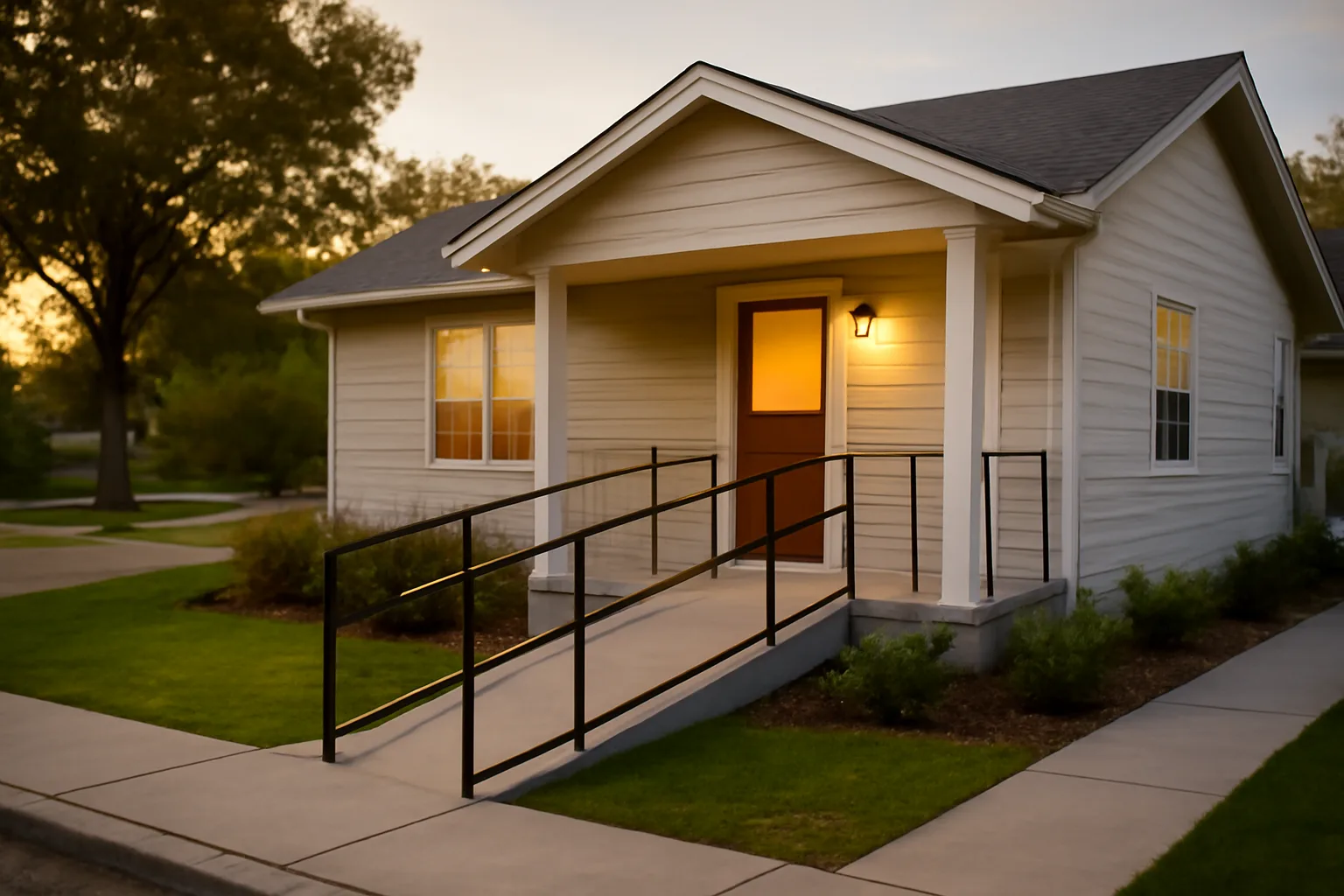
Expect two separate inspection tracks: a life-safety/fire inspection (usually run by the state fire marshal or local fire authority) and a health/licensing inspection (run by your state's assisted living or group home licensing division). Both have to pass before you get a license, and both recur, typically annually, after you're operating. Common physical requirements across states include a minimum square footage per resident bedroom, a cap on residents per bedroom (commonly two), a minimum number of bathrooms per resident count, accessible egress and ramps meeting ADA and local building code, smoke detectors and often a full fire sprinkler system, a working fire alarm system with monitoring, emergency lighting, and a written emergency evacuation and disaster plan posted and drilled with staff. Don't lease a building and assume you can retrofit it cheaply. Sprinkler retrofits, in particular, are one of the most expensive surprises new operators hit, sometimes tens of thousands of dollars depending on the building's age and existing plumbing. Get the fire marshal's informal opinion on a specific address before you sign anything longer than a short-term option agreement.
what does it cost and how long does it take to open
There's no single national number here, and anyone quoting you one flat figure across all states is guessing. Costs depend on whether you're buying or leasing, whether the building needs sprinkler or ADA retrofits, your state's fee schedule, and your bed count. Realistic planning should account for the license application fee (confirm with your state agency), background check fees per employee, an architect or engineer review of floor plans in many states, liability and property insurance, staffing costs before you have paying residents, and a working capital cushion, most operators plan for 6 to 12 months of operating expenses before occupancy stabilizes, since census fill-up is rarely immediate. Timeline is typically 3 to 9 months from application submission to license issuance, longer if your building needs construction or if your state has application backlogs. States vary in whether they publish average processing times; ask your specific licensing office for their current turnaround when you submit. There is no fast-track option and no way to pay for expedited review in most states. Anyone promising quick, easy licensing with no real vetting is not being straight with you.
Frequently asked questions
what is assisted living
Assisted living is state-licensed residential care for adults who need help with daily activities like bathing, dressing, and medication reminders but don't need full-time skilled nursing care. It's regulated entirely at the state level; there's no single federal definition or license, which is why rules, fees, and terminology differ from state to state.
what is a group home
A group home is a small residential facility, usually a house, where a handful of unrelated adults with disabilities, mental illness, or recovery needs live with staff support. Group homes are often licensed under a state's disability or behavioral health agency, distinct from the aging-services agency that licenses assisted living, though the two share similar staffing and life-safety rules.
what is an assisted living facility
An assisted living facility is the licensed physical operation, building, license, staff, and policies together, that delivers personal care services to residents under state assisted living regulations. States call it different names (residential care facility for the elderly, assisted living residence, adult care home) but the licensing structure is functionally similar.
what is assisted living facility called in different states
Names vary: California uses Residential Care Facility for the Elderly (RCFE), Florida uses Assisted Living Facility (ALF), North Carolina uses Adult Care Home, and other states use terms like Personal Care Home or Residential Care Home. The underlying services are similar, but the licensing agency and rule citations differ, so always confirm the exact term with your state's licensing agency.
what is assisted living vs nursing home
Assisted living provides personal care (bathing, dressing, medication reminders) in a residential setting under state-only licensing. Nursing homes provide skilled medical and rehabilitative care under both state licensing and federal Medicare/Medicaid certification, with mandated nurse staffing levels under CMS rules. Nursing homes serve people needing daily medical care; assisted living serves people needing daily living support.
what does assisted living provide
Assisted living typically provides help with bathing, dressing, toileting, mobility, medication reminders, three daily meals, housekeeping, laundry, and social activities. It does not provide skilled nursing services like IV therapy or complex wound care; residents whose needs exceed that scope usually must move to a higher level of care.
how to start a group home
Pick your license type and population, confirm local zoning allows the use, secure a building meeting life-safety and bedroom-occupancy rules, write a state-compliant policy manual, build a staffing plan with background-checked employees, submit your application with required fees, and pass your pre-licensing inspection. The exact agency and requirements depend entirely on your state and the population you serve.
how do i start a group home
Start by contacting your state's licensing agency (disability services, behavioral health, or aging services, depending on who you'll serve) to get the current application packet and fee schedule. Then work zoning, building code, staffing, and policy manual requirements in parallel, since all four typically have to be resolved before your license application can be approved.
what is the difference between assisted living and nursing home
Assisted living is personal care under state licensing only; nursing homes are skilled medical care under both state licensing and federal CMS certification with Medicare/Medicaid participation. Nursing homes have federally mandated nurse staffing requirements; assisted living staffing rules are set entirely by the state, with no federal floor.
does medicare cover assisted living facilities
No. Medicare does not cover the room, board, or personal care costs of assisted living because it classifies that as custodial long-term care. Medicare may still pay for specific medical services (doctor visits, some home health) delivered to a resident who lives in assisted living, but not the facility's monthly rate.
does medicaid pay for assisted living
It depends on the state. Many states offer Medicaid Home and Community-Based Services (HCBS) waivers that can cover personal care services in assisted living, but Medicaid generally still won't cover room-and-board charges. Enrollment as a Medicaid provider is a separate process from your state facility license.
how much does it cost to start an assisted living facility
Costs vary too much by state, building condition, and bed count for one honest national figure. Budget for the license application fee, background checks, possible fire-code retrofits (sprinklers can run into tens of thousands of dollars), insurance, staffing before occupancy, and 6-12 months of working capital while census fills up. Confirm fee schedules directly with your state licensing agency.
how long does it take to get an assisted living license
Most states take roughly 3 to 9 months from application submission to license issuance, longer if the building needs construction, sprinkler retrofits, or if the state has an application backlog. There's no guaranteed or expedited timeline in most states; ask your specific licensing office for current processing estimates.
do i need a special license to run a group home from my house
In most states, yes, if you're providing personal care to non-related adults for payment, licensing is required regardless of whether the home is your primary residence. Some states use a lighter-touch adult foster care or family care home category for very small homes below a certain resident count; confirm the exact threshold with your state licensing agency.
Sources
- Medicaid.gov, Home & Community Based Services: Assisted living is regulated at the state level rather than through federal certification
- HUD, Fair Housing Act overview: Federal fair housing protections affect how municipalities can zone small group homes
- CMS, Nursing Home Requirements of Participation: Nursing homes must meet federal certification conditions of participation under CMS
- CMS, Minimum Staffing Standards for Long-Term Care Facilities final rule: CMS finalized a 2024 rule establishing minimum nurse staffing standards including 24/7 RN presence for certified nursing homes
- Medicare.gov, Long-term care coverage: Medicare does not cover custodial long-term care such as assisted living room and board
- Medicaid.gov, Home and Community-Based Services 1915(c) waivers: Medicaid HCBS waivers can cover community-based personal care services as an alternative to institutional care