Last updated 2026-07-25
TL;DR
A residential assisted living facility is a licensed home, often a converted single-family house, that houses a small number of seniors or adults needing help with daily activities like bathing, medication, and meals. It's not a nursing home. It's overseen by state licensing agencies, not federal Medicare rules, and costs are usually paid privately, through long-term care insurance, or Medicaid waivers.
what is assisted living
Assisted living is a category of licensed care for people who need help with daily activities but don't need the round-the-clock medical care of a nursing home. Think bathing, dressing, medication reminders, meals, and some supervision, not IV drips or ventilators. Every state defines and licenses assisted living differently, which is honestly the most confusing part for anyone trying to open one. There's no single federal assisted living law. Instead, each state health or social services department writes its own rules on staffing ratios, resident-to-caregiver limits, physical plant requirements, and what level of care a home is allowed to provide. The Centers for Medicare & Medicaid Services (CMS) does not regulate assisted living directly because it isn't a Medicare-covered institutional benefit [1]. The term covers many different settings in practice: big 100-bed purpose-built communities with a dining hall and activity director, and small homes with six beds that look like any other house on the block. Both might call themselves "assisted living" depending on state terminology, though some states use separate license categories (residential care home, adult foster care, personal care home) for the smaller model.
what is a residential assisted living facility
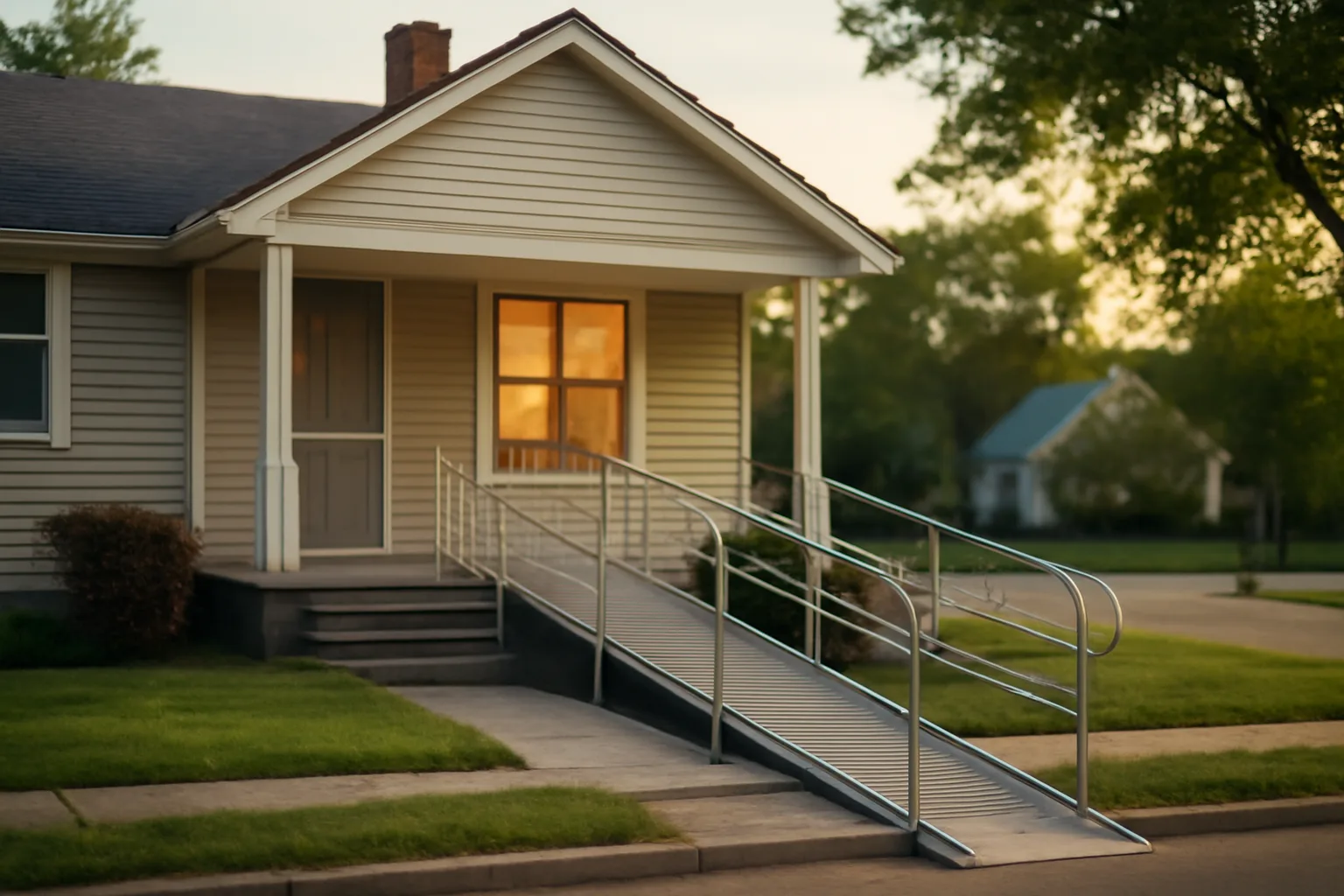
A residential assisted living facility (sometimes called an RAL, residential care home, or adult family home depending on the state) is a small-scale assisted living operation run out of a house rather than an institutional building. Most run somewhere between 6 and 16 residents, though the cap varies a lot by state license type. Some states cap unlicensed or lightly-licensed "family home" models at 5 or 6 residents and require a full institutional license above that. The appeal, for operators and families both, is scale. A residential model can feel like living in a home with a caregiver present, not a facility with a nurses' station and fluorescent hallway lighting. Staff-to-resident ratios tend to be tighter because the whole building is smaller. Meals happen in a real kitchen. Bedrooms are often converted from a house's existing floor plan rather than built to institutional dimensions. On the regulatory side, an RAL still has to meet the same core protections other assisted living settings do: background checks for staff, medication management policies, fire and life safety inspections, and a written plan of care for each resident. What changes is scale of the physical plant requirements (sometimes a residential sprinkler standard instead of a commercial one, for example) and how zoning treats the property. That's a separate headache covered in our zoning guidance, since many residential assisted living homes get challenged over whether a group home use is even permitted in a single-family zone.
what is a group home
A group home is a licensed residential setting where a small number of unrelated people live together and receive support services, supervision, or care from paid staff. The term is used broadly across several populations: seniors needing assisted living, adults with intellectual or developmental disabilities (IDD), people in mental health recovery, and people in substance use recovery. The legal and licensing category differs a lot depending on who's being served. A group home for adults with IDD is usually licensed under a state's developmental disabilities or Medicaid home and community-based services (HCBS) authority, often tied to a Medicaid waiver like a 1915(c) waiver [2]. A group home for seniors needing personal care is usually licensed under the state's assisted living or residential care statute. A group home for mental health or substance use recovery might fall under behavioral health licensing rules entirely separate from either of the above. What they share: a home-like physical setting, paid direct care staff (not family members, which is what separates a group home from informal family caregiving), and a state license or certificate that has to be renewed, usually annually, with the state agency responsible for that population. If you're researching this for a specific population, our guides on assisted living facilities break down the senior RAL side in more depth.
what is an assisted living facility (and what's the difference from "assisted living")
"Assisted living" is the service model. "Assisted living facility" (often abbreviated ALF) is the licensed physical building or license category itself. In everyday use people say them interchangeably, and honestly most families searching online don't distinguish the two, but on a state license application the distinction matters because you're applying for a facility license tied to a specific address and bed count. Most state statutes define an ALF along the lines of: a residence that provides housing, meals, and personal care services to individuals who need help with activities of daily living but do not require continuous nursing care. Florida's statute, for example, defines an assisted living facility as "any building or buildings, section or distinct part of a building, private home, boarding home, home for the aged, or other residential facility... which undertakes through its ownership or management to provide housing, meals, and one or more personal services" [3]. If you're comparing facility types side by side while deciding what to build or convert, our assisted living facility overview walks through license tiers state by state.
what does assisted living provide
Assisted living provides help with activities of daily living (ADLs), not medical treatment. The standard list of ADLs used across most state licensing statutes and by CMS includes bathing, dressing, eating, toileting, transferring (getting in and out of a bed or chair), and continence care [4]. Beyond ADL support, a typical assisted living or residential care license requires the operator to provide: - Three meals a day plus snacks, accommodating basic dietary restrictions
- Medication management or reminders (the exact scope, whether staff can administer meds or only remind residents to take them, depends on state rules and staff licensure)
- 24-hour staff awareness or supervision, though not necessarily awake staff overnight in every state
- Housekeeping and laundry
- Some level of social or recreational activity
- Coordination with outside medical providers, hospice, or home health, since the facility itself usually isn't providing skilled nursing What it does not provide, in most states, is skilled nursing care, IV therapy, ventilator support, or treatment for conditions requiring continuous medical monitoring. Residents who progress past what assisted living staff are licensed to handle usually have to move to a nursing home or skilled nursing facility, which is one of the hardest conversations in this whole industry and worth planning for in your admission and discharge policies from day one.
what is assisted living vs nursing home (and the difference)
| Staffing | Direct care staff, medication aides; RN/LPN not always required on-site | Licensed nurses on duty 24/7, required by federal law | |
|---|---|---|---|
| Regulation | State licensing agency, rules vary widely by state | Federally certified under Medicare/Medicaid Conditions of Participation, plus state licensing | |
| Medicare coverage | Not covered as a room-and-board benefit | Covered up to 100 days per benefit period after a qualifying hospital stay, with cost-sharing after day 20 [5] | |
| Typical resident | Needs ADL help, largely mobile or semi-independent | Needs skilled nursing or rehab, often post-hospital or high acuity | |
| Setting | Home-like, often smaller, private or semi-private rooms | Institutional, hospital-adjacent feel, shared rooms common | Federal nursing home rules come from the Nursing Home Reform Act provisions under the Social Security Act and CMS's Requirements of Participation for long-term care facilities, which mandate a registered nurse on site at least 8 consecutive hours a day, 7 days a week, and licensed nursing staff sufficient to meet resident needs around the clock [6]. Assisted living has no equivalent federal staffing mandate; it's entirely state-defined. |
The core difference is medical acuity and staffing. Assisted living is for people who need help with daily activities but are medically stable. A nursing home (skilled nursing facility, SNF) is for people who need ongoing medical care, like wound care, IV medication, ventilator support, or rehabilitation after a hospital stay, and it's staffed with licensed nurses around the clock. | | Assisted Living / Residential Care | Nursing Home (SNF) |
does medicare cover assisted living facilities
No. Medicare does not pay for the room-and-board or personal care costs of assisted living. CMS is direct about this: Medicare Part A and Part B do not cover long-term custodial care, which is what assisted living primarily provides [7]. Medicare will sometimes pay for specific medical services a resident receives while living in an assisted living facility, like a doctor's visit, physical therapy ordered by a physician, or durable medical equipment, the same way it would if that person lived at home. But it will not pay the facility's monthly rate for housing, meals, or personal care assistance. Medicaid is a different story, and this is where a lot of confusion comes from. Many states use Medicaid Home and Community-Based Services (HCBS) waivers, authorized under Section 1915(c) of the Social Security Act, to help cover the cost of services within a residential setting for people who financially and medically qualify [2]. Medicaid waiver coverage typically pays for the care services (aide time, medication management) but not necessarily the room-and-board portion, and availability depends entirely on your state's waiver design and waitlists. If you're planning to accept Medicaid waiver residents, get familiar with our funding and Medicaid coverage before you finalize your business model, because waiver reimbursement rates and enrollment caps vary enormously by state and can make or break a small operation's math.
what is the difference between assisted living and nursing home costs and care level
Beyond the Medicare/Medicaid distinction above, the practical difference families feel is care intensity and cost structure. Assisted living residents are generally paying a monthly rate that bundles rent, meals, and a defined package of care hours. Nursing home residents are paying (or Medicare/Medicaid is paying on their behalf) for a much higher staff-to-resident ratio and medical oversight, which costs more. Cost data varies a lot by state and region, so rather than quote a national average that might be stale by the time you read this, check your state's most recent Medicaid state plan or your state department of aging's cost-of-care survey for current figures, since these numbers shift year to year with inflation and labor costs. The clinical line between the two settings isn't always crisp in practice. Some states allow assisted living facilities to obtain an enhanced or "limited nursing" license tier that permits a bit more medical care (like hospice coordination or certain nursing tasks) without requiring a full SNF license. If you're building out a facility and unsure which tier fits your intended population, that's exactly the kind of question to put directly to your state licensing agency before you sign a lease or start construction, since the license tier drives your staffing plan, your building code requirements, and your admission criteria all at once.
how to start a group home
Starting a group home, whether it's for seniors, IDD residents, or behavioral health recovery, follows a similar sequence of steps even though the specific agency and requirements differ by state and population: 1. Pick your population and license type. Confirm with your state licensing agency which category (assisted living, adult foster care, personal care home, IDD group home, behavioral health residential) matches the residents you intend to serve, because this decision drives every rule that follows. 2. Check zoning before you sign anything. Many residential group homes rely on protections under the federal Fair Housing Act, which prohibits some (not all) local zoning restrictions on group homes for people with disabilities, but local rules on occupancy, parking, and fire code still apply and vary block by block [8]. See our zoning and property guidance before committing to a location. 3. Write your policy and procedure manual. States typically require written policies on medication management, emergency procedures, resident rights, admission and discharge criteria, and staff training before they'll even accept your application. 4. Build your staffing plan. Most states require a specific administrator qualification (sometimes a state-issued administrator license or certification exam) plus minimum direct care staffing ratios based on resident count and acuity. 5. Pass your life safety and building inspection. Fire marshal sign-off, sprinkler or smoke detector requirements, and ADA-type accessibility rules typically have to clear before licensing will issue a certificate. 6. Submit your license application with required fees. Fees range widely, commonly in the low hundreds to over a thousand dollars, and this is genuinely something to confirm with your state licensing agency rather than guess at, since it varies by state and license type and changes periodically. 7. Pass your pre-licensing inspection. The state will send a surveyor to verify the physical plant and your policies match what's on paper before granting the license. We built a step-by-step $299 State Group Home Licensing Kit specifically because this checklist looks simple written out but each step has a stack of state-specific paperwork behind it, application forms, policy manual templates, staffing plan worksheets, that most first-time operators underestimate badly. It won't get your application approved for you (no one can promise that, and anyone who does is lying to you), but it gives you the document set organized by state so you're not starting from a blank page.
how do i start a group home (the paperwork side, practically)
The question above covers the sequence. This section is about the paperwork trap that catches almost everyone the first time. Most state licensing denials or delays aren't about the building. They're about incomplete or generic policy manuals. A state surveyor reviewing your application wants to see policies written to match your specific facility (your address, your bed count, your staffing hours), not a template copied from a different state's requirements with the names swapped. If your medication management policy references a med pass schedule that doesn't match your actual staffing plan, that's a red flag on day one of the review. Budget real time for this. Depending on the state, licensing review can take anywhere from a few weeks to several months, and that's before you factor in resubmission cycles if your first application comes back with deficiencies. Talk to your state licensing agency early, ask for their application checklist in writing, and don't rely on secondhand forum advice about "what worked in my state," since rules change and vary enough that another operator's experience in a different state (or even a different license tier in your own state) may not apply to you at all. If you're deciding between the small residential model and a larger purpose-built community, our comparison of senior assisted living facilities near me and assisted living at home models is a good next stop before you commit to a property.
Frequently asked questions
What is assisted living in simple terms?
Assisted living is licensed housing and care for people who need help with daily tasks like bathing, dressing, and medication, but don't need the round-the-clock nursing care a hospital or nursing home provides. It can be a large community or a small residential home, and every state licenses and defines it a little differently.
What is a group home exactly?
A group home is a licensed residence where a small number of unrelated people live together and receive paid staff support. It's used for seniors, people with intellectual or developmental disabilities, and people in mental health or substance use recovery, with licensing rules that differ by population and state.
What is an assisted living facility called on a license application?
The term varies by state: assisted living facility, residential care home, personal care home, adult foster care, or community residence are all used for similar license categories. Always confirm with your state licensing agency which term applies to the population and building type you plan to operate.
What is the difference between assisted living and nursing home care?
Assisted living helps with daily activities for medically stable residents; nursing homes (skilled nursing facilities) provide ongoing medical and nursing care, staffed with licensed nurses around the clock as required under federal Conditions of Participation. Nursing homes are federally certified for Medicare/Medicaid; assisted living is regulated only at the state level.
Does Medicare cover assisted living facilities?
No. Medicare does not pay for room, board, or custodial personal care in assisted living. It may cover specific medical services a resident receives there, like doctor visits or ordered physical therapy, the same as it would anywhere else, but not the facility's monthly rate.
Does Medicaid pay for assisted living?
In many states, yes, through Home and Community-Based Services (HCBS) waivers authorized under Section 1915(c) of the Social Security Act, which can cover care services within a residential setting for financially and medically qualifying residents. Room and board often isn't covered by the waiver itself, and availability depends on your state's waiver design and waitlist.
How do I start a group home from scratch?
Pick your license type and population, confirm zoning with your local planning department, write state-compliant policies, build a staffing plan meeting your state's ratios, pass fire and building inspections, then submit your license application with required fees to your state licensing agency and pass the pre-licensing survey.
What's the difference between residential assisted living and a big assisted living community?
Residential assisted living is run out of a house-scale building, usually 6 to 16 residents, with a home-like feel and tighter staff ratios. Larger communities can house 50 to 150+ residents with institutional dining halls, activity staff, and more layered management, though both may fall under the same state license category.
What does assisted living provide that home care doesn't?
Assisted living bundles housing, meals, medication management, and staff supervision under one roof and one license, with staff present continuously. Home care sends an aide into a person's private residence for scheduled hours, without on-site 24-hour staff presence or a licensed facility overseeing the whole environment.
Is a group home the same as a nursing home?
No. A group home typically serves people who need supportive supervision and help with daily activities, not skilled nursing care. A nursing home is federally certified to provide licensed nursing staff around the clock for residents with higher medical needs, and the two are regulated under very different rules.
How much does it cost to license a residential assisted living home?
Licensing fees vary a lot by state and license tier, commonly ranging from a few hundred to over a thousand dollars, plus separate costs for background checks, fire inspections, and administrator certification. Confirm exact current fees with your state licensing agency since amounts change periodically.
Can I convert my house into a residential assisted living facility?
Sometimes, depending on local zoning, building code requirements for group living use, and your state's licensing rules for residential-scale facilities. Many single-family homes need modifications (fire sprinklers, egress, ADA-type access) to meet code, and zoning boards vary widely on whether they treat group homes as a permitted residential use.
Sources
- CMS, Medicare Coverage of Long-Term Care: Medicare does not cover long-term custodial care such as assisted living
- Medicaid.gov, Home & Community-Based Services 1915(c): States use 1915(c) HCBS waivers to fund care services in residential settings
- Florida Statutes, Section 429.02: Florida's statutory definition of an assisted living facility
- CMS, National Health Expenditure and long-term services background: Standard activities of daily living definitions used across long-term care regulation
- Medicare.gov, Skilled Nursing Facility Care Coverage: Medicare covers up to 100 days of skilled nursing facility care per benefit period after a qualifying hospital stay
- CMS, State Operations Manual Appendix PP, Requirements of Participation for Long-Term Care Facilities: Federal requirement for RN coverage at least 8 consecutive hours a day, 7 days a week in skilled nursing facilities
- CMS, Medicare & You handbook: Medicare Part A and B do not cover long-term custodial care
- U.S. Department of Justice, Fair Housing Act Group Homes Guidance: Federal Fair Housing Act protections apply to some zoning restrictions on group homes for people with disabilities