Last updated 2026-07-25
TL;DR
Working in residential care means providing personal support, ADL assistance, medication reminders, and companionship to residents in group homes, assisted living facilities, or other 24-hour settings. Direct-care roles require state certification or training, start at $14-$18/hour, and offer career paths into management, nursing, or facility ownership. Demand is high: the Bureau of Labor Statistics projects 8% growth for home health and personal care aides through 2032.
What does a residential care worker actually do?
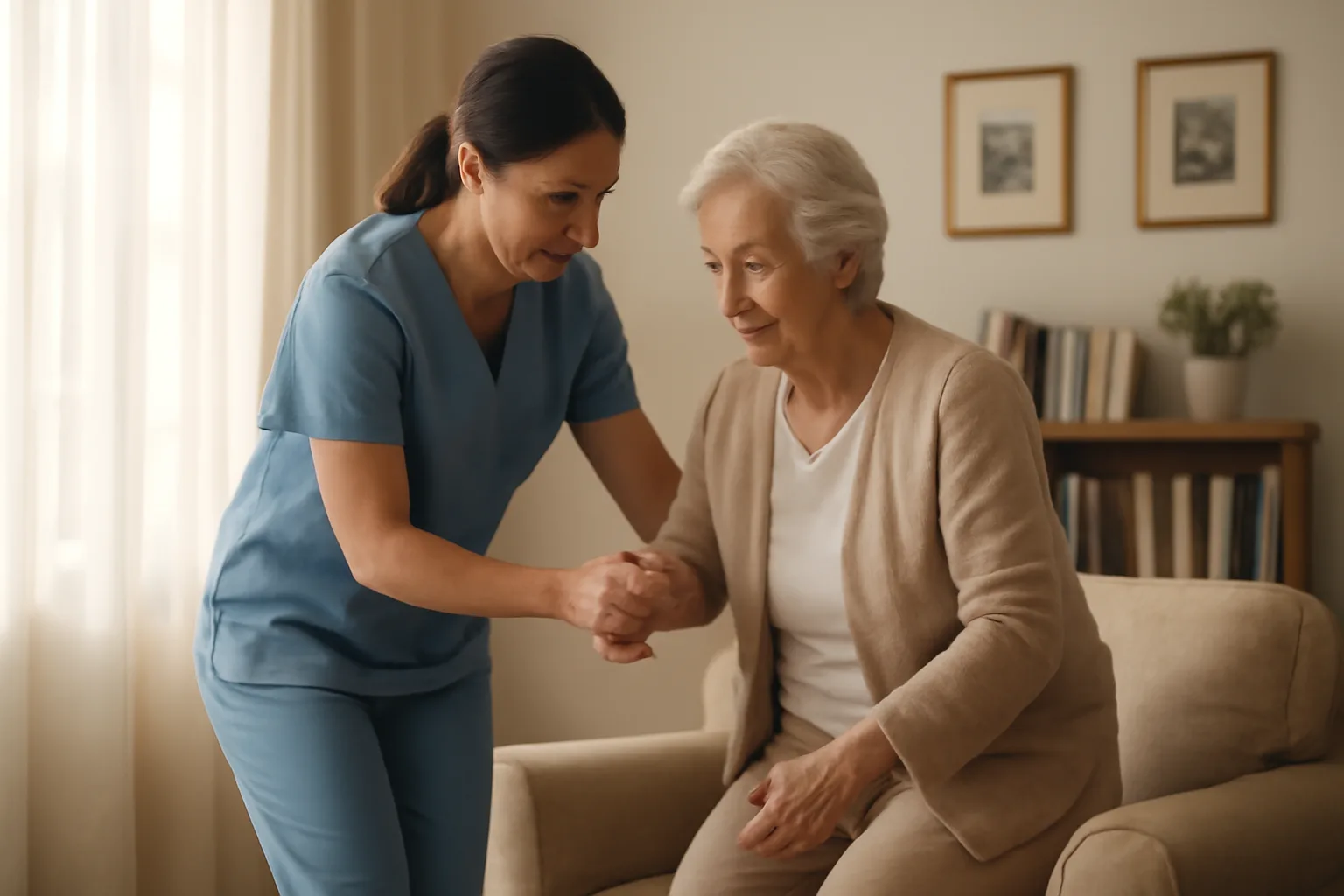
A residential care worker helps residents with activities they can no longer manage alone. That includes bathing, dressing, grooming, toileting, and transferring from bed to chair. You remind people to take medications (or administer them if you're trained and state law allows). You cook meals or serve them. You drive residents to appointments, lead activities, and respond when someone falls or needs help at night. The job is custodial and personal, not clinical. You're not drawing blood or inserting IVs unless you're also a licensed nurse working in a skilled nursing wing. Most residential care aides work under the supervision of a nurse or facility administrator who handles medical decisions and emergencies. Your day starts with wake-up assistance. You help residents dress, then serve breakfast and distribute morning medications. Mid-morning you might lead an activity, walk someone to physical therapy, or help with laundry. After lunch, you document care notes, restock supplies, and assist with toileting or repositioning. Evenings bring dinner, medication pass, and bedtime routines. Overnight shifts are quieter but require vigilance for falls, incontinence episodes, or medical events. [1] In an assisted living facility, residents are more independent. You check in, offer reminders, and step in when someone needs a hand. In a group home for adults with intellectual disabilities, you might teach life skills like cooking or budgeting. In a recovery residence, you enforce house rules, run peer meetings, and watch for relapse warning signs. The setting shapes the work, but the core is the same: you're the reliable human who shows up every shift and keeps people safe and comfortable.
What is assisted living and how does it differ from a nursing home?
Assisted living is residential care for older adults or people with disabilities who need help with daily tasks but don't require 24-hour skilled nursing. Residents live in private or semi-private apartments and receive personal care, meals, medication reminders, housekeeping, and social activities. Most assisted living communities do not provide medical treatment beyond basic first aid, though some hire on-site nurses for higher-acuity residents. [2] A nursing home (also called a skilled nursing facility) provides 24-hour licensed nursing care for people with complex medical needs: feeding tubes, wound care, IV antibiotics, ventilator management, advanced dementia with behavioral issues. Nursing homes are heavily regulated under federal Medicare and Medicaid standards, and at least one RN must be on duty at all times. [3] The staffing difference is stark. Assisted living might have one or two aides on a shift for 20 residents, plus a medication tech and a manager. A nursing home has a full nursing roster with RNs, LPNs, CNAs, and sometimes respiratory therapists or social workers. Medicare covers skilled nursing stays when medically necessary, usually after a hospital discharge. Medicare does not cover assisted living room and board, though Medicaid waiver programs in most states will pay for personal care and housing in licensed assisted living settings. [4] For workers, assisted living is less clinical and less intense. You're not managing wound vacs or G-tubes. You have more time to talk with residents and lead activities. Pay is typically lower than in nursing homes because the acuity is lower and fewer credentials are required. If you want a foot in the door without nursing school, assisted living and other residential care roles are the entry point.
What is a group home and what kind of care happens there?
A group home is a licensed residential care facility serving a small number of people with shared needs: intellectual or developmental disabilities, mental illness, recovery from substance use, or traumatic brain injury. Most states cap group homes at six to eight residents, though some allow up to sixteen under a different license category. [5] Residents live together in a house or apartment, often a converted single-family home in a residential neighborhood. Staff are on-site 24 hours a day or awake overnight, depending on the population and state rules. The care model is habilitative: teaching residents to cook, manage money, take public transit, hold a job, or live more independently. Group homes for people with IDD (intellectual and developmental disabilities) often run day programs and help residents integrate into the community. Recovery homes enforce sobriety, require meeting attendance, and offer peer accountability. [6] Staffing is lean. A typical IDD group home has one or two direct-support professionals on each shift, plus a house manager who handles scheduling, budgets, and family communication. Workers help with personal care (bathing, dressing, medication), meal prep, transportation, and behavioral support. If a resident has seizures, self-injurious behavior, or elopement risk, you're trained in crisis intervention and de-escalation. Group home work is relational. You see the same six residents every shift. You learn their routines, triggers, and goals. You celebrate when someone holds a job for six months or manages a conflict without hitting. You also deal with tough nights: a resident in crisis, a family complaint, or a state inspector showing up unannounced. The work is meaningful and exhausting in equal measure.
What credentials and training do you need to work in residential care?
Entry requirements vary by state and facility type. Most states require direct-care workers in assisted living or group homes to complete a state-approved training program, pass a background check, and obtain CPR and first aid certification. Training ranges from 40 to 120 hours and covers personal care, medication safety, infection control, residents' rights, and emergency procedures. Some states call this credential a "personal care aide" or "residential care aide" certificate; others fold it into CNA (certified nursing assistant) training. [7] If you administer medications (more than remind residents), most states require additional med-tech or med-aide training, often 20 to 40 hours beyond the basic aide curriculum. A few states allow unlicensed aides to give medications under an RN's delegation, while others prohibit it entirely. Check your state licensing agency's caregiver training rules before you take a job that expects you to hand out pills. For group homes serving people with IDD, states often mandate specialized training in behavior support, rights and dignity, reportable incidents, and person-centered planning. If you work with individuals who have epilepsy, you'll learn seizure protocols and emergency medication administration (rectal diazepam or nasal midazolam). Mental health group homes may require crisis prevention (CPI or similar) and trauma-informed care training. No college degree is required for most direct-care roles. A high school diploma or GED is standard. Some employers hire without a diploma if you're willing to train and pass the state exam. If you want to move into management, a bachelor's in social work, psychology, or health administration helps, though hands-on experience matters more than credentials in many smaller operations. You'll need a clean criminal background. States automatically disqualify applicants with certain convictions (elder abuse, fraud, violent felonies). A DUI or misdemeanor theft might not bar you, but it depends on how long ago it happened and your state's rules. Fingerprinting and registry checks against the abuse and neglect database are standard.
What does the job pay and what are the career paths?
The Bureau of Labor Statistics reports that home health and personal care aides earned a median wage of $16.22 per hour in May 2023, which translates to about $33,740 annually at full-time hours. [8] Residential care aides in group homes and assisted living fall into this category. Pay varies by region: aides in California, Massachusetts, and Washington often start at $18 to $20 per hour, while workers in rural Southern states may see $13 to $15. Overnight shifts and weekends sometimes carry a differential of $1 to $2 per hour. Experienced aides move into lead or shift supervisor roles, earning $18 to $22 per hour and overseeing two or three other staff. From there, some become house managers or assisted living coordinators, responsible for one facility and earning $40,000 to $55,000 annually. The next step is administrator or executive director, managing multiple homes or a larger community. Administrators with state licenses can earn $60,000 to $90,000, depending on facility size and profitability. [9] Many direct-care workers use the job as a bridge to nursing. You build clinical confidence, learn medical terminology, and see what you're signing up for before you invest in nursing school. CNAs, LPNs, and RNs all start with higher wages and more career mobility. An RN in long-term care or home health earns a median of $77,600 annually. [10] Another path is facility ownership. Some states allow individuals to operate small group homes (six beds or fewer) without a corporate structure, and the startup cost is lower than most businesses. If you've worked in residential care for five years, understand the regulations, and have $30,000 to $60,000 for a first-year runway, opening a group home is feasible. You'll need a state license, liability insurance, and the stamina to be on call 24/7 until you can afford relief staff. GroupHomePath's State Group Home Licensing Kit helps aspiring operators navigate application paperwork, staffing plans, and policy manuals required by state agencies, turning months of confused research into a clear checklist. The industry will keep hiring. The U.S. population aged 65 and older is projected to reach 80 million by 2040, and demand for personal care aides will grow 8% from 2022 to 2032, faster than the average for all occupations. [1] The work is stable, portable across states, and immune to automation.
What are the hardest parts of working in residential care?
The physical demands wear you down. You lift, bend, push wheelchairs, and stand for hours. Back injuries are common, especially when residents are total-assist transfers and you're short-staffed. Proper body mechanics help, but the repetition grinds. Some facilities provide mechanical lifts; many don't. Emotional labor is constant. You comfort someone with dementia who's asking for a spouse who died 15 years ago. You stay calm when a resident screams at you, throws food, or refuses to bathe. You build relationships, then watch people decline or die. Grief is part of the job, and there's little time to process it before the next shift starts. Staffing is chronically tight. Call-outs mean you're doing two people's work or skipping your break. High turnover means you're training new coworkers every month, answering the same questions, and picking up slack when they quit. Many facilities run on skeleton crews to control costs, and residents pay the price in longer wait times and rushed care. Pay doesn't match effort. You're responsible for human lives, yet you earn less than entry-level retail. Benefits are often minimal: no paid time off, no health insurance, or a plan with a $5,000 deductible. Some workers rely on Medicaid and food assistance despite working full-time. Respect is scarce. Families treat you like a servant. Residents take out frustration on you because you're the person in the room. Administrators sometimes dismiss your input because you're "just an aide," even though you know the residents better than anyone. Society calls you essential, then pays you $15 an hour. Yet people stay. They stay because the work matters, because a resident smiles when you walk in, because you're good at calming someone in crisis, or because the schedule fits around childcare. Some workers love the autonomy: you're not micromanaged once you know the routine. Others love the residents. It's not a calling for everyone, but for the right person, it's a job you can take pride in.
How do you find and apply for residential care jobs?
Start with online job boards: Indeed, ZipRecruiter, and CareerBuilder all list residential care openings. Search "personal care aide," "residential care," "group home," "assisted living," or "direct support professional." State workforce websites often have long-term care or healthcare categories with local listings. [11] Many facilities post openings on their own websites or Facebook pages. If you know the name of a local group home or assisted living community, check their site's career section. Small operators sometimes hire by word of mouth or a sign in the window, so drive around and look. State and county aging or disability services agencies maintain provider directories. Look up licensed facilities in your area, then call and ask if they're hiring. Even if they're fully staffed, ask to be added to their call list for future openings. Turnover is high, and a name on file can get you a call within weeks. Staffing agencies place workers in residential care on temp, temp-to-hire, or per-diem contracts. The agency handles payroll and benefits; you work where they send you. Pay is often $1 to $2 per hour higher than direct hire because the facility pays the agency a markup, but you have less job security and no loyalty from the employer. Networking helps. If you know a CNA, nurse, or social worker, ask if their facility is hiring. Employee referrals sometimes come with a bonus for the person who referred you, so they have an incentive to vouch for reliable candidates. Application requirements are minimal. Bring a resume (even a one-page list of jobs and education works), a copy of your ID and Social Security card, and be ready to fill out a long form with your employment history, references, and criminal background disclosure. Many employers run the background check before making an offer. If you're hired, you'll complete new-hire paperwork (W-4, I-9, state tax withholding) and schedule your first training shift. Some places start you the next day; others wait for clearance from the state caregiver registry.
What does a typical shift look like in assisted living?
Day shift starts at 6:00 or 7:00 a.m. You get report from the overnight aide: who slept poorly, who refused breakfast, any incidents. Then you begin wake-up rounds. You knock, enter, help residents get out of bed, use the toilet, and get dressed. Some people are independent and just need a cheerful good morning; others need full assistance. By 8:00 a.m., you're escorting residents to the dining room and serving breakfast. After breakfast, you pass medications. You pull each resident's pre-filled med box or blister pack, verify the name and dose, watch them swallow, and document. If someone refuses, you note it and tell the nurse. Medication pass takes 30 to 60 minutes, depending on how many residents you have and whether anyone needs coaxing. Mid-morning is activity time. You might lead chair exercises, play bingo, or take residents outside for fresh air. Others use this window to help residents shower or do laundry. Around 11:30 a.m., you prep for lunch: set tables, distribute napkins, escort residents who need help finding their seat. After lunch, you clear dishes and help people back to their rooms for rest. Afternoon brings another med pass (if there are scheduled doses), toileting rounds, and one-on-one time with residents who have appointments or need extra support. You document care notes in each resident's chart: meals eaten, fluids consumed, mood, any skin issues or falls. At 2:00 or 3:00 p.m., the evening shift arrives. You give report, hand off keys and phone, and go home. Evening shift covers dinner, evening medications, and bedtime routines. Overnight shift monitors residents who wander, assists with toileting, and responds to call lights. Some facilities have awake overnight staff; others allow sleep shifts with a monitor, depending on state rules and acuity.
What does a shift look like in a group home for adults with disabilities?
A group home day shift blends personal care with skill-building. You arrive at 7:00 a.m. and help residents wake up, shower, dress, and take morning medications. Breakfast is a teaching moment: you coach someone on using the stove safely or measuring cereal portions. One resident might need full hand-over-hand assistance; another just needs a reminder to eat before the bus arrives. By 9:00 a.m., you're loading residents into the van for day program. You drive them to a workshop, vocational site, or community center where they'll spend the day. If your state requires a commercial driver's license or passenger endorsement for transporting clients, your employer should have verified that before you started. Some group homes arrange outside transportation instead. After drop-off, you return to the house and complete daily chores: laundry, meal prep, tidying common areas, restocking supplies. You document yesterday's notes in the state-required logbook or software system. If a resident has a medical appointment, you drive them, wait, and communicate with the doctor. If there's a family meeting or ISP (individual service plan) review, you attend and report on progress toward goals. You pick residents up from day program at 3:00 or 4:00 p.m., then supervise homework, chores, or free time. Dinner prep is another teaching opportunity: residents help cook, set the table, and clean up. After dinner, you lead an activity or let residents watch TV, play games, or go for a walk. Evening medications, showers, and bedtime routines finish by 9:00 or 10:00 p.m. Overnight staff stay awake or sleep on-site, depending on the residents' needs. If someone has seizures or a history of elopement, you're awake and checking on them every hour. If the group is stable, you sleep in a staff bedroom with a baby monitor and respond to any calls.
How do you handle difficult behaviors and emergencies?
Difficult behaviors are part of the work. A resident with dementia might resist care, accuse you of stealing, or become physically aggressive. Someone with IDD might have a meltdown when their routine changes. A person in recovery might relapse and need immediate intervention. Your first tool is de-escalation. Stay calm, lower your voice, give space, and validate the person's feelings. "I see you're upset. Let's sit down and figure this out." Sometimes distraction works: offer a snack, suggest a walk, change the subject. Never argue with someone who's confused or delusional; redirect gently. If a resident becomes physically aggressive, your training (crisis prevention, safe restraint protocols) kicks in. Most states prohibit untrained staff from using physical restraints, and many facilities have no-restraint policies. Your job is to keep yourself and others safe: back away, call for help, clear the area. If someone is at immediate risk (a resident choking another resident, brandishing a weapon), you call 911. Medical emergencies follow a protocol. If a resident falls, you assess for injury, keep them still, and call the nurse or 911 if there's a head injury, broken bone, or loss of consciousness. If someone stops breathing, you start CPR and yell for someone to call 911 and grab the AED. If a resident has a seizure, you time it, protect their head, turn them on their side, and call for help if it lasts more than five minutes or they have another one right after. You document everything. Incident reports capture the who, what, when, where, and outcome. Most states require facilities to report certain incidents to the licensing agency within 24 hours: falls with injury, medication errors, abuse allegations, elopements, deaths. Your notes might end up in a lawsuit or investigation, so stick to facts and skip the editorial commentary.
How do you move from direct care into management or ownership?
Management starts with showing up. Reliable workers who stay calm in a crisis and communicate clearly get promoted. After a year or two as a direct-care aide, you might become a lead or shift supervisor, training new staff and covering call-outs. From there, you move into a house manager or care coordinator role, handling schedules, family communication, and regulatory compliance. Most states require assisted living administrators or group home operators to hold a state license or certification. Requirements vary: some states accept experience in lieu of a degree, while others require a bachelor's or associate's in health administration, social work, or a related field, plus a state exam. [12] California, for example, requires Residential Care Facilities for the Elderly (RCFE) administrators to complete a 40-hour certification course. Pennsylvania requires a two-year degree and a state exam for personal care home administrators. Check your state's adult care or long-term care licensing board for specifics. If you want to own a facility, you'll need startup capital, a business plan, and the stamina to navigate state licensing. Most small group homes (six beds or fewer) cost $30,000 to $80,000 to launch: first month's rent and deposit, furnishings, initial food and supplies, licensing fees, insurance, and a cash cushion for the months it takes to fill beds and receive the first Medicaid or private-pay checks. Larger facilities or new construction require six-figure investment and often involve investors or loans. You apply for a state license, which involves submitting floor plans, policies and procedures, staff qualifications, fire safety inspections, zoning approval, and sometimes a criminal background check for all owners and board members. The process takes three to twelve months, depending on the state and how complete your application is. If you're a first-time operator, mistakes in the application (missing forms, vague policies, unqualified staff on paper) add months to the timeline. Once licensed, you're responsible for compliance: staffing ratios, staff training, resident rights, medication management, incident reporting, and annual inspections. Violations can result in fines, conditional licenses, or closure. If you have a nurse or administrator on staff who holds the license while you handle operations, make sure your roles and liability are clear in writing. Owning a facility means you're on call for emergencies, staff no-shows, and family complaints. Revenue is lumpy: Medicaid pays 30 to 60 days after service, and private-pay families sometimes miss payments. But if you fill beds, control costs, and avoid costly violations, a six-bed home can net $40,000 to $80,000 annually for the owner after paying staff and overhead. Scale to two or three homes, and you've built a real business.
How do I start a group home?
Starting a group home begins with choosing your population and confirming demand. Will you serve adults with IDD, people in recovery, foster youth aging out of the system, or elderly adults needing personal care? Each population has different funding streams, regulations, and referral sources. Research your state's Medicaid waiver programs (for IDD or elderly care), county contracts (for mental health or recovery), or private-pay markets. Next, secure a property. Most states require group homes to meet residential building codes, pass a fire marshal inspection, and comply with local zoning. Some municipalities restrict group homes in certain neighborhoods or require special-use permits. Confirm zoning before you sign a lease. The property needs adequate bedrooms (most states cap occupancy at two residents per room), accessible bathrooms, a commercial kitchen if you're serving more than six people, and outdoor space if required by your state. Apply for your state license. You'll submit an application with your business structure (LLC, nonprofit, sole proprietor), background checks for all owners and staff, policies and procedures (admission, discharge, medication management, incident reporting, residents' rights), a staffing plan showing how you'll meet 24-hour coverage requirements, proof of liability insurance, and inspection approvals from the fire marshal and health department. Application fees range from $100 to $2,500, depending on the state and facility size. Hire and train staff before residents move in. You need at least two direct-care workers per shift if you're running 24-hour awake staff, or one worker plus an on-call backup if your state allows sleep shifts. Staff must complete state-required training, pass background checks, and hold current CPR and first aid cards before they interact with residents. Budget $15 to $20 per hour for experienced aides, plus payroll taxes and workers' comp insurance. Contract with referral sources. If you're serving Medicaid-funded residents, enroll as a Medicaid provider and sign agreements with managed-care organizations or the state agency that pays claims. If you're serving county-referred clients (mental health, recovery), reach out to county case managers and get on their referral lists. Private-pay clients come through word of mouth, hospital discharge planners, and online listings. Market your facility. Create a simple website with photos, services, contact info, and your state license number. List on senior housing or disability service directories. Visit hospitals, social workers, and family support groups to introduce yourself. Referrals are slow at first; expect three to six months to fill half your beds. Run the operation. You manage staff schedules, order supplies, pay bills, document care, handle resident and family concerns, and stay compliant with state regulations. Budget for monthly costs: rent, utilities, food, staff payroll, insurance, and a reserve for emergencies. Revenue comes from Medicaid (typically $1,500 to $4,500 per resident per month, depending on the state and service level), county contracts, or private pay ($2,000 to $6,000 per month). Profit margins are thin in the first year; most operators break even or take a loss until occupancy stabilizes above 80%.
Frequently asked questions
What is assisted living?
Assisted living is a residential care setting for older adults or people with disabilities who need help with daily tasks like bathing, dressing, and medication management but don't require 24-hour skilled nursing. Residents live in private or shared apartments and receive meals, personal care, activities, and supervision in a homelike environment.
What is a group home?
A group home is a licensed residential facility serving a small number of people, usually six to eight, who share a common need such as intellectual disabilities, mental illness, or recovery from substance use. Staff provide 24-hour supervision, personal care, skill-building, and support to help residents live as independently as possible in a community setting.
What is an assisted living facility?
An assisted living facility is a licensed community that provides housing, meals, personal care, and social activities for residents who need assistance with daily living but not full-time medical care. Facilities range from small homes with six residents to large campuses with 100 or more apartments, and services are tailored to each resident's needs and preferences.
What is the difference between assisted living and a nursing home?
Assisted living provides personal care and supervision but not medical treatment; residents are relatively independent and need help with tasks like bathing and medication reminders. Nursing homes provide 24-hour skilled nursing for people with complex medical needs such as wound care, feeding tubes, or advanced dementia. Medicare covers skilled nursing when medically necessary but not assisted living room and board.
What does assisted living provide?
Assisted living provides housing, three meals a day, personal care assistance (bathing, dressing, toileting), medication reminders or administration, housekeeping, laundry, transportation, social activities, and 24-hour staff supervision. Some communities offer memory care, physical therapy, or on-site nursing for higher-acuity residents, though the focus is on personal support rather than medical treatment.
Does Medicare cover assisted living facilities?
No, Medicare does not cover assisted living room and board or the monthly service fees. Medicare may pay for short-term skilled nursing or home health if you're recovering from an illness or injury, but once you need only personal care and supervision, you're responsible for the cost. Medicaid waiver programs in most states do cover assisted living for eligible low-income seniors.
How much do residential care workers make?
Personal care aides in residential care earned a median wage of $16.22 per hour or about $33,740 annually in 2023, according to the Bureau of Labor Statistics. Pay varies by state and experience: entry-level aides in rural areas start near minimum wage, while experienced workers in higher-cost states earn $18 to $22 per hour. Lead staff and managers earn $40,000 to $60,000 annually.
Do you need a nursing license to work in residential care?
No, most direct-care jobs in residential care don't require a nursing license. You need to complete state-approved caregiver training (40 to 120 hours), pass a background check, and obtain CPR and first aid certification. If you administer medications, most states require additional med-tech training. Only positions like charge nurse or director of nursing require an RN or LPN license.
What is the hardest part of working in residential care?
The hardest parts are the physical demands (lifting, standing all day, risk of injury), emotional labor (comforting residents in distress, coping with death and decline), chronic understaffing, and low pay relative to the responsibility. Workers also face disrespect from families, administrators, and society despite doing essential work. Turnover is high, and burnout is common without strong support and self-care.
Can you move from direct care into management?
Yes, many managers and facility owners started as direct-care aides. Reliable workers who show leadership and stay calm in emergencies get promoted to lead or supervisor roles within a year or two. From there, you can become a house manager, care coordinator, or administrator. Most states require administrators to complete a certification course or hold a degree, but experience counts heavily in hiring and advancement.
How do I start a group home?
To start a group home, choose a population (IDD, recovery, elderly), secure a property that meets zoning and fire codes, apply for a state license with policies, staffing plan, and inspections, hire and train staff, and contract with Medicaid, county agencies, or private-pay referral sources. Startup costs range from $30,000 to $80,000 for a small home. The licensing process takes three to twelve months, and filling beds takes another three to six months.
What kind of training do group home workers receive?
Group home workers complete state-mandated training in personal care, medication safety, residents' rights, infection control, and emergency procedures (typically 40 to 120 hours). Workers serving people with IDD also receive training in behavior support, crisis prevention, and person-centered planning. Ongoing in-service training covers topics like CPR, first aid, abuse reporting, and specialized medical protocols (seizures, diabetes, feeding tubes) as needed.
Is residential care work stable and in demand?
Yes, residential care jobs are stable and in high demand. The Bureau of Labor Statistics projects 8% growth for home health and personal care aides through 2032, driven by the aging U.S. population. The work is recession-resistant and portable across states. Turnover is high due to low pay and tough conditions, so facilities are nearly always hiring, and experienced aides can find work quickly.
What background check issues disqualify you from residential care work?
Convictions for elder abuse, child abuse, fraud against vulnerable adults, sexual offenses, and violent felonies automatically disqualify applicants in most states. A DUI or minor theft may not bar you, depending on how long ago it occurred and your state's rules. All applicants are fingerprinted and checked against state abuse and neglect registries. Disclosure and honesty during the hiring process are essential.
Sources
- Bureau of Labor Statistics, Occupational Outlook Handbook: Home Health and Personal Care Aides: 8% projected growth for home health and personal care aides, 2022-2032; job duties include assisting with ADLs, medication reminders, and daily activities
- National Center for Assisted Living (NCAL), Assisted Living State Regulatory Review 2023: Assisted living provides housing, meals, personal care, and medication assistance but not skilled nursing; state regulations vary
- Centers for Medicare & Medicaid Services, Medicaid Home and Community-Based Services: Medicaid waiver programs in most states cover personal care and room and board in assisted living for eligible beneficiaries
- Bureau of Labor Statistics, Occupational Employment and Wage Statistics: Home Health and Personal Care Aides, May 2023: Median hourly wage for home health and personal care aides was $16.22 in May 2023
- Bureau of Labor Statistics, Occupational Outlook Handbook: Medical and Health Services Managers: Medical and health services managers (including residential care administrators) earn a median annual wage of $104,830; smaller facilities pay less, typically $60,000-$90,000
- Bureau of Labor Statistics, Occupational Employment and Wage Statistics: Registered Nurses, May 2023: Median annual wage for registered nurses was $86,070 in May 2023; RNs in home health and long-term care earn slightly less at around $77,600
- CareerOneStop (U.S. Department of Labor), Job Search: CareerOneStop aggregates state workforce and job board listings for healthcare and social assistance roles, including residential care positions
- SCORE, How to Start an Assisted Living Facility: Small group homes typically require $30,000-$80,000 in startup capital for rent, furnishings, supplies, licensing, and operating reserves; larger facilities require six-figure investment
- U.S. Small Business Administration, Apply for Licenses and Permits: State and local licensing for residential care involves submitting applications, floor plans, policies, inspections, and background checks; timelines vary widely
- Medicaid.gov, Home & Community Based Services 1915(c) Waivers: Medicaid 1915(c) waivers fund home and community-based services, including group homes for people with IDD, elderly, or disabled populations; each state administers waivers differently
- National Conference of State Legislatures, Assisted Living and Residential Care State Laws: State licensing fees for residential care facilities range from under $100 to over $2,500 depending on size and state; applications require business details, policies, staffing plans, and inspections
- Centers for Medicare & Medicaid Services, Become a Medicaid Provider: Providers must enroll with state Medicaid agencies and meet program requirements to receive Medicaid payments for services