Last updated 2026-07-24
TL;DR
A group home is a licensed residential setting where a small number of unrelated people with disabilities, mental illness, or aging needs live together with staff support. It differs from assisted living (larger, senior-focused, more amenities) and nursing homes (skilled medical care). Licensing, staffing ratios, and zoning rules vary by state.
What is a group home?
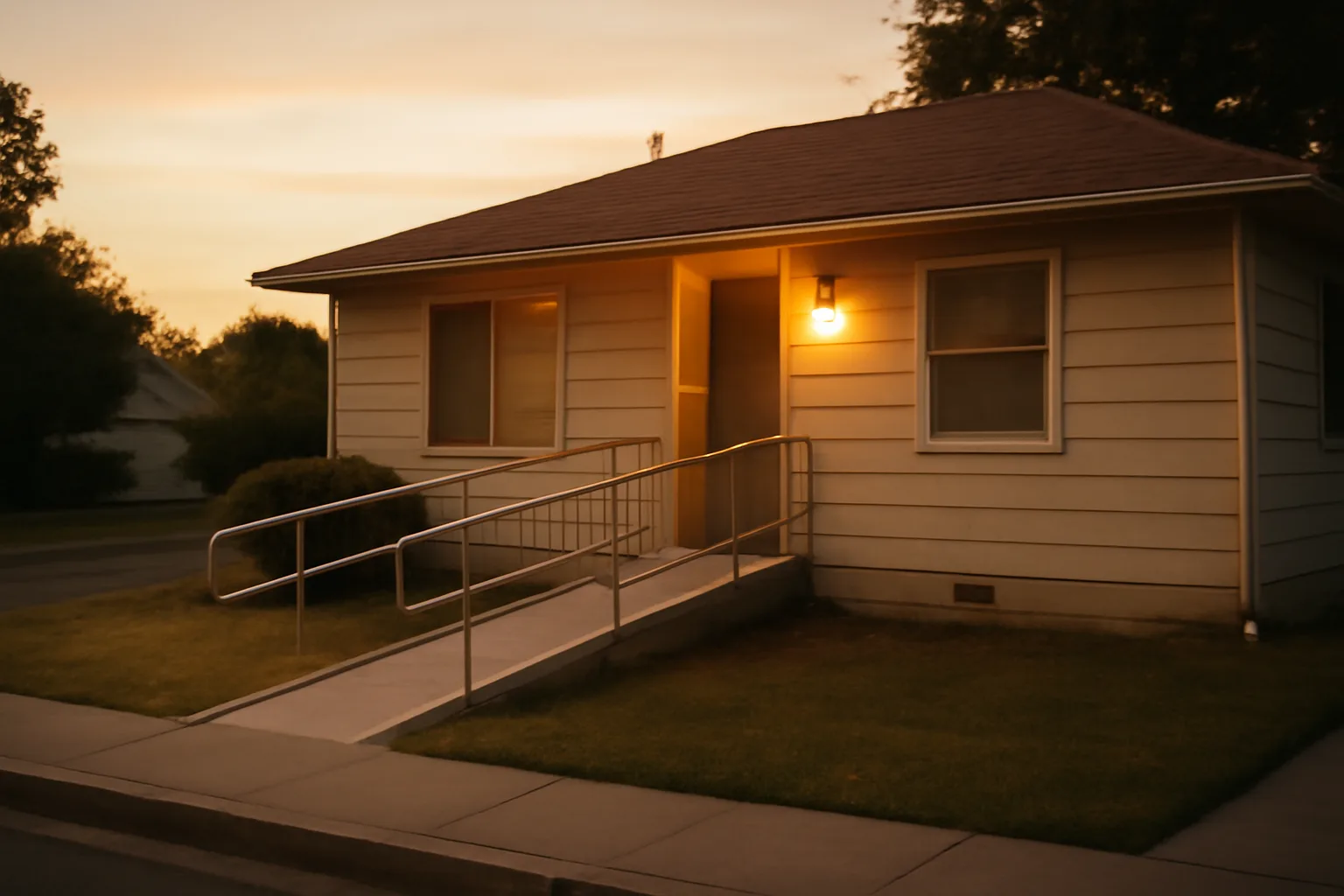
A group home is a licensed residential home, usually a single-family style house, where a small number of unrelated adults or children live together and receive support from paid staff. The people living there typically share a common need: an intellectual or developmental disability (IDD), a mental illness, a substance use recovery goal, or in some states, age-related frailty that doesn't rise to nursing-home level care. The legal definition changes by state, and that matters more than most people expect. In Texas, for example, a "community home" for people with intellectual disabilities is governed under Texas Human Resources Code Chapter 123, which defines it as a home providing room, board, and habilitative services to persons with disabilities in a residential neighborhood [1]. In California, a "community care facility" (the umbrella category that includes many group homes) is defined and licensed under California Health and Safety Code Section 1502 [2]. Neither definition matches word for word, and that's normal. Every state writes its own statute, sets its own bed-count caps, and names its own regulator. What stays consistent nationally is the operating model: a home-like physical setting (not an institution), a capped number of residents (commonly 4 to 16 depending on state and program type), paid direct care staff on site or on call, and a state license tied to a specific population and specific building. If you're comparing this to assisted living or a facility assisted living model, the biggest practical difference is scale and who is served, not the presence of care itself.
What is assisted living?
Assisted living is a licensed residential care option for adults, usually seniors, who need help with daily activities like bathing, dressing, medication reminders, and meals, but who don't need the round-the-clock skilled nursing care a nursing home provides. Residents typically have private or semi-private apartments or rooms, and staff are on site 24 hours a day, though not necessarily nurses. Assisted living is licensed at the state level, not federally, and there is no single national assisted living law. The Centers for Medicare & Medicaid Services (CMS) itself notes that assisted living facilities "are licensed and regulated by the state, and definitions and requirements vary from state to state" [3]. That single sentence explains why a facility called "assisted living" in Florida can look structurally different from one in Ohio: different staffing ratios, different move-in and move-out criteria, different definitions of what level of care triggers discharge. Most assisted living communities today are larger than a typical group home, often 20 to 120+ units, and market themselves with amenities: dining rooms, activity calendars, transportation, and sometimes memory care wings. Smaller assisted living-licensed group homes exist too (sometimes called residential care homes or adult family homes depending on the state), and they operate under many of the same care rules as their larger cousins but with a house-sized resident count.
What is an assisted living facility, exactly?
An assisted living facility is the physical building and licensed operation where assisted living services are delivered: staff, a state license, a building that meets fire and life-safety code for the resident population, and a written plan of care for each resident. The term "facility" is doing regulatory work here. Once a building is licensed as an assisted living facility, it's subject to inspections, staffing minimums, and reporting requirements that an ordinary rental home is not. States use different license names for what the public calls "assisted living facility": Residential Care Facility for the Elderly (California), Assisted Living Residence (Pennsylvania), Adult Care Home (North Carolina), and so on. If you're researching a specific building type, search your target state's regulation using the phrase "assisted living facility" alongside the state's actual license category name, because Google and even AI search results often blend generic national explainers with state-specific licensing pages that don't apply to your state. For a state-by-state breakdown, start with assisted living facilities licensing pages before you draft a business plan. A quick gut check: if the building provides skilled nursing, IV therapy, or ventilator care as a matter of course, it's very likely licensed as a nursing home or skilled nursing facility, not assisted living, regardless of what the sign out front says.
What is assisted living vs nursing home?
| Typical resident count | 4-16 | 20-120+ (some small homes) | Varies, often 60-150+ | |
|---|---|---|---|---|
| Care level | Habilitative/personal support | Personal care, non-medical | Skilled nursing, 24/7 medical | |
| Licensed by | State (population-specific) | State only | State + federal (Medicare/Medicaid certified) | |
| Federal certification | No | No | Yes, under 42 CFR Part 483 [4] | |
| Common populations | IDD, mental illness, recovery, seniors | Seniors needing ADL help | Seniors/adults needing medical care | People move from assisted living to a nursing home (or a higher-acuity group home) when their medical needs outpace what non-medical staff can safely manage. States define this "level of care" trigger differently, so ask your state licensing agency what discharge and transfer criteria apply before you accept a resident whose needs might exceed your license type. |
The core difference is the level of medical care and who provides it. Assisted living gives help with daily living activities (dressing, bathing, medication reminders) from personal care aides, while a nursing home provides 24-hour skilled nursing care from licensed nurses for people with serious medical needs, post-surgical recovery, or conditions requiring constant medical monitoring. Nursing homes (also called skilled nursing facilities or SNFs) are certified under federal Medicare and Medicaid rules in addition to state licensing. That federal certification is a big structural difference: nursing homes must meet requirements under 42 CFR Part 483, the federal "Requirements for States and Long Term Care Facilities" regulation, to participate in Medicare and Medicaid [4]. Assisted living has no equivalent federal certification pathway; it's state-regulated only. Here's a side-by-side to keep the categories straight: | Feature | Group home | Assisted living | Nursing home |
What does assisted living provide?
Assisted living typically provides help with activities of daily living (ADLs) such as bathing, dressing, toileting, and mobility, plus meals, housekeeping, medication management or reminders, social activities, and 24-hour staff availability for emergencies. It does not typically provide skilled nursing, IV therapy, or the kind of continuous medical monitoring a hospital or nursing home offers. Most states require a written individual service plan or care plan for each resident, updated periodically (commonly every 6 to 12 months, or after a significant change in condition, though the exact interval is set by your state agency). Staffing requirements usually specify a minimum awake staff-to-resident ratio, particularly overnight, and many states require a certain number of direct care hours per resident per day, though the numbers vary widely and should be confirmed with your state licensing agency rather than assumed from a national average. What assisted living generally does not provide: ventilator care, IV medication administration by non-licensed staff, wound care beyond basic first aid, or care for residents who are bed-bound and require two-person transfers, though again, exact scope-of-practice lines depend on your state's nurse practice act and assisted living regulations.
Does Medicare cover assisted living facilities?
No. Medicare does not cover the cost of room and board or personal care services in an assisted living facility. Medicare.gov states plainly that Medicare "doesn't cover room and board when you get hospice care in your home or if you live in a nursing home" and separately, its long-term care guidance confirms Medicare does not pay for custodial care, which is what most assisted living provides [5]. Medicare Part A can cover a short stay in a skilled nursing facility after a qualifying hospital stay, but that's medical/rehabilitative care, not the personal-care model assisted living uses, and it's capped: Medicare covers up to 100 days per benefit period in a skilled nursing facility, with a copay required for days 21-100 as of the current benefit structure described on Medicare.gov [6]. Medicaid is a different story, and this is the number-one confusion point for families and new operators alike. Some states offer Medicaid Home and Community-Based Services (HCBS) waivers that can help pay for services within assisted living or group home settings, though not typically room and board itself. CMS explains that HCBS waivers, authorized under Section 1915(c) of the Social Security Act, let states pay for services that help people remain in home and community-based settings instead of institutions [7]. Coverage, waiting lists, and eligibility differ enormously state to state, so this is a case where you genuinely have to check your own state Medicaid agency rather than trust a national generalization.
What is the difference between assisted living and nursing home, in practice?
In practice, the difference shows up in three places: staffing licenses, medical acuity, and cost/payer source. Assisted living staff are typically personal care aides or certified nursing assistants supervised by a licensed administrator, not around-the-clock RNs. Nursing homes must have licensed nursing staff on duty and meet federal staffing requirements to keep their Medicare/Medicaid certification. Medical acuity is the deciding factor for placement. A person who needs help remembering to take pills and getting dressed fits assisted living. A person who needs a feeding tube managed, has a stage 3 pressure ulcer, or needs daily wound care from a nurse generally needs a nursing home level of care. Group homes for IDD or mental health populations sit in a different lane entirely: acuity there is about behavioral support and habilitation goals, not medical nursing needs, though some states license "enhanced" or "intermediate care" group home tiers for higher support needs. Cost and payer source track the same line. Nursing home care, because it's medically necessary and certified, can be paid by Medicaid (for those who qualify financially and medically) and short stays by Medicare Part A. Assisted living is overwhelmingly private-pay or, in some states, partially offset by a Medicaid HCBS waiver for the service component only. There is no federal assisted living benefit.
How to start a group home
Starting a group home means securing a state operating license tied to a specific population (IDD, mental health, recovery, or senior residential care), a compliant building, and an approved staffing and policy structure, all before you can accept your first resident. The process is state-driven from day one; there's no single federal group home license. The realistic sequence looks like this: 1. Pick your population and license category. IDD group homes, mental health residential facilities, adult foster care, and senior residential assisted living (RAL) are usually licensed under separate statutes even within the same state. Confirm the exact category with your state licensing agency before you sign a lease or purchase a property. 2. Check zoning first, not last. Many operators lose months because they fall in love with a house before confirming the local zoning code allows a group home use, or before checking whether the home qualifies for reasonable-accommodation protection under the Fair Housing Act (42 U.S.C. § 3604) as a residence for people with disabilities . 3. Write your policy and procedure manual. States typically require written policies covering medication administration, resident rights, emergency and disaster planning, behavior support (for IDD/MH homes), staff training, and incident reporting before they'll issue a license. 4. Build your staffing plan. Minimum staff-to-resident ratios, background check requirements (often including a state and FBI fingerprint check and abuse/neglect registry check), and required training hours (first aid, CPR, medication administration certification, population-specific training) are set by your state, not by you. 5. Pass a pre-licensing inspection. Fire marshal sign-off, building/life-safety code compliance, and a state surveyor site visit are standard steps before a license is issued. Expect to fix things twice. 6. Apply for the license and pay the fee. Application fees, bond requirements (some states require a surety bond), and renewal cycles vary by state; confirm current amounts with your state licensing agency since these change and are frequently updated in state fee schedules. This is also where a lot of new operators get stuck rebuilding the same policy manual and staffing plan from scratch for each new state or location. GroupHomePath's $299 State Group Home Licensing Kit was built to shortcut exactly that step: state-specific application checklists, editable policy manual templates, and staffing plan starters, so you're not drafting a medication administration policy from a blank page. You can start building one at licensing-kit-builder.
How do I start a group home if I've never run one before?
If you've never operated a licensed facility before, start by contacting your state's licensing agency directly (not a franchise or consultant first) and asking three questions: what license category fits the population you want to serve, what the minimum experience or education requirement is for the administrator/owner, and what the current application packet contains. Most states publish this as a downloadable provider manual or licensing handbook on the agency's website. Some states require the administrator (whether that's you or a hire) to hold a specific credential, complete a state-approved training course, or have a minimum number of hours of direct care or healthcare administration experience before they'll approve the license application. This is one of the most commonly missed requirements by first-time operators, because it's easy to assume a business background alone is enough. It usually isn't for IDD or mental health group homes; senior RAL programs sometimes have separate, sometimes lighter, administrator requirements. Realistic timeline expectations matter too. Between finding a compliant property, completing zoning approval, hiring and training staff, writing and getting policies approved, and passing inspection, most new group home licenses take several months from serious start to open doors, not weeks. Nobody should promise you a fast-track approval; state agencies process applications in the order they arrive and can and do send applications back for corrections.
What's the difference between assisted living, group homes, and other residential care terms people search for?
The terms overlap in everyday language but mean different things legally. "Assisted living facility," "senior assisted living facilities near me," and "assisted living at home" generally point to senior-focused, non-medical personal care settings, licensed under a state's assisted living or residential care statute. "Group home" more often refers to smaller homes serving IDD, mental health, or recovery populations, licensed under a state's disability services or behavioral health statute, though some states also use "group home" language for small senior residential care settings. A practical way to sort a confusing search result: check who the license is written for. If the statute or regulation you're reading defines "eligible resident" around age 60+ or 65+ and ADL needs, you're looking at assisted living. If it defines eligibility around a diagnosis (intellectual disability, serious mental illness, substance use disorder), you're looking at a group home license, even if the building type and daily operations look almost identical. This distinction matters for money and paperwork both. Medicaid HCBS waiver eligibility, staffing certification requirements, and even fire code occupancy classifications can differ between an assisted living license and an IDD group home license, even for buildings on the same street with the same square footage.
What should I check before assuming a term applies to my state?
Before you rely on any national definition, run it against your specific state's statute and your local zoning code, because both can override the general pattern described here. A term like "group home" might be legally undefined in one state's code and instead folded into a broader "residential facility" category, while a neighboring state has a standalone group home statute with its own bed caps and staffing rules. Three checks worth doing before you write a business plan: search your state legislature's website for the actual statute number governing your target population (more than a state agency's marketing page), call your state licensing agency's provider relations line and ask what license category and application packet applies, and check your city or county planning department for zoning language specific to group homes or community residences, since local zoning can restrict or protect your use case under fair housing law regardless of what the state license allows. If you're comparing across assisted living options in different states as part of a multi-state expansion plan, keep a simple tracking sheet: state, license category name, statute citation, bed cap, administrator requirement, and application fee. It sounds tedious. It's the single habit that saves the most rework later.
Frequently asked questions
What is assisted living in simple terms?
Assisted living is a licensed residential option for adults, usually seniors, who need help with daily tasks like bathing, dressing, and medication reminders but don't need 24-hour skilled nursing care. Staff are on site around the clock, but care is personal-care level, not medical. It's regulated entirely at the state level; there's no federal assisted living license.
What is a group home?
A group home is a licensed residential home, usually house-sized, where a small number of unrelated people with disabilities, mental illness, or recovery needs live together with paid staff support. States define and license group homes under their own disability services or behavioral health statutes, and bed caps, staffing rules, and eligible populations vary by state.
What is an assisted living facility?
An assisted living facility is the licensed building and operation where assisted living services happen: a state-issued license, staff trained in personal care, a facility that meets fire and life-safety codes, and individual care plans for residents. States use different official names for this license category, so check your state's specific terminology.
What is assisted living vs nursing home?
Assisted living provides non-medical help with daily activities from personal care staff; nursing homes provide 24-hour skilled nursing care from licensed nurses for people with serious medical needs. Nursing homes must meet federal certification requirements under 42 CFR Part 483 to bill Medicare and Medicaid; assisted living has no federal certification pathway.
What does assisted living provide day to day?
Typical assisted living services include help with bathing, dressing, and mobility, meals, housekeeping, medication reminders, social and recreational activities, and staff available 24 hours for emergencies. It generally does not include skilled nursing tasks like IV therapy, ventilator care, or complex wound care, which fall under nursing home or home health scope.
Does Medicare cover assisted living facilities?
No. Medicare does not pay for room, board, or personal care services in assisted living. Medicare Part A can cover up to 100 days in a skilled nursing facility after a qualifying hospital stay, but that's a different, medically-focused benefit, not an assisted living payment source, per Medicare.gov guidance.
How do I start a group home?
Pick your population and license category, confirm zoning allows the use, write required policies (medication, emergency plans, resident rights), build a staffing plan meeting state ratios and background check rules, pass a pre-licensing inspection, then submit your application and fee to your state licensing agency. Timelines commonly run several months from start to license.
What is the difference between a group home and assisted living?
Group homes typically serve people with intellectual/developmental disabilities, mental illness, or recovery needs and are licensed under disability or behavioral health statutes. Assisted living typically serves seniors needing help with daily activities and is licensed under a state's aging or residential care statute. Some states also license small senior homes as "group homes," so check your state's exact terminology.
Can Medicaid help pay for assisted living or a group home?
Sometimes, through state Medicaid Home and Community-Based Services (HCBS) waivers authorized under Section 1915(c) of the Social Security Act, which can cover certain services within these settings. Coverage rarely includes room and board, and eligibility, waiting lists, and covered services differ significantly by state, so check with your state Medicaid agency directly.
What's the minimum number of residents allowed in a group home?
There's no national minimum or standard; each state sets its own resident cap for each license category, commonly ranging from 4 to 16 residents depending on the population served and license type. Confirm the exact cap for your target population and state with your state licensing agency before finalizing a property.
Do I need a special license to open a group home?
Yes. Every state requires a specific operating license tied to the population you serve (IDD, mental health, recovery, or senior residential care), issued by a designated state agency, plus compliance with local zoning and fire/building codes. There is no way to legally operate an unlicensed group home for these populations.
What's the difference between assisted living and independent living?
Independent living involves no required personal care services; it's housing for seniors who can manage daily activities on their own, often with optional amenities like meals or transportation. Assisted living includes licensed staff providing hands-on help with activities of daily living, which independent living communities are not licensed or staffed to provide.
How long does it take to get a group home license approved?
There's no universal timeline; it depends on your state's application backlog, how quickly your property passes fire and building inspections, and whether your application needs corrections. Realistically, most first-time operators should plan for several months between starting the process and receiving an approved license, not weeks.
Sources
- Texas Statutes, Human Resources Code Chapter 123: Texas defines a 'community home' for persons with intellectual disabilities providing room, board, and habilitative services
- California Health and Safety Code Section 1502: California defines and licenses community care facilities, the umbrella category including many group homes
- eCFR, 42 CFR Part 483: Federal requirements for long term care facilities that must be met for Medicare/Medicaid certification
- Medicare.gov, Hospice Care coverage details: Medicare doesn't cover room and board in a nursing home or at home under hospice
- Medicare.gov, Skilled Nursing Facility Care coverage: Medicare covers up to 100 days per benefit period in a skilled nursing facility with a copay for days 21-100
- Medicaid.gov, Home & Community-Based Services 1915(c): HCBS waivers under Section 1915(c) let states pay for services helping people remain in community settings instead of institutions
- U.S. Department of Justice, Fair Housing Act, 42 U.S.C. § 3604: Fair Housing Act protections apply to reasonable accommodation requests for group homes serving people with disabilities