Last updated 2026-07-25
TL;DR
To start a group home in Houston, you pick a population (IDD, mental health, or adult foster care), meet HHSC licensing rules under Texas Health and Safety Code Chapter 247, secure a property that satisfies Houston zoning and fire code, hire qualified staff, and pass a pre-licensing inspection. Expect several months of paperwork before you take your first resident.
what is a group home
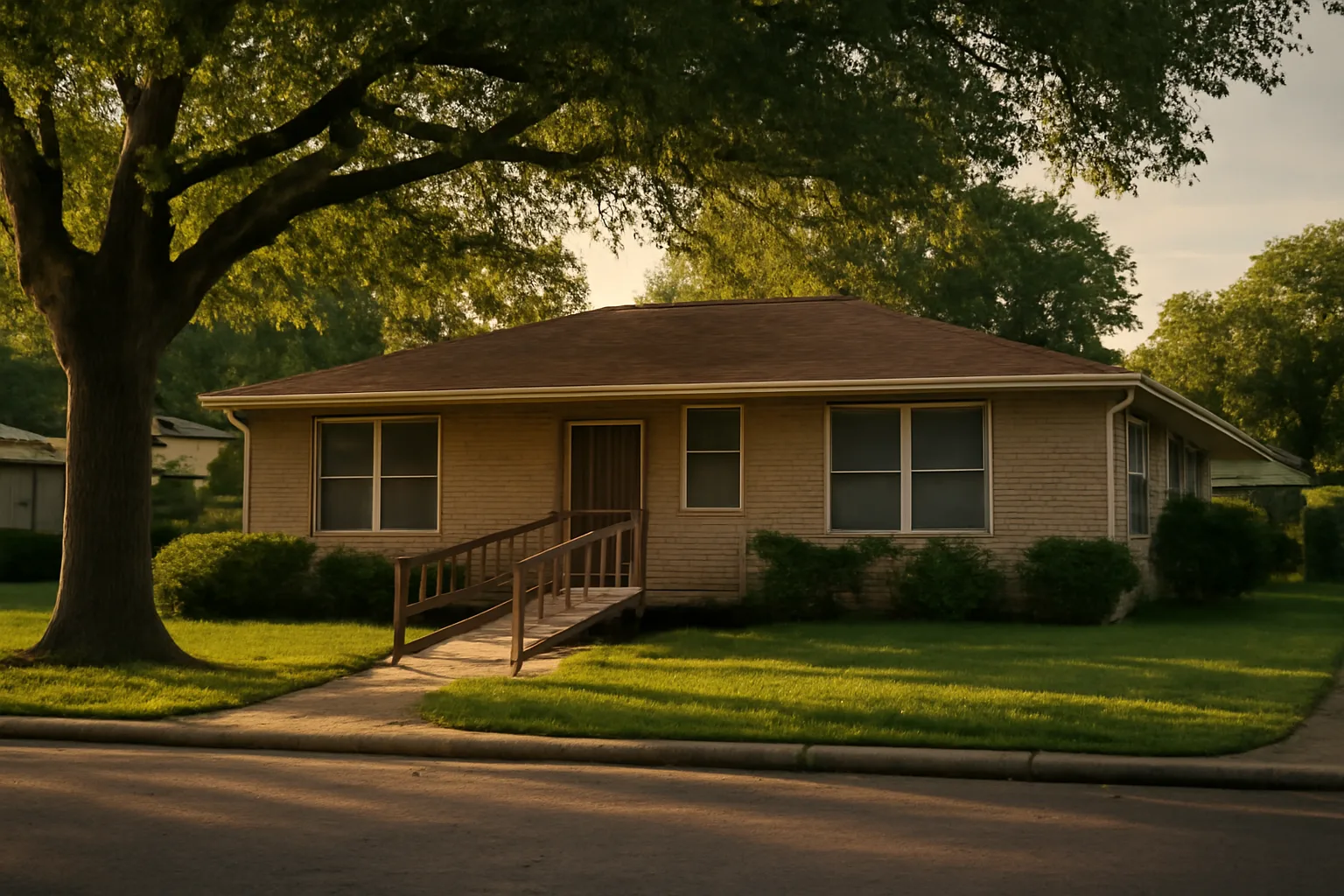
A group home is a residential setting, usually a single house or a small number of houses, where a handful of unrelated people live together and get support with daily living. That support might be help with meals, medication reminders, transportation, or supervision, depending on who lives there and why. In Texas, the term covers a lot of ground. You'll hear "group home" used for facilities serving adults with intellectual or developmental disabilities (IDD), people recovering from mental illness or substance use, and sometimes seniors who need light assistance but not nursing care. Each of those populations falls under different state rules, funding sources, and licensing categories, even though the physical house next door might look identical. Houston doesn't have its own separate "group home license." Licensing happens at the state level through the Texas Health and Human Services Commission (HHSC). The city's role is mostly zoning, building permits, and fire code, which we cover further down. If you're comparing this model to other senior housing options, it helps to look at how it differs from assisted living and assisted living facilities, since the licensing paths and staffing rules diverge quite a bit.
what is assisted living
Assisted living is a licensed residential care model for people, usually older adults, who need help with activities of daily living like bathing, dressing, or medication management but don't need the round-the-clock skilled nursing care a nursing home provides. Residents typically have private or semi-private rooms, shared common areas, and staff on-site. In Texas, assisted living facilities are licensed by HHSC as "Assisted Living Facilities" under Texas Health and Safety Code Chapter 247, with rules published in Texas Administrative Code Title 26, Chapter 553 [1]. Facilities are classified by type (A, B, or C) based on the level of care residents need and whether residents can evacuate a building unassisted. Type A allows residents who are mobile and don't need overnight attendance for evacuation; Type B and C serve residents with greater physical or cognitive limitations who need more staff supervision, including at night. If you're deciding between an assisted living model and a smaller group home model, the core difference is scale and licensing category, not the quality of care. A group home for IDD or mental health populations follows an entirely different chapter of state rules than an assisted living facility does. For more on the assisted living path specifically, see assisted living facility licensing requirements.
what is an assisted living facility
An assisted living facility (ALF) is the licensed building or program itself, the physical operation that holds an HHSC assisted living license and follows Chapter 553 rules. It's distinct from home care agencies (which send caregivers into someone's own home) and from nursing facilities (which provide skilled medical care). HHSC defines an assisted living facility as an establishment that furnishes food and shelter to four or more residents unrelated to the proprietor, and provides personal care services or administers medication, or provides both regularly scheduled personal care and general supervision . That "four or more residents" threshold matters a lot for small operators: houses with three or fewer residents may fall outside the assisted living licensing requirement entirely, though other rules (like IDD-specific licensing) can still apply depending on the population served. If your business plan centers on the ALF model rather than an IDD or mental health group home, budget for a longer application timeline and a more detailed physical plant review, since ALFs face stricter life-safety and fire code standards than smaller unlicensed settings. The application, background check, and initial survey process alone commonly takes a few months from a complete submission, though HHSC does not publish a guaranteed turnaround time.
what is assisted living vs nursing home
| Licensing chapter (TX) | Health & Safety Code Ch. 247 | Health & Safety Code Ch. 242 |
|---|---|---|
| Staffing | Aides, medication aides, some LVN/RN depending on type | RNs/LVNs on duty around the clock |
| Typical resident | Needs help with ADLs, largely mobile | Needs skilled nursing or rehab care |
| Common payer | Private pay, some Medicaid waiver | Medicaid, Medicare (short-term) |
The short answer: assisted living is for people who need help with daily tasks but are largely independent, while a nursing home (called a "nursing facility" in Texas licensing language) is for people who need ongoing skilled medical or nursing care. Nursing facilities in Texas are licensed separately under Texas Health and Safety Code Chapter 242 and staffed with licensed nurses around the clock, plus access to physicians and rehabilitation services [2]. Assisted living facilities are not required to have a registered nurse on-site at all times; staffing depends on facility type and resident needs under 26 TAC Chapter 553. Cost and payment sources differ too. Nursing facility care is more likely to be covered by Medicaid or Medicare (Medicare only for short-term skilled stays after a qualifying hospitalization), while assisted living is usually private-pay, though Texas does offer a Medicaid waiver program (STAR+PLUS Home and Community Based Services) that can help cover some assisted living costs for eligible low-income Texans [3]. If you're building a business plan, know your target population's typical payment source before you pick a license type, because it changes your intake process, your paperwork, and your revenue timing. | Feature | Assisted Living | Nursing Home |
what does assisted living provide
Assisted living provides housing plus help with the activities most people need support with as they age or manage a disability: bathing, dressing, grooming, mobility, medication reminders or administration, meals, housekeeping, and general supervision. It is not a medical or nursing service, though many facilities coordinate with outside home health or hospice agencies for residents who need more. Under Texas rules, an assisted living facility must have a written policy describing the scope of personal care services offered, and must assess each resident's needs before or at admission to make sure the facility can actually meet them [1]. Facilities are also required to have emergency preparedness plans, staff trained in first aid, and a system for managing resident medications if the facility administers them. What a facility does NOT typically provide: skilled nursing care, IV therapy, ventilator management, or the kind of medical monitoring a nursing home offers. If a resident's needs progress past what the facility's license type allows, Texas rules require the facility to either get the necessary waivers, arrange additional services, or help the resident transition to a more appropriate setting.
how to start a group home in houston, step by step
Starting a group home in Houston means working through state licensing (HHSC), city zoning and permitting, and your own operational buildout, roughly in that order, though some steps overlap. 1. Pick your population and license type. Are you serving adults with IDD, people in mental health or substance use recovery, or seniors needing assisted living-level care? This decision drives everything downstream, from which HHSC license application you file to what your staffing ratios need to look like. 2. Confirm licensing requirements with HHSC. Contact HHSC's Long Term Care Regulatory division to confirm the exact license category, required forms, and current fee schedule for your population and house size; fee amounts and required forms change periodically, so treat the agency's current published fee page as the source of truth rather than any fee number you saw elsewhere [4]. 3. Find and secure a property. Houston zoning generally treats small group homes (typically homes for six or fewer unrelated persons with disabilities) as a permitted residential use under the Fair Housing Act's protections against discriminatory zoning, but you still need to confirm this with the City of Houston Planning and Development Department and check any deed restrictions, since Houston has no formal zoning code in the traditional sense but does enforce deed restrictions and development ordinances that can affect group homes [5]. Larger facilities or those serving more residents may trigger additional review. Check our [zoning-and-property guide topics] before you sign a lease. 4. Get your building up to code. Fire marshal inspection, building permits for any renovation, and life-safety features (smoke detectors, fire extinguishers, accessible exits) are non-negotiable. The Houston Fire Department and city building code office both have to sign off before HHSC will issue a license in most cases. 5. Write your policies and procedures manual. HHSC will want to see written policies covering admission criteria, medication management, emergency procedures, resident rights, staff training, and incident reporting before they'll license you. This is one of the most time-consuming parts for first-time operators, and it's where a lot of applications get delayed or denied on the first pass. 6. Hire and train staff. Staffing ratios and qualifications depend on license type. Background checks (including the Texas DFPS Central Registry and criminal history checks) are required for anyone with resident contact. 7. Submit your license application and pass inspection. HHSC reviews your application, conducts a pre-licensure survey of the physical building and your paperwork, and issues a license once everything meets Chapter 247 or the relevant IDD/mental health licensing chapter. 8. Set up funding and billing. If you plan to accept Medicaid waiver residents, you'll need separate provider enrollment through HHSC and, for some programs, contracting with a Local Intellectual and Developmental Disability Authority (LIDDA) or managed care organization. Realistically, from a clean start (property secured, no prior violations, complete paperwork) to an open license, plan on several months. Operators who rush the policy manual or skip a pre-inspection walkthrough tend to lose more time to corrections than they'd have spent doing it right the first time.
how do i start a group home (funding and cost planning)
Funding a group home startup in Texas usually comes from a mix of personal savings, small business loans, private investors, or, for nonprofit operators, grants tied to specific populations. There is no dedicated state startup grant just for opening a group home. On the revenue side, your payer mix depends heavily on population. IDD group homes serving Medicaid waiver clients typically get paid through HHSC's IDD waiver programs (like HCS, the Home and Community-based Services waiver) administered in coordination with a LIDDA [6]. Mental health and recovery residences are more often private-pay or funded through state mental health authority contracts. Senior assisted living is most often private-pay, supplemented in some cases by the STAR+PLUS Medicaid waiver for those who qualify financially and functionally [3]. Budget realistically for pre-revenue costs: property (purchase or lease-up), renovation to meet fire and accessibility code, HHSC application fees, background check fees, insurance (general liability and often professional liability), staff hiring and training before your first resident arrives, and a policy manual that meets state requirements. None of this generates income until you're licensed and have residents admitted. So plan your cash runway for at least the low end of a multi-month licensing timeline, and build in a buffer for a possible resubmission if your first application has deficiencies. This is the point where a lot of first-time operators either hire a consultant or buy a pre-built policy and procedure template rather than draft everything from scratch. GroupHomePath's $299 State Group Home Licensing Kit is built around this exact gap: state-specific checklists and policy manual templates so you're not starting the compliance paperwork from a blank page. It doesn't replace talking to HHSC directly, and it doesn't guarantee approval, but it can save you real time on the parts of the application that trip people up most.
does medicare cover assisted living facilities
No, in almost all cases Medicare does not cover the cost of assisted living. Medicare Part A and Part B cover hospital stays, doctor visits, and short-term skilled nursing care after a qualifying hospital stay, but they don't pay for the room, board, and personal care services that make up assisted living [7]. CMS is direct about this limitation: Medicare coverage focuses on medically necessary skilled care, not custodial or personal care assistance, which is what most assisted living residents actually need day to day. Some Medicare Advantage plans have started offering limited supplemental benefits that touch on home modifications or personal care, but full assisted living room-and-board costs remain outside standard Medicare coverage [7]. Medicaid is a different story, sort of. Traditional Medicaid doesn't pay for room and board in assisted living either, but many states, including Texas, use Medicaid Home and Community Based Services (HCBS) waivers to cover the personal care and service costs within an assisted living or group home setting, while the resident (or their family) still typically covers room and board separately [3]. If your business plan leans on Medicaid waiver residents, budget time for provider enrollment, which is a separate process from your HHSC facility license.
how does group home licensing differ by population type
Texas doesn't use one license for every group home. The license category depends entirely on who lives there and why they need support, and each category has its own statute, staffing rule, and inspection standard. Homes serving adults with intellectual or developmental disabilities generally fall under HHSC's ICF/IID (Intermediate Care Facility for Individuals with an Intellectual Disability) licensing or the HCS (Home and Community-based Services) program, both regulated differently from assisted living [6]. Homes serving people in mental health recovery may operate under different HHSC behavioral health program rules or, in some cases, without a facility license at all if they're structured as unlicensed sober living or supportive housing, though that legal line is one you should confirm directly with HHSC and a Texas attorney familiar with housing law rather than assume. Senior-focused group homes fall under the assisted living rules in Chapter 247 and 26 TAC Chapter 553 discussed above. The practical takeaway: don't assume the license you researched for one population applies to another. A house licensed as an assisted living facility cannot simply start admitting IDD clients under a Medicaid waiver without the correct additional licensing or contracting, and vice versa. If you're unsure which category fits your target population, HHSC's Long Term Care Regulatory division and your regional LIDDA (for IDD services) are the right first calls, not a general contractor or real estate agent.
what should houston-specific zoning and permitting look like
Houston is unusual among major U.S. cities because it has no citywide zoning code. Land use is instead controlled through a mix of deed restrictions, development ordinances, and the city's building and fire codes, which changes how you should approach site selection compared to a city with traditional zoning. Federal Fair Housing Act protections generally require cities to treat small group homes for people with disabilities the same as any other family residential use, meaning a home for a small number of unrelated residents with disabilities usually can't be blocked simply because neighbors object, as long as it fits within the residential density and use pattern of the area [5]. That said, larger facilities, ones with more than a handful of residents, or those with commercial-feeling operations (multiple staff shifts, signage, regular deliveries) can trigger closer review under the city's chapter on land development and any applicable deed restrictions recorded on the property. Before you sign a lease or purchase agreement, pull the deed restrictions for the specific property (Harris County Clerk's office keeps these on record), and call the City of Houston Planning and Development Department to confirm whether any additional development ordinance provisions apply to your intended use and resident count. Also loop in the Houston Fire Department early. Fire marshal review of egress, smoke detection, and, for larger homes, sprinkler requirements is often the single biggest source of delay in getting from lease signing to opening day.
what staffing and inspection requirements should i expect
Staffing requirements vary by license type, but every category shares a few common threads: background checks for anyone with resident contact, a minimum staff-to-resident ratio appropriate to the population's needs, and documented training before staff work unsupervised. For assisted living facilities specifically, Texas requires facilities to have an administrator who meets HHSC qualification standards (which can include specific training hours or a license depending on facility type) and staff trained in first aid, resident rights, and the facility's emergency plan [1]. IDD group homes under HCS have their own staff qualification and training standards tied to the individual service plan of each resident. Inspections happen at two main points: a pre-licensure survey before HHSC issues your initial license, and then periodic unannounced surveys after you're operating, typically at least annually, though HHSC can and does inspect more often in response to complaints [1]. Expect surveyors to check your physical plant (fire safety, cleanliness, accessibility), your records (staff files, resident files, medication logs), and your actual practice against your written policies. A gap between what your policy manual says and what staff actually do on the floor is one of the most common citation triggers in these surveys, so train to your policies, more than to what looks good on paper.
Frequently asked questions
what is assisted living
Assisted living is a licensed residential setting for people, usually older adults, who need help with daily activities like bathing, dressing, and medication management but don't need full-time skilled nursing care. In Texas, it's licensed by HHSC under Health and Safety Code Chapter 247 and 26 TAC Chapter 553, with facility types A, B, and C based on resident mobility and care needs.
what is a group home
A group home is a residential home where a small number of unrelated people live together with shared support services, often for people with intellectual/developmental disabilities, mental health needs, or seniors needing light assistance. Licensing category and rules depend on the population served; Texas doesn't have one single "group home license" that covers every type.
what is an assisted living facility
An assisted living facility is a licensed operation under Texas Health and Safety Code Chapter 247 that provides housing plus personal care services or medication administration to four or more unrelated residents. It's regulated separately from home care agencies and nursing facilities, with its own staffing and physical plant standards under 26 TAC Chapter 553.
what is assisted living vs nursing home
Assisted living serves people who need help with daily tasks but are largely independent; nursing homes serve people who need ongoing skilled nursing or medical care. Texas licenses them under separate statutes (Chapter 247 for assisted living, Chapter 242 for nursing facilities), and nursing homes require round-the-clock licensed nursing staff while assisted living does not.
does medicare cover assisted living facilities
No. Medicare covers hospital care, doctor visits, and short-term skilled nursing after a qualifying hospital stay, but it does not cover room, board, or personal care services in assisted living. Some Medicaid waiver programs, including options in Texas, can help cover service costs within assisted living for financially and functionally eligible residents, but room and board is usually still out of pocket.
how to start a group home in houston
Pick your population (IDD, mental health, or senior/assisted living), confirm the correct HHSC license category, secure a property that clears Houston zoning, deed restrictions, and fire code, write required policies, hire and background-check staff, then submit your HHSC application and pass a pre-licensure inspection. Plan for several months from a complete application to an open license.
what does assisted living provide
Assisted living provides housing, meals, housekeeping, and help with daily activities like bathing, dressing, mobility, and medication reminders or administration, along with general supervision and emergency response. It does not provide skilled nursing, IV therapy, or the medical monitoring level of a nursing home.
how do i start a group home if I have no healthcare background
You don't need a clinical license to start most group homes, but you do need a qualified administrator and trained direct care staff who meet your state's requirements. Many first-time operators partner with or hire an experienced administrator to meet HHSC qualification standards while they handle the business and property side.
what license do I need for a group home in texas
It depends on who you're serving. Assisted living facilities are licensed under Texas Health and Safety Code Chapter 247. IDD group homes typically operate under ICF/IID licensing or the HCS Medicaid waiver program. Mental health and recovery residences may fall under different state behavioral health rules or operate unlicensed in some structures; confirm directly with HHSC.
how long does it take to get a group home license in texas
There's no single guaranteed timeline, and HHSC doesn't publish one, but a complete application with a code-compliant building and finished policy manual commonly takes a few months from submission to licensure. Incomplete applications, unresolved fire code issues, or missing background checks are the most common causes of delay.
is houston zoning different for group homes than other texas cities
Yes, in one big way: Houston has no traditional zoning code, so land use is controlled through deed restrictions and development ordinances instead. Small group homes for people with disabilities are generally protected under the federal Fair Housing Act, but you still need to check deed restrictions on the specific property and confirm requirements with the city's Planning and Development Department.
can a group home accept medicaid in texas
Yes, but it depends on the license type and program. IDD group homes often bill through the HCS Medicaid waiver in coordination with a Local Intellectual and Developmental Disability Authority. Assisted living residents may access Medicaid-funded services through the STAR+PLUS HCBS waiver, though room and board is typically still paid separately by the resident.
what is the difference between a group home and assisted living facility
A group home is a broader term covering small residential settings for various populations (IDD, mental health, seniors), while an assisted living facility is a specific Texas-licensed category under Chapter 247 for people, usually seniors, who need help with daily activities. Not every group home is licensed as an assisted living facility, and the two follow different rules.
Sources
- Texas Health and Human Services / Texas Administrative Code: Assisted living facility definition, classification types A/B/C, and licensing rules
- Texas Health and Safety Code Chapter 242: Nursing facility licensing statute in Texas
- Texas HHSC STAR+PLUS program page: STAR+PLUS Medicaid waiver can help cover home and community based services costs for eligible Texans
- Texas HHSC Long Term Care Regulatory: HHSC licenses and regulates assisted living facilities and publishes current application requirements
- Texas HHSC Home and Community-based Services (HCS) Program: HCS Medicaid waiver program funds IDD group home services in Texas
- CMS / Medicare.gov coverage information: Medicare does not cover long-term custodial care such as assisted living room and board
- Texas Health and Safety Code Chapter 247: Assisted living facility licensing statute defining scope, requirements, and enforcement in Texas