Last updated 2026-07-25
TL;DR
Starting a group home in Houston means picking a population (IDD, mental health, or assisted living), forming a business entity, checking City of Houston zoning and deed restrictions, then applying to Texas HHSC for the matching license (HCSSA, assisted living, or a 1915(c) waiver provider agreement). Expect months, not weeks, and real fees.
What is a group home, exactly?
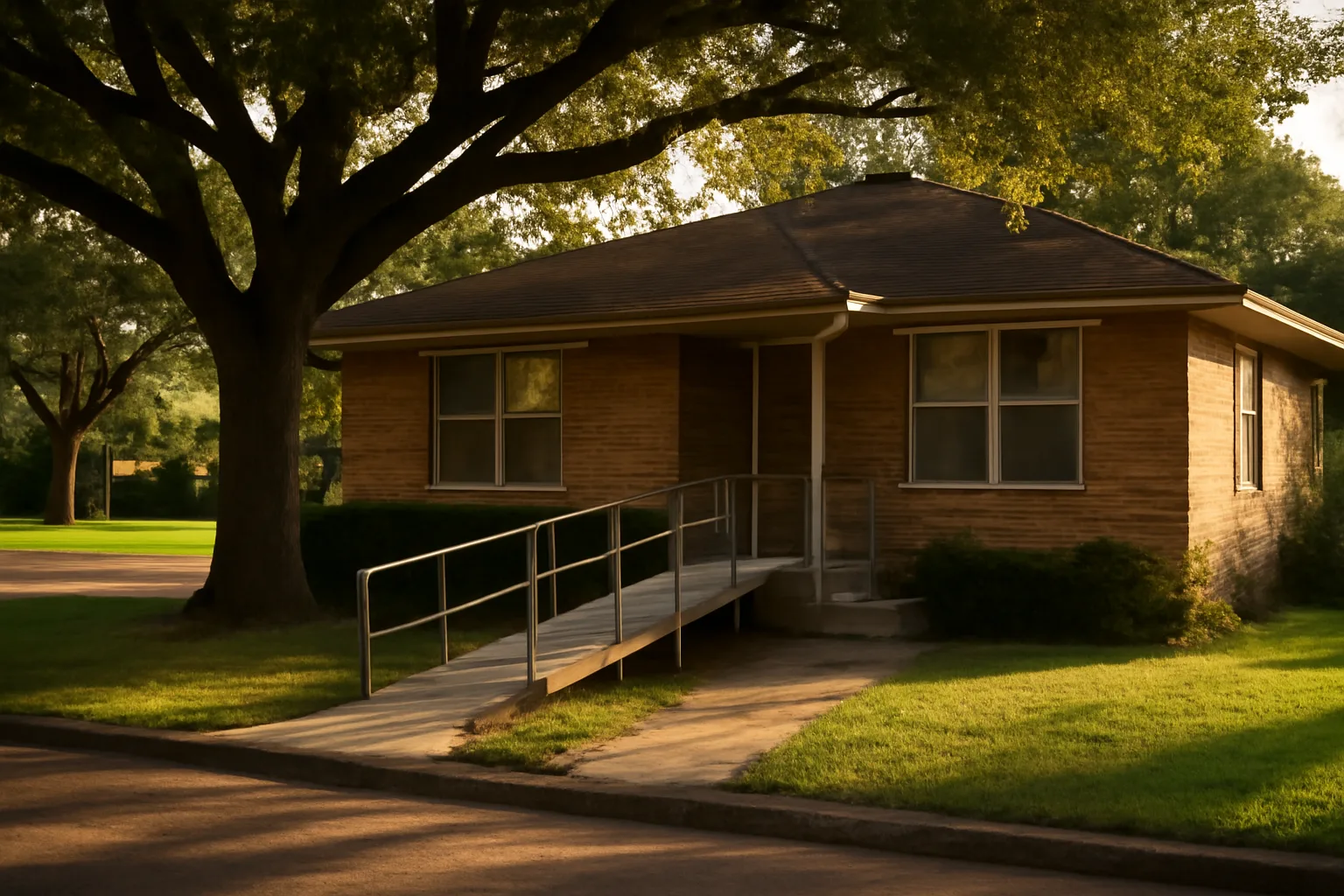
A group home is a residential setting, usually a regular house on a regular street, where a small number of people who need support with daily living share a home with paid staff. It is not a hospital, not a nursing home, and not a hotel with a nurse on call. The house has bedrooms, a kitchen, a living room, and a staffing schedule that matches whoever lives there. In Texas the term covers a lot of ground. You will hear "group home" used for a Home and Community-based Services (HCS) residence serving people with intellectual or developmental disabilities, a community mental health residential setting, a recovery or sober-living house, and, less precisely, small assisted living homes for seniors. Each of those has its own state license and its own rulebook, even though the physical building might look identical from the curb. If you're picturing four to six residents in a converted single-family home with two or three staff rotating shifts, you're picturing the most common model. Texas Health and Human Services Commission (HHSC) licenses several of these categories separately, so the very first decision you make (who will actually live here) determines which application, which inspection checklist, and which statute applies to you [1].
What is assisted living, and what is an assisted living facility?
Assisted living is a level of care between fully independent living and a nursing home. Residents get help with things like bathing, dressing, medication reminders, and meals, but they don't need the round-the-clock skilled nursing care a nursing home provides. An assisted living facility (ALF) is the licensed building or program that delivers that care. Texas defines it in statute: an assisted living facility is "an establishment that furnishes, in one or more facilities, food and shelter to four or more persons who are unrelated to the proprietor of the establishment" and provides personal care services, or administers medication, or has a legal responsibility for residents' welfare [2]. That four-or-more threshold matters a lot in Houston, because a three-bed home for seniors may fall outside ALF licensing entirely while a four-bed home does not. Texas splits ALF licenses into Type A and Type B based on how much help residents need and whether they can evacuate on their own in an emergency. Type A residents are generally able to follow directions and evacuate with minimal physical assistance. Type B residents need more help evacuating and may have greater physical or cognitive needs. HHSC's licensing rules for assisted living facilities are at 26 Texas Administrative Code Chapter 553 [3]. If you're planning a small senior care home in Houston, read our assisted living facility guide alongside the state rule text, because the categories change your staffing ratios and physical plant requirements.
What is assisted living vs. nursing home, and does Medicare cover either?
The short version: assisted living is custodial, help with daily living, and nursing homes (skilled nursing facilities) provide medical and nursing care for people who need it around the clock, often after a hospital stay. Medicare's own consumer guidance is blunt about this. Medicare.gov states that "Medicare doesn't cover room and board costs for long-term care or custodial care," which is the core of what most assisted living residents receive [4]. Medicare Part A will cover a short-term stay in a skilled nursing facility after a qualifying hospital stay, but that is medical rehab, not a permanent living arrangement, and it is capped in duration. What does pay for assisted living? Mostly private funds (long-term care insurance, savings, family contributions), and in some states a Medicaid waiver can help cover the service component (not room and board) for people who qualify financially and medically. Texas's Medicaid-funded 1915(c) waivers, like Home and Community-based Services (HCS) and Community Living Assistance and Support Services (CLASS), fund services for people with intellectual and developmental disabilities in home and community settings, administered through HHSC [5]. If your Houston project is aimed at IDD group homes rather than senior assisted living, the waiver provider enrollment process (not the ALF license) is your real path, and it runs through HHSC's Provider Enrollment portal alongside your facility license.
What does assisted living provide day to day?
A licensed Texas assisted living facility has to provide, at minimum, three meals a day plus snacks, help with personal care tasks like bathing and dressing, housekeeping, laundry, medication administration or reminders (depending on license type), and 24-hour supervision with staff awake or on call as required by the facility type [3]. Beyond the floor set by state rule, most homes add activities programming, transportation to medical appointments, and some level of health monitoring, blood pressure checks, weight tracking, that kind of thing. None of that is nursing care. If a resident's needs escalate to require regular skilled nursing intervention, the facility is generally required to either bring in licensed home health services or help the family transition the resident to a nursing facility. For Houston operators, the practical question is staffing math: how many awake staff per resident, per shift, does your license type require? Type B facilities and larger populations of residents with mobility or cognitive limitations generally need more staff per capita than Type A. Get this wrong in your staffing plan and it's the single most common reason HHSC surveyors cite deficiencies during inspection.
How do I start a group home in Houston, step by step?
Here is the order that actually works, based on how Texas and City of Houston processes are structured. Skipping steps (especially zoning) is the single most expensive mistake new operators make. 1. Pick your population and license type. IDD, mental health, recovery housing, or senior assisted living each route to a different HHSC program. This decision drives everything downstream. 2. Form your business entity. Most operators form a Texas LLC through the Secretary of State. Filing a Certificate of Formation costs $300 as of the state's current fee schedule [6]. Get an EIN from the IRS and open a dedicated business bank account before you spend a dollar on the house. 3. Check City of Houston zoning and any deed restrictions. Houston famously has no traditional zoning ordinance, but that does not mean anything goes. The city regulates land use through deed restrictions, subdivision covenants, and specific ordinances (like those governing group residential facilities and setback/parking rules), and Texas state law (Human Resources Code Chapter 123 and related provisions) limits how localities can restrict small licensed group homes for people with disabilities, treating them similarly to single-family residential use up to a certain occupancy [7]. Before you sign a lease or buy a property, pull the deed restrictions for that specific subdivision through the Harris County Clerk's real property records, because a private deed restriction can block a group home even where city rules would allow it. 4. Find and secure the property. You need a home that matches your license type's physical plant rules: bedroom square footage per resident, number of bathrooms, fire exits, an accessible layout if residents have mobility limitations. HHSC's ALF minimum standards spell out specific square footage and occupancy limits per bedroom [3]. 5. Get your fire marshal and life safety inspection lined up. Houston Fire Department and/or Harris County Fire Marshal review is typically required before HHSC will schedule its own life safety survey. Budget real time here, sprinkler and alarm requirements for group care buildings are not the same as a standard single-family home. 6. Write your policy and procedure manual. HHSC will not license a facility without a written manual covering admission and discharge criteria, medication management, resident rights, emergency preparedness, staff training, and incident reporting. This is also the document your day-one staff will actually use, so don't just copy boilerplate. 7. Build your staffing plan and start hiring/training. You need enough qualified staff, background-checked through the Texas Department of Public Safety and the HHSC Employee Misconduct Registry, before you can pass inspection. 8. Submit your license application to HHSC. Applications and required fees are submitted through HHSC's Long Term Care Regulatory division. Confirm current application and license fees with your state licensing agency, they are set by rule and do change. 9. Pass the pre-licensure health and life safety survey. An HHSC surveyor visits the physical building, checks your policies against practice, reviews personnel files, and verifies life safety systems. 10. Get your license, then keep it. Licenses are typically issued for a set term and subject to unannounced inspections and complaint investigations for as long as you operate.
What license do I actually need for a Houston group home?
| Seniors needing help with daily living (4+ residents) | Assisted Living Facility, Type A or B | HHSC Long Term Care Regulatory [3] | |
|---|---|---|---|
| Adults/children with intellectual or developmental disabilities | HCS or CLASS Medicaid waiver provider enrollment plus applicable facility license | HHSC IDD Waiver Programs [5] | |
| Home and community support services (personal assistance, respite in a residential setting) | Home and Community Support Services Agency (HCSSA) license | HHSC Long Term Care Regulatory [1] | |
| Adult foster care (small home, licensed caregiver model) | Adult Foster Care under HCSSA rules | HHSC Long Term Care Regulatory [1] | If you're not sure which row fits your plan, call HHSC's Long Term Care Regulatory intake line before you sign a lease. It's a five-minute call that can save you a six-month misfire. Our assisted living facilities overview breaks down the Type A versus Type B distinction in more depth if senior care is your target population. |
This is where most first-time operators lose weeks. Texas doesn't have one universal "group home license." It has several, and picking the wrong one means starting the application over. | Population served | Texas license/program | Regulating division |
What does zoning and property setup look like in Houston specifically?
Houston is the largest U.S. city without a conventional zoning code, which surprises a lot of out-of-state operators. That doesn't mean there's no land-use regulation, it means the regulation runs through different mechanisms: private deed restrictions recorded on the property, city ordinances on parking and lot use, and building and fire codes enforced by the City of Houston Permitting and Development department. Texas Human Resources Code Chapter 123 restricts how cities and homeowners' associations can single out licensed community homes (a defined term covering certain small group homes for people with disabilities) for extra zoning burdens beyond what applies to other single-family residences, within occupancy limits set by the statute [7]. That's a real legal protection, but it is narrow and population-specific, it does not blanket-cover every type of group home, and it does not override validly recorded deed restrictions that predate the statute in some circumstances. Do not assume you're exempt from local land-use rules without reading the actual statute language and, ideally, getting a local land-use attorney's opinion on your specific address. Practical Houston steps: pull the deed restrction from the Harris County Clerk before you commit to an address, check whether the property sits inside a Municipal Utility District (MUD) with its own rules, and call City of Houston Permitting and Development for any certificate of occupancy or use classification questions tied to your specific structure. Our zoning and property considerations apply broadly, but Houston's deed-restriction system is genuinely different from cities with conventional zoning maps, so don't reuse a checklist built for Dallas or Austin without rechecking it.
How much does licensing cost, and how long does it take?
Costs break into three buckets: business formation, property/build-out, and the license fee itself. The Texas LLC formation fee is $300 through the Secretary of State [6]. HHSC license application fees vary by facility type and bed count and change periodically by rule, confirm current fee amounts directly with HHSC Long Term Care Regulatory before budgeting [3]. Timeline is the harder number to pin down honestly, because it depends on how ready your property and paperwork are when you submit. Between entity formation, zoning verification, property build-out to meet physical plant standards, staff hiring and background checks, policy manual completion, fire marshal sign-off, and the HHSC survey itself, most new operators are looking at several months from a standing start to an issued license, not weeks. Rushing the physical plant or staffing steps to hit an artificial deadline is how operators end up with a failed initial survey and a second, delayed inspection. A structured application kit (ours is the $299 State Group Home Licensing Kit) can shortcut the research phase, the forms, checklists, and policy manual templates, but it does not shortcut the actual state review timeline or guarantee approval. Nobody can promise that, and any company that does is not being straight with you.
How do I write the policy and procedure manual HHSC wants to see?
HHSC surveyors expect a written manual that actually matches what happens in the house, not a generic downloaded template with the wrong state's statute numbers still in it. At minimum, plan for sections on admission and discharge criteria, resident rights and grievance procedures, medication administration and storage, staff qualifications and training records, emergency preparedness and evacuation plans specific to your building, infection control, and incident and abuse/neglect reporting procedures tied to HHSC's mandatory reporting rules. Write it for the 2 a.m. staff member, not for the inspector. If your overnight aide can't find the emergency contact procedure in under thirty seconds during a real fire drill, the manual has failed regardless of what it looks like on paper. Surveyors will ask staff questions during inspection to check whether policy and practice actually line up, and a mismatch is a documented deficiency. For operators building this from scratch, our assisted living and assisted living at home guides cover the resident-rights and daily-operations language that tends to satisfy both HHSC reviewers and, separately, families doing their own due diligence before move-in.
What happens at the licensing inspection?
HHSC conducts a pre-licensure survey before issuing your initial license, then unannounced inspections on a regular cycle (typically annually for many license types) plus complaint-triggered visits for as long as you're licensed. The surveyor checks the physical building against life safety and physical plant standards, reviews resident and personnel files, watches medication administration if applicable, and interviews staff and, where possible, residents. Common first-time deficiencies in Texas long-term care surveys include incomplete personnel files (missing background check documentation or TB screening), medication storage and administration records that don't match what's actually happening, fire drill documentation gaps, and staffing ratios that look fine on paper but don't hold up on the actual schedule during a shift change. If you get cited, you'll typically receive a statement of deficiencies and a required plan of correction with a deadline. This isn't automatically fatal to your license, but repeated or serious deficiencies can lead to enforcement action, so treat the plan of correction with the same seriousness as the original application. Review our senior assisted living facilities near me resource if you want to see how existing Houston-area facilities are structured before your own inspection.
Do I need Medicaid enrollment, and how does that work in Texas?
It depends entirely on who you're serving and how they'll pay. If your residents are private-pay seniors in an assisted living facility, you may never touch Medicaid enrollment directly, though some ALF residents use the STAR+PLUS Home and Community Based Services program for service costs while paying room and board separately. If you're serving adults with intellectual or developmental disabilities through HCS or CLASS, Medicaid waiver provider enrollment is not optional, it's the funding mechanism, and it runs through HHSC's provider enrollment process alongside your facility license [5]. Medicaid.gov's home and community-based services page explains that these waivers let states "provide long-term services and supports in home and community settings, rather than institutional or other isolated settings," which is the entire policy logic behind why small group homes exist as a licensed category at all [8]. Enrollment as a Medicaid provider is a separate process from your state facility license, with its own application, its own provider agreement, and its own compliance audits. Budget for both processes running in parallel, not sequentially, because the waiver enrollment paperwork can take as long as the facility license itself.
What staffing and background check rules apply in Texas?
Every staff member with access to residents needs a criminal history check run through the Texas Department of Public Safety, and HHSC requires facilities to check the Employee Misconduct Registry and the Nurse Aide Registry (where applicable) before hiring anyone into a resident-facing role. Staff with disqualifying criminal history findings cannot work in direct-care roles, full stop, and HHSC does check this during survey. Beyond background checks, plan real training hours: infection control, medication administration if your staff will handle it, first aid and CPR certification, abuse and neglect reporting obligations, and emergency evacuation procedures specific to your building. Ongoing annual training requirements apply too, this isn't a one-time onboarding checklist. Staffing ratios themselves are set by your specific license type and bed count under HHSC rule, not a single statewide number, so confirm the exact ratio required for your facility category directly with HHSC Long Term Care Regulatory before finalizing your staffing budget and shift schedule [3].
Where the $299 licensing kit fits, and where it doesn't
If you've read this far, you've noticed the real work isn't finding out that HHSC exists, it's assembling the actual documents: a policy manual that matches your license type, a staffing plan with defensible ratios, zoning documentation specific to your address, and an application packet that doesn't bounce back for missing attachments. That's the gap our $299 one-time State Group Home Licensing Kit is built to close: state-specific checklists, policy manual templates, and application organizers built around HHSC's actual categories (ALF Type A/B, HCSSA, IDD waiver provider enrollment) instead of generic national boilerplate. It does not file anything on your behalf, it does not guarantee approval, and it does not replace a licensing attorney if your property or population raises unusual questions. What it does is give you a structured starting point so you're not reconstructing the entire checklist from scratch or, worse, from a template built for a different state's statute numbers. Start building your Houston application packet at /licensing-kit-builder, and cross-reference everything against HHSC's own current rule text before you submit, because state rules and fees change and the state's own page is always the final word.
Frequently asked questions
What is assisted living?
Assisted living is a level of long-term care for people who need help with daily activities like bathing, dressing, and medication reminders, but who don't need round-the-clock skilled nursing care. It typically happens in a licensed residential setting, either a larger facility or a smaller group home, staffed by caregivers rather than medical staff around the clock.
What is a group home?
A group home is a residential house, usually in a regular neighborhood, where a small number of people needing support (due to disability, age, mental health condition, or recovery status) live together with paid staff support. It's licensed under different state programs depending on who it serves, and in Texas that means different HHSC license categories.
What is an assisted living facility?
Under Texas law, an assisted living facility is an establishment providing food and shelter to four or more unrelated people while also providing personal care services, administering medication, or holding legal responsibility for residents' welfare, per Texas Health and Safety Code Section 247.002 [2]. Texas licenses these as Type A or Type B depending on resident needs.
What is the difference between assisted living and a nursing home?
Assisted living provides custodial help, meals, bathing, dressing, medication reminders, in a residential setting. A nursing home (skilled nursing facility) provides licensed medical and nursing care for people who need ongoing clinical treatment, often following a hospital stay. Nursing homes have nursing staff on site around the clock; many assisted living facilities do not.
Does Medicare cover assisted living facilities?
No. Medicare.gov states plainly that Medicare doesn't cover room and board for long-term or custodial care, which is most of what assisted living provides [4]. Medicare Part A may cover a short skilled nursing facility stay after a qualifying hospitalization, but that's medical rehab, not ongoing assisted living, and it's time-limited.
How do I start a group home in Houston, TX?
Pick your population and matching HHSC license type, form a Texas LLC, verify zoning and deed restrictions for your specific address, secure a property meeting physical plant standards, write your policy manual, hire and background-check staff, then submit your license application to HHSC Long Term Care Regulatory and pass the pre-licensure survey. Budget several months, not weeks.
What does assisted living provide?
At minimum under Texas rule: three daily meals plus snacks, help with personal care tasks, housekeeping and laundry, medication administration or reminders depending on license type, and supervision around the clock appropriate to the facility's license category. Many facilities add activities, transportation, and basic health monitoring beyond the state floor.
Do I need a special zoning permit to open a group home in Houston?
Houston has no traditional zoning code, but private deed restrictions, subdivision covenants, and city permitting rules still apply. Texas Human Resources Code Chapter 123 limits how cities can single out certain licensed community homes for extra restrictions, within occupancy limits, but it doesn't override every deed restriction, so check the specific property's recorded deed restrictions first.
How much does it cost to license a group home in Texas?
Texas LLC formation costs $300 through the Secretary of State [6]. HHSC license application fees vary by facility type and bed count and change periodically, so confirm current fees directly with HHSC Long Term Care Regulatory. Add property build-out, staffing, and insurance costs on top, these vary too much by project to state a single figure honestly.
What license do I need for an IDD group home in Houston?
Most Texas group homes serving people with intellectual or developmental disabilities operate under HCS (Home and Community-based Services) or CLASS Medicaid waiver provider enrollment through HHSC, alongside applicable facility licensing. This is a different track from the assisted living facility license used for senior care homes.
How long does it take to get a group home license in Texas?
There's no single guaranteed timeline. Between property build-out to meet physical plant standards, staffing and background checks, policy manual completion, and the HHSC survey process, most new operators should plan for several months from a standing start to an issued license, longer if zoning or property issues surface midway.
Can I convert a regular house into a Houston group home?
Often yes, but only if it meets your license type's physical plant standards (bedroom square footage, bathroom count, fire exits) and clears any recorded deed restrictions on the property. Check the deed restriction through the Harris County Clerk and confirm physical plant requirements with HHSC before signing a lease or purchase contract.
Does a group home need Medicaid enrollment to operate?
Only if your funding model depends on it. Private-pay assisted living homes may never need direct Medicaid enrollment, though residents might separately use STAR+PLUS HCBS for services. IDD group homes funded through HCS or CLASS waivers must complete Medicaid provider enrollment through HHSC, run in parallel with the facility license process.
Sources
- Texas HHSC, Home and Community Support Services Agencies (HCSSA) Licensing: HHSC Long Term Care Regulatory licenses HCSSA and adult foster care programs separately from assisted living facilities
- Texas Health and Safety Code Section 247.002: Statutory definition of an assisted living facility as furnishing food and shelter to four or more unrelated persons with personal care or medication administration
- Texas Administrative Code, Title 26, Chapter 553 (Licensing Standards for Assisted Living Facilities): HHSC minimum standards for assisted living facilities including Type A/B distinctions and physical plant requirements
- Medicare.gov, Nursing Home Care coverage page: Medicare doesn't cover room and board costs for long-term or custodial care
- Texas HHSC, Home and Community-based Services (HCS) Program: HCS is a Medicaid 1915(c) waiver program funding services for people with intellectual and developmental disabilities in community settings
- Texas Secretary of State, Business and Nonprofit Forms Fee Schedule: Texas Certificate of Formation for an LLC costs $300
- Texas Human Resources Code Chapter 123: State law limiting how municipalities and property restrictions can single out licensed community homes for disabled persons
- Medicaid.gov, Home & Community Based Services: HCBS waivers let states provide long-term services and supports in home and community settings rather than institutional settings