Last updated 2026-07-25
TL;DR
To start a residential group home in Texas, pick your population and license type (assisted living facility, adult foster care, or a residential child/behavioral program), then apply through the Texas Health and Human Services Commission. Expect a facility inspection, staffing plan, background checks, and a fire/life-safety review before HHSC issues a license.
What is a group home?
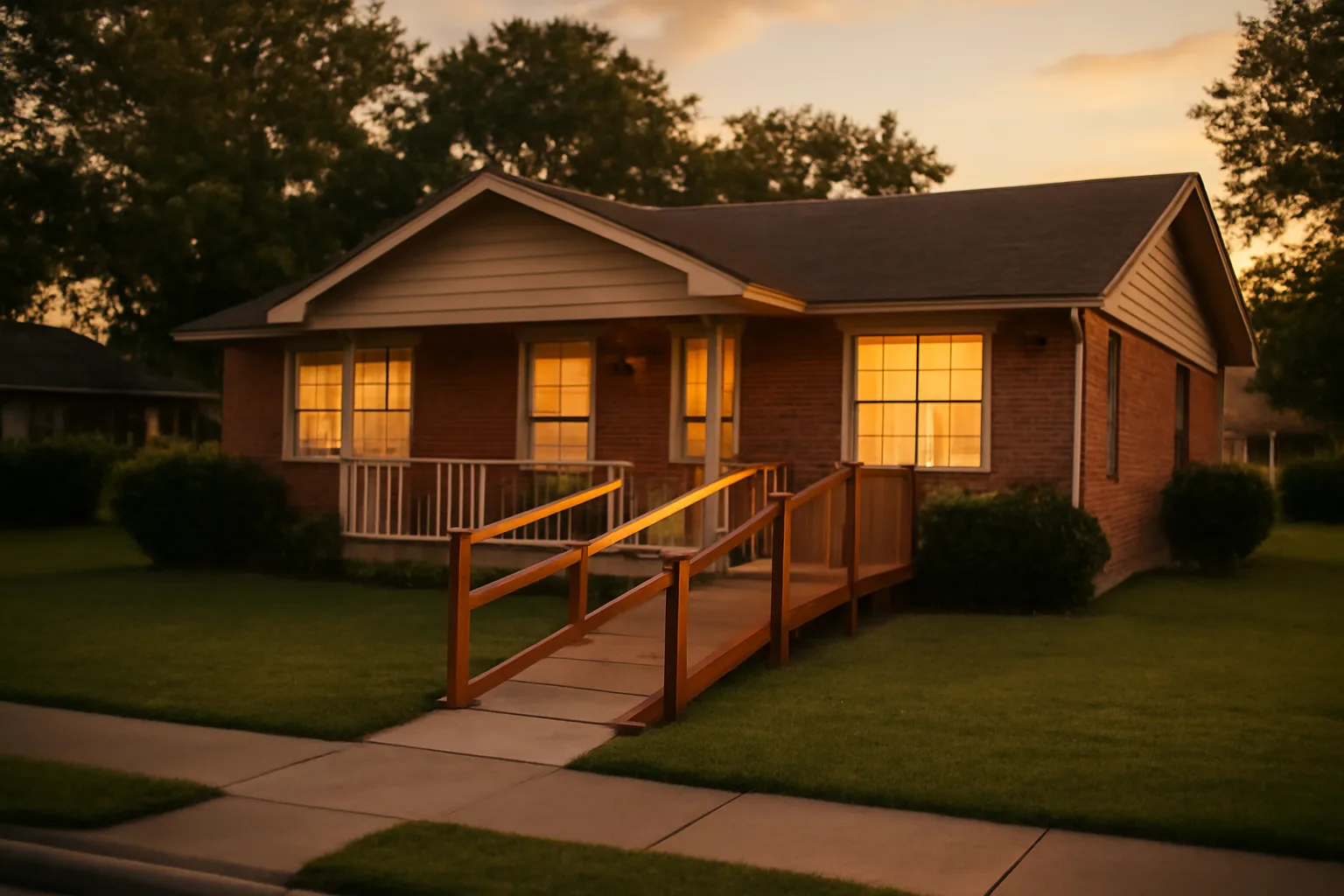
A group home is a residential setting, usually a single-family style house, where a small number of unrelated people live together and receive supervision, personal care, or treatment services from paid staff. The population can be older adults, people with intellectual or developmental disabilities (IDD), people in mental health or substance use recovery, or children in state care. In Texas, the term "group home" isn't a single license type. It's a functional description that maps to several different regulatory categories depending on who lives there and what services they need. A home serving four elderly residents who need help bathing and taking medication is regulated differently than a home serving six adults with IDD, which is regulated differently again from a home serving children removed from their families. This matters because the first real decision in starting a group home in Texas isn't about property or staffing. It's about which license category you're actually applying for, because that choice drives every fee, inspection standard, and staffing ratio that follows [1].
What is assisted living, and what is an assisted living facility?
Assisted living is a level of care between independent living and nursing home care. Residents get help with daily activities like bathing, dressing, medication management, and meals, but they don't need the round-the-clock skilled nursing care a nursing home provides. An assisted living facility (ALF) is the licensed physical setting where that care happens. Texas defines an assisted living facility under Texas Health and Safety Code Chapter 247 as an establishment that furnishes food, shelter, and personal care services to four or more residents unrelated to the proprietor [2]. Homes with three or fewer residents generally fall outside the Chapter 247 licensing requirement, though local zoning and other rules can still apply. HHSC licenses ALFs under several "types" based on resident acuity and building features, including facilities that can serve residents who need help evacuating without assistance versus those that can serve residents who need staff assistance to evacuate. The type you apply for affects your staffing ratios, fire sprinkler requirements, and the kind of residents you can legally admit [2]. Get this wrong on the application and you'll either under-serve your market or fail your life-safety inspection. If you're specifically building a senior-focused assisted living business, it's worth reading a dedicated breakdown of assisted living facility licensing before you draft a floor plan, since the building code differences between ALF types are not cosmetic.
What is assisted living vs nursing home, and what's the difference between them?
| Texas statute | Health & Safety Code Ch. 247 [2] | Health & Safety Code Ch. 242 [3] | |
|---|---|---|---|
| Level of care | Personal care, supervision, help with ADLs | 24-hour skilled nursing care | |
| Nursing staff | Not required around the clock | Licensed nurse on duty 24/7 | |
| Typical resident | Needs help with daily living, medically stable | Needs ongoing medical/nursing intervention | |
| Medicare coverage | Generally not covered as a residence | Covered short-term post-hospital stays only | If your business plan mixes both populations under one roof, you likely need two licenses, not one. HHSC doesn't let you blend nursing-facility-level care into an ALF license just because it's convenient. |
The core difference is medical intensity. Assisted living is personal care and supervision in a home-like setting. A nursing home (called a "skilled nursing facility" or, in Texas licensing language, a "nursing facility") provides 24-hour skilled nursing care ordered by a physician, for people recovering from illness or surgery, or managing complex chronic conditions. Texas nursing facilities are licensed under Health and Safety Code Chapter 242 and are separately certified for Medicare and Medicaid participation, with federal requirements enforced by the Centers for Medicare & Medicaid Services (CMS) under 42 CFR Part 483 [3]. Assisted living facilities, by contrast, are licensed under Chapter 247 and are not required to have a registered nurse on-site around the clock the way nursing facilities are. Here's a quick comparison for anyone trying to decide which license path to pursue: | Feature | Assisted living facility | Nursing home |
What does assisted living provide?
Assisted living provides a residence plus a package of personal care and support services. Under Texas rules, ALFs typically provide meals, housekeeping, laundry, help with bathing and dressing, medication reminders or administration (depending on license type), social and recreational activities, and 24-hour staff availability for supervision and emergencies [2]. What it does not reliably provide is ongoing skilled nursing, physical therapy, or intensive medical monitoring, unless the facility has arranged for outside home health or hospice services to come in, which Texas rules do permit under certain conditions. For operators, this list of services is exactly what your policy manual has to document. HHSC surveyors will check your admission agreement and resident records against what you actually provide, and gaps between promised services and delivered services are one of the most common deficiency citations in ALF surveys.
Does Medicare cover assisted living facilities?
No. Medicare does not cover the room-and-board or personal care costs of assisted living. Medicare.gov states plainly that Medicare and Medicaid "generally don't pay for non-skilled assistance with daily activities" of the kind provided in assisted living [4]. Medicare Part A can cover short, medically necessary stays in a skilled nursing facility after a qualifying hospital stay, and Part B can cover doctor visits, some therapies, and durable medical equipment for a person living in assisted living. But the facility charge itself, the rent-like cost of living in an ALF, is paid out of pocket, through long-term care insurance, or in some states through a Medicaid waiver. Texas Medicaid does not pay for ALF room and board either, but it can help fund certain services for eligible IDD and aging populations through home and community-based services (HCBS) waivers administered by HHSC, which is a completely different funding mechanism than nursing home Medicaid coverage [5]. If your business model depends on Medicaid-funded residents, you need to research waiver program contracts (like HCS or CLASS for IDD populations) separately from your facility license, because provider enrollment and licensure are two different processes with two different agencies to satisfy.
How do I start a group home in Texas? (step-by-step)
Starting a group home in Texas follows a fairly consistent sequence regardless of which population you serve, though the specific forms and inspection standards vary by license type. 1. Pick your population and license type. Confirm with your state licensing agency (HHSC) which chapter applies: assisted living (Ch. 247), adult foster care, IDD community homes, or a licensed child-care/residential treatment category if you plan to serve minors. 2. Form your business entity and get an EIN. Most operators use an LLC. You'll need this before you can open a business bank account or sign a lease. 3. Secure and prepare the property. Confirm local zoning allows a group home use in that location (many Texas cities treat small group homes as permitted residential uses under fair housing law, but occupancy limits and fire code still apply). Local building and fire officials, not HHSC, typically handle the life-safety inspection sign-off. 4. Write your policy and procedure manual. HHSC application packets require written policies on admission, medication management, emergency preparedness, abuse/neglect reporting, staffing, and resident rights before they'll issue a license. 5. Build your staffing plan. You need a qualified administrator or program director (requirements vary by license type), direct care staff meeting minimum ratios, and documented training plans. Everyone with resident contact needs a background check through the Texas Department of Public Safety and, for many license types, the HHSC Employee Misconduct Registry and nurse aide registry checks. 6. Submit the license application and fee to HHSC. Applications are typically submitted through HHSC's licensing portal or by mail depending on program, along with the required non-refundable application fee (confirm current fee amounts with HHSC, since fee schedules are updated periodically). 7. Pass the pre-licensing inspection. An HHSC surveyor (and often a local fire marshal) will inspect the physical plant, review policies, and check staff files before the license is granted. 8. Get your license and start intake. Once issued, most Texas facility licenses require ongoing compliance with unannounced inspections, incident reporting, and periodic renewal. This is the skeleton. The real work is in steps 3 through 6, where a lot of first-time applicants lose months to incomplete paperwork or a floor plan that doesn't meet fire code for the resident population they intended to serve.
How do you decide which Texas license category fits your home?
Start with the population, not the building. A single-family home can physically hold six beds, but that doesn't tell you whether you need an ALF license, an adult foster care license, or an IDD-specific certification. Assisted living facility (Chapter 247) fits homes serving older adults or adults with disabilities who need personal care but not intensive behavioral or medical support, at a scale of four or more unrelated residents [2]. Adult foster care fits smaller, more home-like settings, often licensed differently and sometimes tied to state contracts for Medicaid HCBS clients, with lower resident counts per home. Intellectual and developmental disability (IDD) group homes, often operating under HCS (Home and Community-based Services) or similar waiver program certification, have their own staffing, training (including behavioral support), and physical plant standards layered on top of basic facility licensing. Mental health and recovery residences serving adults in behavioral health treatment may fall under separate licensed treatment program rules if they provide clinical services, versus simple sober-living arrangements that may not require a health facility license at all but still must follow local ordinances and any state recovery residence certification program. Because these categories genuinely overlap in the kind of building and staff you need, many operators find it faster to build out the general playbook (policies, staffing templates, forms) once and then adapt it per license type, rather than starting from a blank page for each program.
What zoning and property rules apply to a Texas group home?
Local zoning is often the first wall new operators hit, and it's a separate track from state licensing entirely. Many Texas municipalities treat licensed group homes for people with disabilities as a protected residential use under the federal Fair Housing Act and Texas Fair Housing Act, meaning cities generally cannot flatly ban them from residential zones just because they're a group home. But cities can and do enforce neutral rules like occupancy caps, parking, spacing requirements between group homes, and building/fire code, so "protected use" doesn't mean "no rules apply." Before signing a lease or closing on a property, confirm with your local planning/zoning department and your state licensing agency separately: zoning approval and HHSC licensure are two independent processes, and passing one doesn't guarantee the other. A property that looks perfect on paper can fail because the fire marshal requires a sprinkler retrofit for the resident evacuation category you intend to serve, which can run into real money depending on square footage and system type. Get a local fire marshal walkthrough before you sign anything long-term. It's the cheapest insurance available at this stage.
What staffing does a Texas group home need?
Staffing requirements depend on license type, but nearly every Texas residential program requires a designated administrator or program director, direct care staff meeting a minimum staff-to-resident ratio around the clock, documented initial and ongoing training, and background checks for anyone with resident access. For assisted living facilities, HHSC rules require sufficient staff to meet resident needs based on the facility's licensed type and resident acuity, with specific training requirements for medication aides who administer medication versus staff who only assist with self-administration [2]. IDD-specific programs layer on additional required training in behavior support, restraint alternatives, and person-centered planning tied to waiver program standards. Background check requirements typically run through the Texas Department of Public Safety criminal history check, plus registry checks (Employee Misconduct Registry, Nurse Aide Registry, or similar) depending on program type. Budget real time for this step; criminal history results and registry clearances can take days to weeks depending on volume, and you generally cannot let unscreened staff work unsupervised with residents in the interim.
What does the Texas inspection process actually check?
Expect two distinct inspection tracks: a life-safety/fire inspection (often local) and a licensing compliance survey (HHSC). The fire and building inspection checks things like exit width, smoke detectors and fire alarm systems, sprinkler requirements tied to your resident evacuation category, egress lighting, and general structural safety. This is typically handled by your local fire marshal's office, not HHSC directly, though HHSC will want documentation that you passed it. The HHSC licensing survey checks your written policies against actual practice: admission agreements, medication management logs, staff training files, background check documentation, incident and abuse-reporting logs, and physical plant conditions like cleanliness, accessible bathing facilities, and posted resident rights information. Surveyors typically tour the building, interview a sample of staff and residents, and review a sample of resident records. After initial licensure, expect unannounced follow-up inspections. Facilities that get complaints (from residents, families, or staff) can trigger an unscheduled investigation outside the normal survey cycle, so keeping your policy manual current and your logs accurate isn't a one-time task, it's ongoing operational hygiene.
What paperwork and policy manual do you actually need before you apply?
HHSC application packets generally require a written policy and procedure manual covering, at minimum: admission and discharge criteria, medication management, emergency preparedness and evacuation plans, staffing plans and job descriptions, abuse/neglect/exploitation reporting procedures, resident rights and grievance procedures, and infection control practices. You'll also need floor plans showing room dimensions and exit routes, proof of property ownership or lease, staff roster with background check documentation, and your business entity paperwork (LLC formation, EIN, and any required state business registration). This is the single biggest time sink for first-time applicants, because writing 15 to 25 individual policies from scratch, in the specific language a surveyor expects to see, takes most people far longer than they budget for. This is exactly the gap the $299 State Group Home Licensing Kit is built to close: state-specific policy templates and application checklists so you're not drafting a medication management policy at 11pm the night before your HHSC submission deadline. It won't get your license approved for you (nobody can promise that, and any company that does is lying to you), but it removes the blank-page problem.
How much does it cost and how long does it take to get licensed?
Costs and timelines vary meaningfully by license type, resident count, and how prepared your application is, so treat any number you read online (including this one) as a starting range, not a quote. HHSC publishes current application fees on its own program pages, and those fees do change, so confirm the exact current fee with HHSC before budgeting [1]. Beyond the state fee, plan for local fire/building permit fees, any sprinkler or fire alarm retrofit costs if your property doesn't already meet code for your resident evacuation category, background check fees per employee, and general renovation costs to meet accessibility and life-safety requirements. Timeline from application submission to license issuance commonly runs from a couple of months to longer, depending on how complete your initial submission is and how quickly you can schedule and pass the required inspections. Incomplete applications, missing policy documents, and failed first-round fire inspections are the most common reasons the timeline stretches.
What happens after you're licensed?
Licensure is the starting line, not the finish line. Most Texas residential programs require ongoing compliance: periodic license renewal, continuing staff training hours, incident reporting within required timeframes for falls, injuries, deaths, or allegations of abuse or neglect, and cooperation with unannounced HHSC surveys. You'll also need a system for tracking resident care plans, medication administration records, and staff certifications so you're not scrambling to reconstruct documentation when a surveyor asks for it. Facilities that treat their policy manual as a living document, updated when rules change or when an incident reveals a gap, tend to have smoother re-licensure surveys than facilities that wrote the manual once and never touched it again. If you're weighing whether a senior-focused assisted living model or a smaller in-home care model fits your goals better, it's worth comparing the operating realities side by side; see assisted living at home and assisted living facilities for how the two models differ in staffing intensity and licensing burden before you commit to a property.
Frequently asked questions
What is assisted living?
Assisted living is a residential care option for people who need help with daily activities like bathing, dressing, and medication management but don't require the intensive skilled nursing care provided in a nursing home. It combines housing, meals, and personal care services, typically in a licensed facility with staff available around the clock.
What is a group home?
A group home is a residential setting where a small number of unrelated people live together and receive supervision or care from paid staff. The term covers many licensed categories in Texas, including assisted living, adult foster care, IDD community homes, and behavioral health residences, each with its own regulations.
What is an assisted living facility?
An assisted living facility is a licensed establishment that provides food, shelter, and personal care services to residents, typically four or more unrelated people, under Texas Health and Safety Code Chapter 247. HHSC licenses ALFs into different types based on the acuity of residents they can serve and building safety features.
What is the difference between assisted living and a nursing home?
Assisted living provides personal care and supervision for people who are medically stable but need help with daily tasks. A nursing home provides 24-hour skilled nursing care ordered by a physician for people with complex medical needs. Texas licenses them under different statutes: Chapter 247 for assisted living and Chapter 242 for nursing facilities.
Does Medicare cover assisted living facilities?
No. Medicare does not pay for the room-and-board or personal care costs of assisted living. Medicare.gov states that Medicare generally doesn't pay for non-skilled help with daily activities of the kind assisted living provides. Medicare can cover short-term skilled nursing stays and some medical services delivered to a resident, but not the facility itself.
How do I start a group home in Texas?
Pick your population and license type, form your business entity, secure a property that meets zoning and fire code, write your required policy manual, build a compliant staffing plan with background checks, and submit your application and fee to HHSC. Then pass the pre-licensing fire and compliance inspections before you can accept residents.
What does assisted living provide that a regular apartment doesn't?
Assisted living provides meals, housekeeping, laundry, help with bathing and dressing, medication support, social activities, and 24-hour staff availability for supervision and emergencies. A regular apartment provides none of these built-in services, which is the core value proposition (and cost driver) of licensed assisted living.
Do you need a special license to open a group home for people with disabilities in Texas?
Yes. Depending on the population and services provided, you may need an assisted living license, an IDD-specific certification tied to a Medicaid waiver program like HCS, or another HHSC-regulated license category. Confirm the exact applicable category with HHSC before drafting policies or signing a lease, since requirements differ meaningfully by program.
Can a Texas city block a group home from a residential neighborhood?
Generally not outright, because federal and Texas fair housing law protects licensed group homes for people with disabilities as a residential use. Cities can still enforce neutral rules like occupancy limits, spacing requirements, parking, and fire/building code, so confirm specific zoning conditions with your local planning department before committing to a property.
How much staff do you need for a small Texas group home?
Minimum staffing depends on your license type, resident count, and resident acuity, but nearly every program requires a designated administrator, direct care staff meeting a minimum ratio around the clock, and background-checked employees with documented training. Confirm the exact ratio requirement for your specific license category with HHSC before finalizing your staffing budget.
How long does it take to get a group home license in Texas?
Timelines vary by license type and how complete your application is, but the process commonly runs a couple of months or more from submission to license issuance. Incomplete paperwork, missing policy documents, and failed initial fire inspections are the most common causes of delay, so a complete first submission matters more than speed.
Is a sober living home the same as a licensed group home in Texas?
Not necessarily. Sober living homes that don't provide clinical treatment services may not require the same health facility license as an assisted living or behavioral health treatment program, but they still must follow local zoning ordinances and, in many cases, a state recovery residence certification standard. Confirm current requirements with your state licensing agency.
What's the biggest reason Texas group home applications get delayed?
Incomplete or generic policy manuals and floor plans that don't meet the fire/life-safety code for the intended resident evacuation category are the two most common delay causes. Both are avoidable with upfront planning: get a fire marshal walkthrough early and make sure your written policies match what HHSC actually requires for your license type.
Sources
- Texas Health and Human Services Commission, Provider Licensing and Regulation: HHSC licenses assisted living facilities and administers the application and inspection process
- Texas Health and Safety Code, Chapter 247 (Assisted Living Facilities): Definition of assisted living facility, resident count threshold, and licensing framework under Chapter 247
- Texas Health and Safety Code, Chapter 242 (Convalescent and Nursing Facilities): Nursing facilities are licensed separately under Chapter 242 with distinct skilled nursing requirements
- Medicare.gov, Long-Term Care: Medicare generally doesn't pay for non-skilled assistance with daily activities such as assisted living
- Medicaid.gov, Home & Community-Based Services: Medicaid HCBS waivers can fund certain in-home and community-based services separate from facility room and board
- 42 CFR Part 483 (Requirements for States and Long Term Care Facilities): Federal requirements for nursing facility certification and resident care standards